

Bhutan’s private sector continues to face significant regulatory and systemic challenges, with a comprehensive review identifying 111 regulatory issues affecting business operations, investment and growth.
The findings are part of Phase II of the Business Regulatory Review (BRR) conducted by the Bhutan Chamber of Commerce and Industry (BCCI), which also identified more than 50 broader barriers arising from processes, infrastructure, finance and access to key business factors.
The review examined 955 legislative and regulatory instruments and gathered feedback from more than 100 businesses and entrepreneurs across different sectors and regions of the country.
The findings come as Bhutan seeks to strengthen private sector participation under the 13th Five-Year Plan (2024–2029), which identifies an improved business ecosystem as a flagship priority aimed at reducing compliance burdens, simplifying regulations and enhancing the ease of doing business.
BCCI’s review found that businesses continue to face challenges including lengthy approval processes, overlapping requirements, repeated documentation, inconsistent implementation of regulations and limited flexibility in compliance requirements, particularly for small and medium enterprises.
The Phase II review builds on the first phase completed in 2024, which identified 235 regulatory issues. Of these, 118 were resolved through collaboration between the Ministry of Industry, Commerce and Employment (MoICE), the Office of the Cabinet Affairs and Strategic Coordination (OCASC), and BCCI.
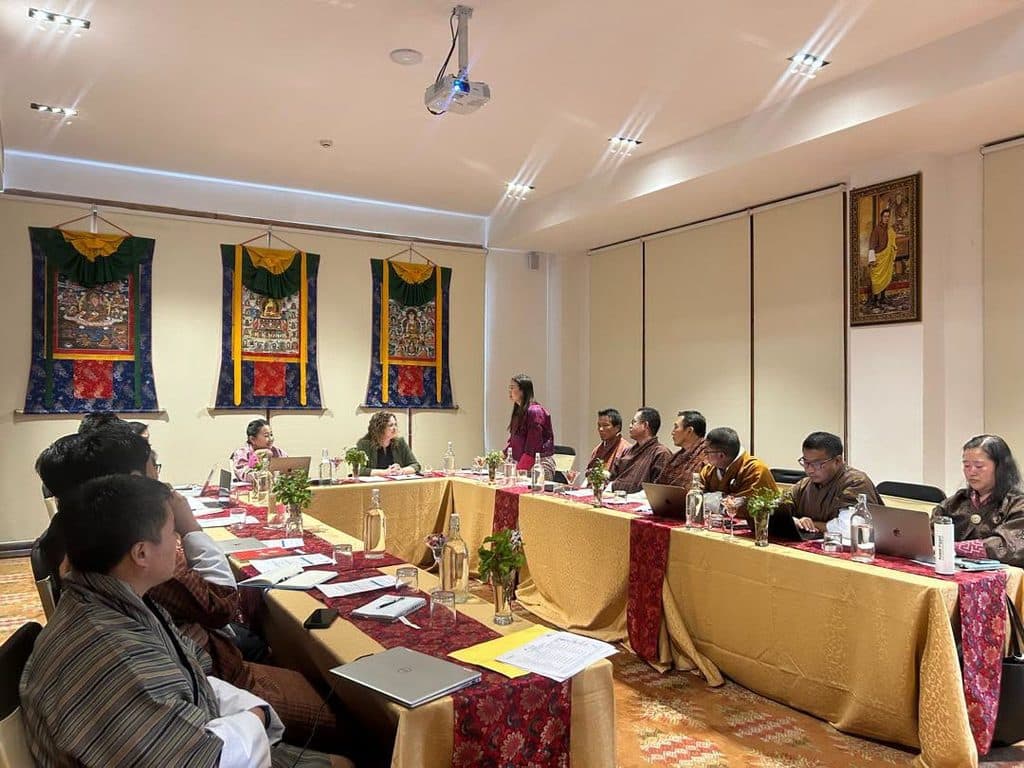
For the latest review, BCCI’s Research and Strategy Department mapped the country’s regulatory framework before engaging with business associations, informal sector representatives and 12 economic clusters to understand challenges faced by businesses on the ground.
The review identified regulatory issues across four major sectors: services with 47, industry with 20, agriculture with 18 and trading with 9 issues. The concerns cover areas such as foreign worker management, tourism regulations, tenancy laws, healthcare services, licensing procedures, land lease processes, immigration rules, procurement, taxation and sector-specific operational challenges.
One of the major concerns highlighted in the review is the complexity involved in obtaining business licences, permits and sector clearances.
BCCI noted that establishing a business often requires approvals from multiple agencies, with each process involving separate documentation and timelines. While individual clearances serve important purposes, the review found that the absence of coordination among agencies creates delays and increases compliance costs.
According to the review, environmental clearance alone can take between 30 and 100 days depending on the category of assessment required. Land use clearance may take around one month at the dzongkhag level, with additional time required where approval from other authorities is needed.
Food safety licensing and certification requires at least one month before an industry licence application can be completed. Industrial projects may also require power and forest clearances, resulting in a pre-operational period of four to six months at minimum, and longer in cases involving delays or incomplete documentation.
BCCI said the challenge is not the purpose of individual approvals but the way the overall system operates, with businesses often required to navigate separate agency processes without a unified mechanism.
To address these issues, BCCI has recommended accelerating the rollout of the Bhutan National Single Window (BNSW), introducing parallel processing of clearances, establishing mandatory turnaround times for approvals and adopting a “once-only” principle to prevent businesses from repeatedly submitting the same documents to multiple agencies.
Access to finance was identified as another major constraint affecting business growth.
The review highlights challenges including high collateral requirements, conservative asset valuation practices, high lending rates and limited specialised financial products for start-ups, exporters, traders and agriculture-based enterprises.
BCCI noted that these constraints particularly affect micro and small enterprises, which account for more than 95 percent of businesses in Bhutan, limiting their ability to access affordable credit for expansion and investment.
Cross-border trade was also identified as a significant challenge. The review highlights infrastructure limitations, documentation requirements, transit restrictions and coordination gaps with neighbouring countries, particularly India, as factors affecting export competitiveness.
Land access remains another structural concern, especially for manufacturing, agriculture, agro-processing and logistics businesses. The report points to fragmented land-related instruments, lack of clear standards and differences in implementation practices across dzongkhags as barriers affecting business planning and investment decisions.
Beyond regulatory changes, BCCI has recommended consolidation of fragmented legislation into simpler and more coherent frameworks. The review proposes merging related labour regulations into a unified Labour Regulation, company-related rules into a comprehensive Companies Regulation and land-related instruments into a consolidated land administration framework.
The chamber has also called for a mandatory Regulatory Impact Assessment (RIA) for all new legislation, rules, regulations, guidelines and standard operating procedures before they are finalised.
BCCI stated that many existing barriers were created because regulations were introduced without a structured assessment of their impact on businesses, workers and entrepreneurs required to comply with them.
The review concludes that addressing these challenges would help reduce compliance costs, improve competitiveness, attract investment and create a more predictable business environment.
BCCI has recommended continued collaboration between the government and private sector through a joint mechanism to track reforms, assign responsibilities and monitor progress in resolving the issues identified through the review.
Nidup Lhamo, Thimphu