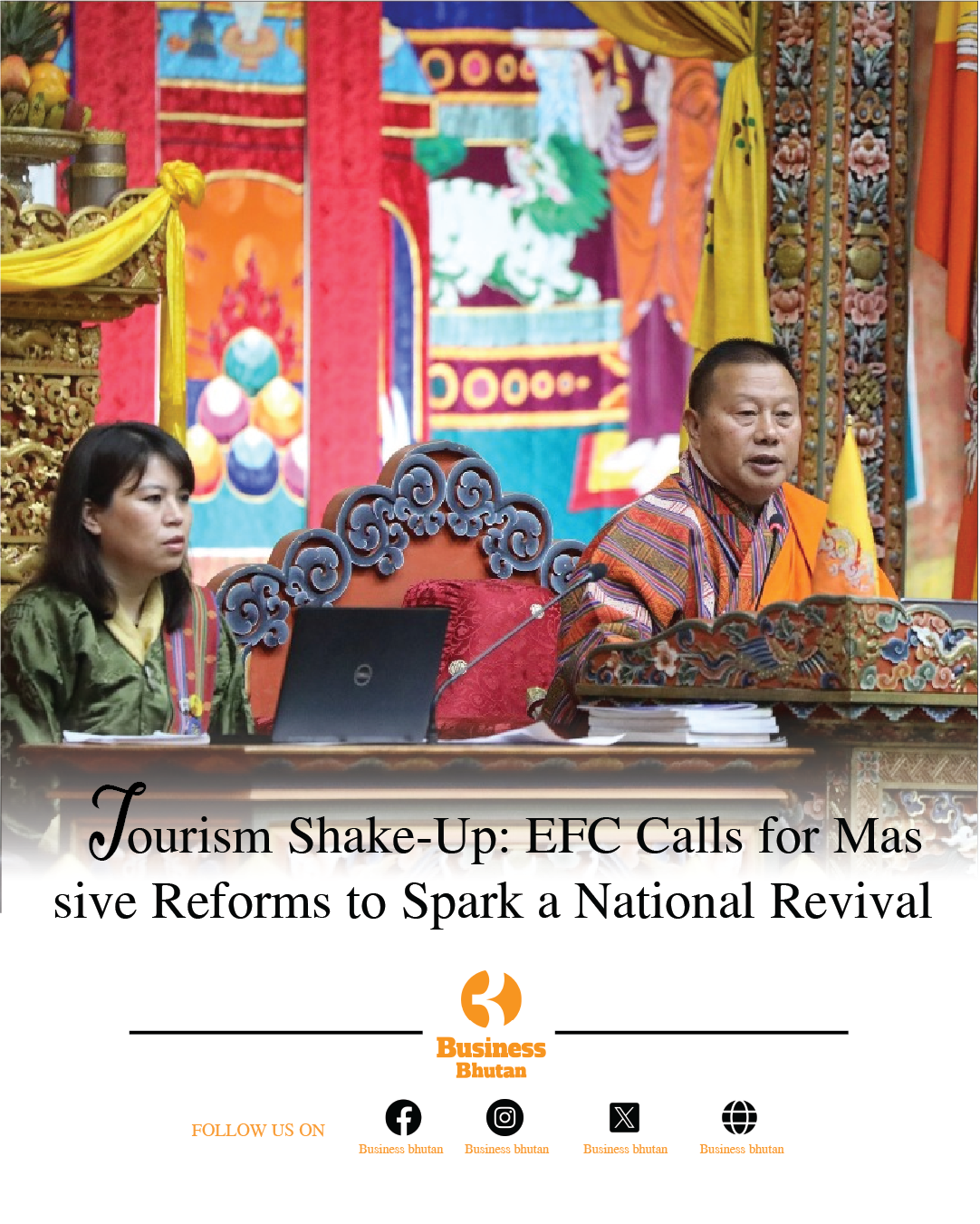
The Economic and Finance Committee (EFC) has unveiled a wide-ranging set of reform proposals aimed at revitalizing Bhutan’s tourism industry, with recommendations spanning legal clarity, governance improvements, market incentives, regional development and enhanced cultural promotion.
The committee’s review underscores the need for an updated and more comprehensive tourism policy framework, emphasizing that a stronger, more coherent system is essential to making Bhutan a competitive, sustainable and inclusive global destination.
A key focus of the recommendations is the need to revisit and strengthen the Tourism Levy Act of 2022. The committee noted that the Act should be made more detailed by clearly defining institutional roles, pricing and levy mechanisms, licensing procedures, regional development guidelines and accountability systems.
“A coherent legal framework will help streamline operations, improve transparency and promote equitable growth across all regions,” the committee stated.
Until a revised Act is enacted, the committee recommended continuing with the Tourism Rules and Regulations of 2024 as a transitional measure to maintain regulatory continuity.
The committee proposed a more adaptable Sustainable Development Fee (SDF) framework, recommending market-based tools such as group discounts, incentives for longer stays and seasonal concessions. These incentives, they said, would particularly benefit central and eastern regions that remain underserved by tourism.
One significant proposal is to extend the current 24-hour SDF waiver for border towns to 72 hours within designated border zones.
“A 72-hour waiver will allow visitors more time to rest and explore locally while still maintaining movement controls beyond the zone,” the committee noted. The extension is expected to increase the likelihood of overnight stays, boost local businesses and strengthen border-town economies.
The EFC highlighted governance as a critical area for reform. The committee recommended establishing a single, empowered Tourism Authority responsible for policy development, licensing, SDF administration and overall sector regulation.
They also proposed developing inter-agency standard operating procedures for visa clearance, aviation coordination, SDF management and tourism product approval.
“A unified authority will ensure better coordination, transparency and efficiency,” the committee stated.
To improve oversight and streamline processes, the committee recommended linking all visa applications to licensed Bhutanese operators or individuals. They also called for the creation of an integrated digital platform — a one-window system for visa processing, SDF payments, booking verification, safety oversight and operator services.
The committee cautioned that Bhutan’s current three-tier airfare system has become a barrier to visitor growth. They suggested exploring a uniform airfare rate regardless of nationality, encouraging airlines to align fares with regional markets and conducting periodic reviews based on seasonal demand and global trends.
“A transparent, predictable airfare policy will boost tourist arrivals and strengthen competitiveness in the South Asian region,” the review stated.
To broaden Bhutan’s appeal, the EFC recommended new programs in culinary tourism, textile and craft circuits, agro-tourism, wellness retreats, trekking and low-season MICE (Meetings, Incentives, Conferences and Exhibitions) events.
The committee emphasized the need to involve local artisans, strengthen community-based tourism and introduce incentives to enhance grassroots participation.
Recognizing ongoing challenges in the hotel sector, the committee proposed targeted measures including low-interest soft loans with deferred repayment, operational grants for renovations, hygiene upgrades, and eco-certifications. They also encouraged the resumption of domestic meetings and conferences to create stable demand and protect jobs.
Aggressive international marketing — particularly through the Export Support Program (ESP) — alongside incentives for bulk bookings, tour packages and MICE events were also recommended to improve occupancy and diversify revenue streams.
The committee stressed the importance of Bhutan’s cultural and natural heritage in shaping the future of tourism. It recommended that the Department of Culture, in collaboration with other stakeholders, develop policies and guidelines to strengthen culture-based tourism offerings.
The EFC’s comprehensive recommendations aim to build a more resilient, transparent and future-ready tourism industry by focusing on legal clarity, regional equity, governance reform, operational efficiency, diversification and cultural heritage promotion.
Sherab Dorji
From Thimphu