

MP asks if Bhutan would introduce IVF services soon
A child is often the greatest dream of every parent—a source of love, hope, and meaning. Yet, not everyone is blessed with the joy of parenthood. Across Bhutan, many couples live in silence, their homes echoing without the laughter of a child of their own.
This personal sorrow is now mirrored in a national concern. Bhutan’s fertility rate has fallen below the replacement level of 2.1, signaling a troubling trend. Amid growing worries about infertility, the absence of advanced reproductive treatments such as In-Vitro Fertilization (IVF) has become increasingly apparent.
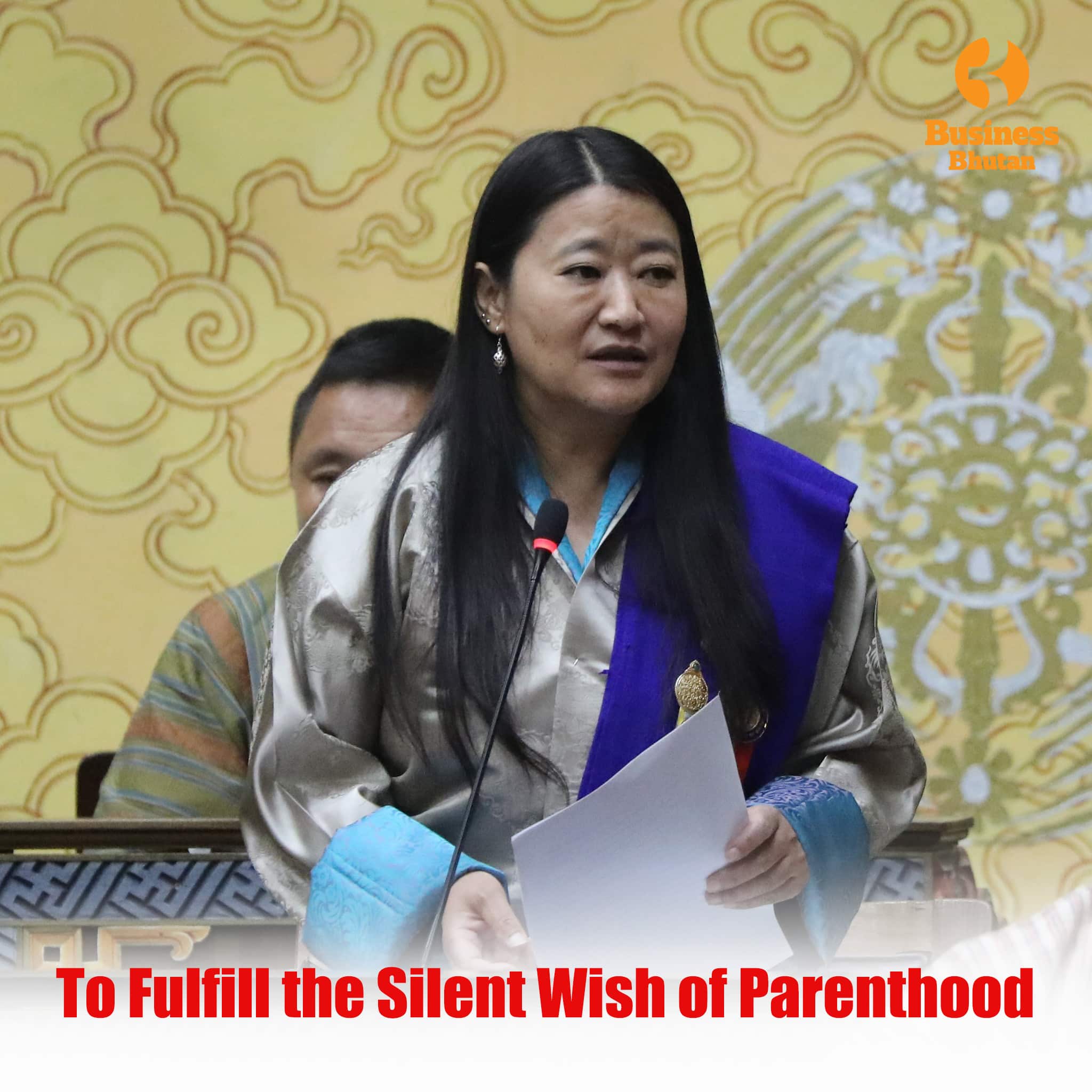
Against this backdrop, Dorji Wangmo, Member of Parliament from the Kengkhar-Weringla constituency, raised a question in Parliament: What are the government’s plans to introduce IVF services in Bhutan—and will these treatments be made accessible and affordable for the Bhutanese people?
According to the National Health Survey (NHS) 2023, Bhutan’s Total Fertility Rate (TFR) stands at approximately 1.86. The MP said that in response to the decreased fertility rate, the government has set a target to raise the TFR to 2.1 by 2034.
“However, infertility remains a growing concern, especially among couples unable to conceive due to medical conditions,” the MP said, adding that currently, the country lacks access to advanced fertility treatments such as IVF, pushing many couples to seek expensive treatment abroad, primarily in India and Thailand.
In response, the Ministry of Health (MoH), Tandin Wangchuk acknowledged the lack of IVF services in the country and inconvenience it has caused for couples who wish to have children. “We currently offer only IUI services at JDWNRH, but recognizing IVF as a crucial component of fertility care, the service has been included in the 13th Five-Year Plan,” the minister said.
The minister shared that the government is working towards implementing IVF services in collaboration with the World Health Organization (WHO). “If there is no funding support from WHO, we will allocate the necessary budget from within the Ministry,” the Minister added.
The Minister also shared that to prepare for the rollout, a group of Bhutanese medical professionals has undergone specialized training in Thailand. “Moreover, a Health Technology Assessment is currently underway to evaluate the service’s sustainability, cost-effectiveness, and financial feasibility of the services.”
The IVF facility is expected to be established at the Gyaltsuen Jetsun Pema Mother and Child Hospital at JDWNRH. The service aims to support couples or individuals facing reproductive health challenges such as infertility, blocked fallopian tubes, or other conditions preventing natural conception.
The response has lifted the hearts of several Bhutanese, including those living abroad. A Bhutanese woman from Australia said that the charges for IVF are very high in Australia. “One visit costs around AUD 10,000, which is very expensive”. She mentioned that the service in Bhutan may not be entirely free. “Just as we need to pay for certain services, the government can charge a reasonable fee,” she said.
Meanwhile, Bhutanese are forced to seek IVF abroad, incurring high costs and repeated travel for follow-ups. A single IVF cycle in India ranges from INR 150,000 to 300,000, while in Thailand it costs between 100,000 to 250,000 baht (approximately USD 3,000 to 7,500).
Nidup Lhamo from Thimphu