

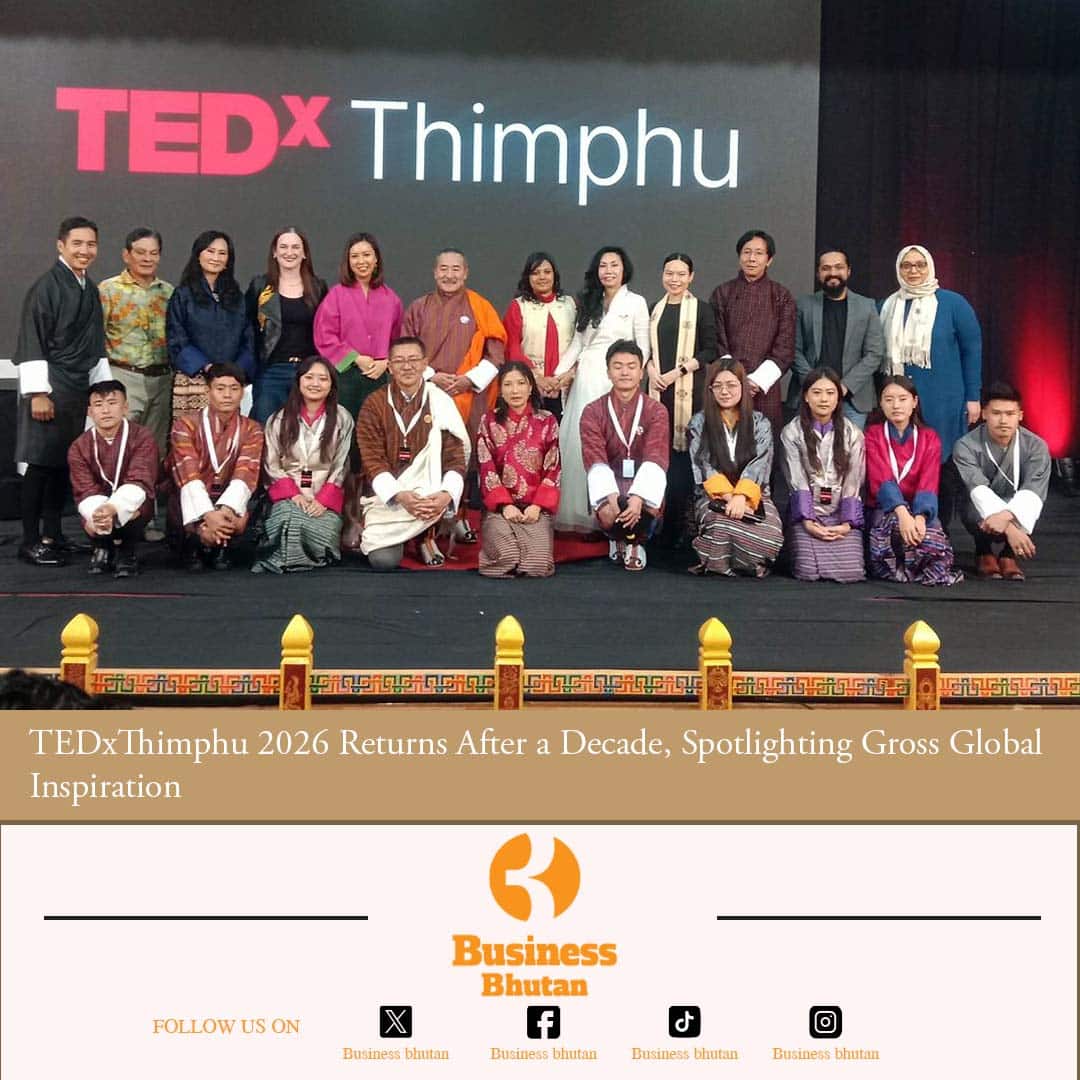
After nearly a decade of silence, one of the world’s most influential idea-sharing platforms has found its voice again in Bhutan. TEDxThimphu 2026 returned to the capital with renewed energy and ambition, bringing together thinkers, innovators, and storytellers from across the globe under one roof.
Held at the Royal University of Bhutan (RUB) hall, the event marked more than just a revival—it signaled Bhutan’s re-entry into a global conversation about the future of humanity, development, and purpose. With eleven speakers from eight countries, TEDxThimphu 2026 was both a celebration of ideas and a bold statement about Bhutan’s role in shaping them.
At the heart of the event was its theme: “Gross Global Inspiration.”
In a world increasingly driven by economic competition, technological disruption, and relentless productivity, the theme offered a powerful counterpoint. “Gross Global Inspiration” challenged conventional notions of success—measured typically in GDP, output, and growth—and instead invited audiences to consider a different currency: inspiration.
From the opening session, it became clear that this was not just another conference. Speakers urged the audience to reflect on what truly drives human progress. Is it wealth? Innovation? Or is it something more intangible—purpose, creativity, and connection?
Throughout the day, a recurring idea emerged: inspiration is not finite. Unlike natural resources or economic capital, it grows when shared. It spreads across borders, disciplines, and cultures, fueling change in ways that numbers alone cannot capture.
Speakers described this as the rise of an “inspiration economy”—a world where ideas, empathy, and creativity are as valuable as financial capital. In such a system, societies thrive not just by producing more, but by inspiring more.
While TEDx events are held around the world, TEDxThimphu carried a distinctly Bhutanese identity. The country’s development philosophy—Gross National Happiness—served as a central thread throughout the event.
Introduced in the 1970s, Gross National Happiness offers an alternative to purely economic measures of progress. It emphasizes holistic wellbeing, guided by four pillars: sustainable socio-economic development, cultural preservation, environmental conservation, and good governance.
At TEDxThimphu 2026, this philosophy was not just referenced—it was actively explored and debated. Speakers examined how its principles could inform global development at a time when many countries are grappling with inequality, environmental degradation, and social fragmentation.
Rather than presenting Bhutan as an exception, the event positioned it as a source of insight. In a world searching for balance, Bhutan’s approach offered a compelling model for integrating economic growth with human wellbeing.
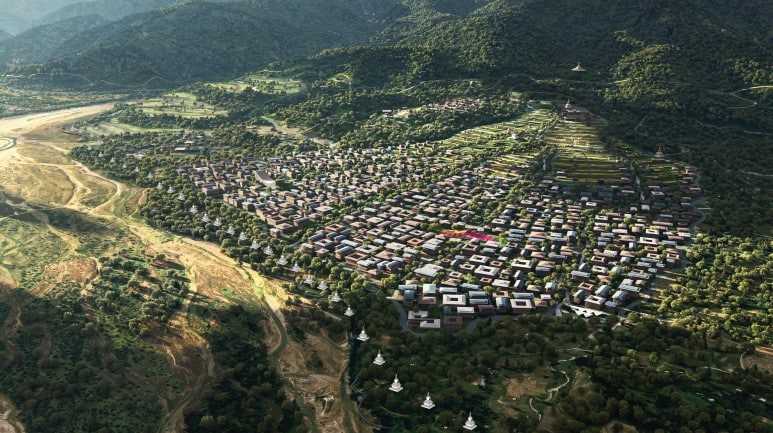
One of the most anticipated and widely discussed topics of the event was the Gelephu Mindfulness City (GMC), an ambitious initiative envisioned by His Majesty The King, Jigme Khesar Namgyel Wangchuck.
The GMC is more than an urban development project—it is a bold reimagining of what cities can be.
Speakers described it as a “philosophical blueprint” for the future, where infrastructure is designed not just for efficiency, but for wellbeing. The project seeks to integrate economic opportunity with environmental sustainability and cultural depth, creating a space where people can live, work, and thrive without compromising their mental and emotional health.
In an era of rapid urbanization, where cities are often associated with congestion, stress, and environmental strain, the GMC offers a radically different vision. It proposes a model where growth is mindful, where nature is preserved, and where human connection remains central.
For many in the audience, the discussion around GMC was a moment of pride—and reflection. It highlighted Bhutan’s ability to contribute not just ideas, but solutions to global challenges.
The strength of TEDxThimphu 2026 lay in its diversity. Eleven speakers from eight countries brought perspectives shaped by different cultures, professions, and experiences.
Their talks spanned a wide range of themes—innovation, climate change, artificial intelligence, resilience, and the interplay between tradition and modernity. Yet, despite this diversity, a common thread connected them all: the belief that meaningful change begins with ideas rooted in purpose.
Some speakers explored how traditional knowledge systems can address modern challenges, particularly in environmental sustainability. They highlighted how indigenous practices, often overlooked, hold valuable lessons for managing natural resources and building resilient communities.
Others delved into the ethical implications of emerging technologies. As artificial intelligence and digital systems become increasingly integrated into daily life, questions of responsibility, equity, and human values become more urgent. Speakers emphasized that innovation must be guided not just by capability, but by compassion.
The blend of global and local perspectives created a rich dialogue—one where Bhutanese experiences intersected with international insights, generating new ways of thinking about shared challenges.
Unlike traditional conferences, TEDxThimphu 2026 was designed to be interactive and immersive.
In addition to formal presentations, the event featured performances and interactive sessions that encouraged audience participation. Attendees engaged directly with speakers, asked questions, and shared their own perspectives.
For students and young professionals in particular, the experience was transformative. It offered not just exposure to global ideas, but also the confidence to engage with them.
Organizers emphasized that the goal was not simply to deliver talks, but to spark ongoing conversations. The real impact of the event, they noted, would be measured not by what happened on stage, but by what happens afterward—in classrooms, workplaces, and communities.
After a decade-long hiatus, the return of TEDxThimphu carries symbolic and practical significance. It reflects Bhutan’s readiness to re-engage with global conversations at a time of profound change.
More importantly, it positions Bhutan as an active participant in shaping those conversations.
In a world facing complex challenges—from climate change to technological disruption—there is a growing need for ideas that are not only innovative, but also grounded in values. TEDxThimphu 2026 demonstrated that Bhutan has much to contribute in this regard.
The event concluded with a clear message: inspiration matters. It has the power to transform individuals, communities, and entire societies.
For Bhutan, the return of TEDxThimphu is not just about reviving a platform. It is about reaffirming a commitment to ideas that prioritize wellbeing, sustainability, and human connection.
As the lights dimmed at the RUB hall, the conversations sparked during TEDxThimphu 2026 continued—echoing in discussions, reflections, and aspirations.
Organizers hope that this is just the beginning of a renewed movement, one that brings together thinkers, creators, and changemakers to shape a better future.
In many ways, the event captured a defining moment for Bhutan. It showcased a nation that is deeply rooted in its values, yet open to global ideas. A nation that is not only learning from the world, but also teaching it.
And perhaps most importantly, it reminded everyone present that progress is not just about what we build—but about what inspires us to build it.
Nidup Lhamo
From Thimphu