

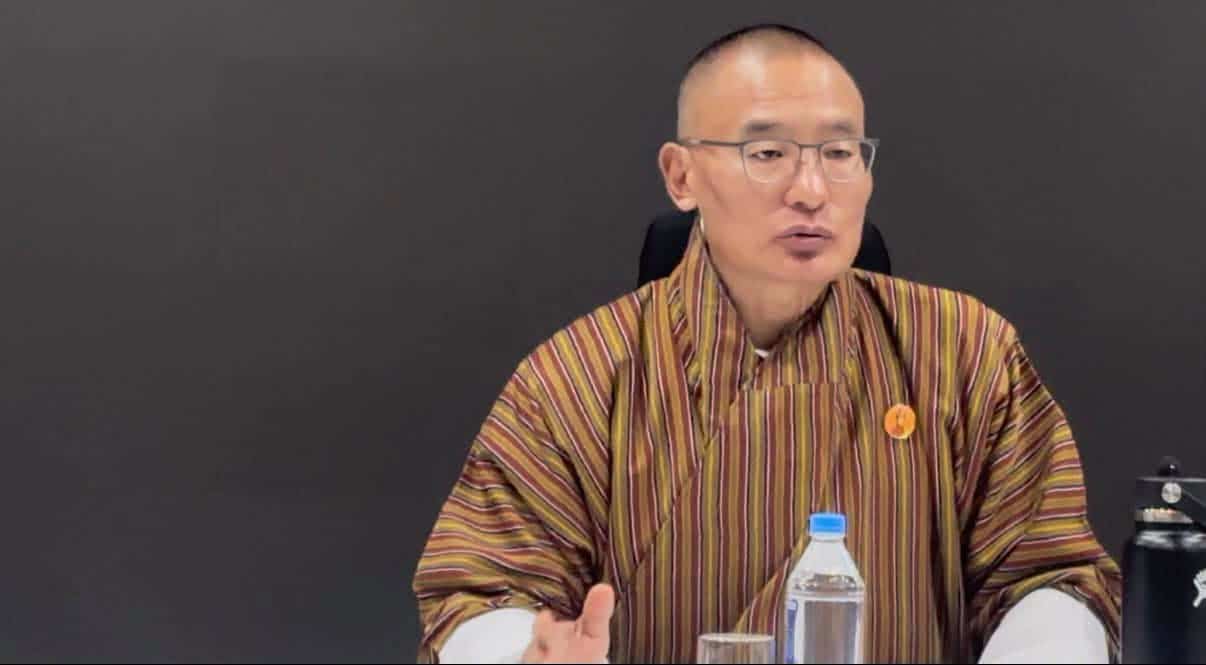
Prime Minister Dasho Tshering Tobgay confirmed during the 32nd Meet-the-Press on Friday that the Seventh Pay Commission has been constituted with effect from October 1, 2026, and is being chaired by the Managing Director of Druk Green Power Corporation, Dasho Chhewang Rinzin, following the command of His Majesty The King.
The Seventh Pay Commission has been constituted in accordance with Article 30 of the Constitution of the Kingdom of Bhutan, which provides for an autonomous Pay Commission to be established from time to time on the recommendation of the Prime Minister.
Section 1 of Article 30 states that the commission shall be headed by a chairperson and remain autonomous. Section 2 mandates the commission to recommend revisions to the salary structure, allowances, benefits and other emoluments of the Royal Civil Service, the Judiciary, members of Parliament and Local Governments, holders and members of constitutional offices, and other public servants.
The Constitution also requires the commission to take due account of the state of the national economy and other constitutional provisions when making its recommendations.
Under Section 3, the commission’s recommendations can be implemented only after approval by the Lhengye Zhungtshog, subject to any conditions or modifications made by Parliament.
This means that any proposed salary revision will have to pass through the prescribed approval process before it can be implemented. The last Pay Commission was constituted in 2023.
The commission is expected to review the salary structure, allowances, benefits and other emoluments of public servants across the country. The commission’s report is likely to be presented during the winter session of Parliament, setting the stage for discussions on public-sector remuneration and its implications for government expenditure and the national economy.
The formation of the commission comes as civil servants and other public employees look forward to a possible review of their compensation, particularly amid changing living costs and the need to maintain an adequately remunerated and motivated public workforce.
The announcement has raised expectations among public servants across sectors, including education, health, administration, technical services and local government. For many employees, the review will be important in assessing whether salaries and benefits adequately reflect their responsibilities, professional qualifications and the rising cost of living.
“This is indeed very good news for all the civil servants across the country,” said Sonam Zangmo, a teacher in Thimphu. “This gives us energy to work harder now.”
Civil servants in the health sector are also among those awaiting the commission’s recommendations, particularly employees working in hospitals and health centres who shoulder demanding responsibilities in delivering essential services.
“With the workload that we carry, we could have been morally down if it has not been for this good news,” says Pema, a nurse with a district hospital. “Many of our colleagues have left the profession because of the poor incentives.”
For employees in technical and administrative positions, the review could provide an opportunity to assess remuneration across different grades, occupations and levels of responsibility.
“We hope that the raise this time is consonant or fair to our working conditions,” says Tenzin Thinley, a technical officer in Dagana, adding that sustaining this pay raise until the next one arrives should be the main aim of the government.
While expectations are likely to be high, the extent of any salary adjustment will depend on the commission’s assessment and recommendations, as well as the government’s fiscal capacity.
The commission’s task will involve balancing the welfare and motivation of public servants with the country’s economic circumstances and the sustainability of public expenditure.
Any revision to salaries and allowances could have implications for the government’s recurrent spending, making affordability an important consideration alongside the need to attract and retain skilled personnel.
The commission is expected to examine the existing remuneration structure and recommend changes in line with its constitutional mandate. Its findings will be closely watched by public servants and other stakeholders awaiting clarity on potential revisions.
With the report expected during the winter session of Parliament, attention will now turn to the commission’s review and the subsequent approval process.
Tashi Namgyal, Thimphu