Two industrial parks create space for 75 industries, strengthening manufacturing, agro-processing and heavy industries
Samtse is emerging as one of Bhutan’s key industrial hubs with more than Nu 1.72 billion invested in developing two strategic industrial parks that now provide space for 75 industries across manufacturing, processing, engineering and heavy industries.
The combined investment includes Nu 852.32 million for the development of Dhamdum Industrial Park and Nu 871.12 million for infrastructure development at Norbugang Industrial Park.
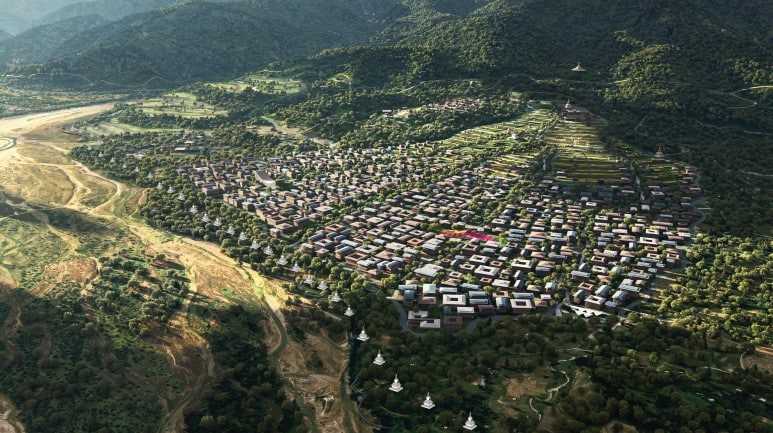
Spread across 532.86 acres, the two industrial parks represent a major push to expand Bhutan’s industrial base, attract investment and create opportunities for domestic enterprises and foreign direct investment (FDI).
While Dhamdum Industrial Park has developed into a diversified industrial centre dominated by Bhutanese enterprises, Norbugang Industrial Park has been positioned as a dedicated hub for ferro-alloy and allied heavy industries, with equal participation from domestic and FDI companies.
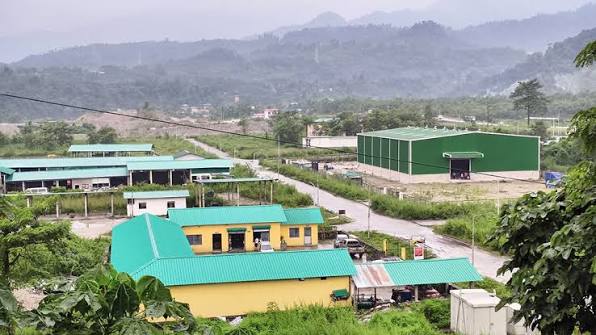
Located along the Dhamdum and Bhudini rivers near the Samtse-Sipsu Highway and the Indian border, Dhamdum Industrial Park is the larger of the two, covering 349 acres across three pockets—A, B and C.
The park currently accommodates 65 industries, of which 22 are operational, 13 are under construction, 24 have yet to begin construction, four are halted during operation or construction, and two are on construction hold.
The industrial park has received Nu 852.32 million in development expenditure, including Nu 305 million during the 11th Five-Year Plan (2013–2018), Nu 459 million during the 12th Five-Year Plan (2018–2023), and an estimated Nu 88 million during FY 2023–24.
Domestic enterprises dominate activity at Dhamdum, with 60 industries owned by Bhutanese investors, accounting for 92 percent of the total. The remaining five industries are FDI companies.
Manufacturing remains the backbone of the park, with 56 industries, or 86 percent, engaged in production activities, while nine operate in the service sector.
Agro and food-based industries form the largest category with 17 industries, followed by 12 industries under the “others” category. Wood and forest-based industries account for 10 industries, while consumer goods and specialty industries and metal and chemical-based industries each have nine industries. Fabrication and engineering industries account for eight industries.
By enterprise size, medium-scale industries dominate with 32 units, followed by 22 small industries, eight large industries and three cottage industries.
The park has 96.06 acres of allocable industrial land, of which 74.46 acres have already been allotted to investors. With 68 industrial plots allocated, the park has achieved an occupancy rate of 77.5 percent. The industrial land lease rate is Nu 3.20 per square foot per annum.
Meanwhile, Norbugang Industrial Park, located along the international boundary and the Samtse-Sipsu Highway, spans 183.86 acres and has been developed specifically for ferro-alloy and allied heavy industries.
The park currently houses 10 industries—five domestic and five FDI companies. Six industries are operational, while four are under construction.
Together, the industries have a planned production capacity of 411.5 MVA. FDI industries account for 270 MVA, representing 65.61 percent of the total planned capacity, while domestic industries account for 141.5 MVA.
Of the total area, 104.1 acres have been allocated to industries, while 44.99 acres have been reserved for essential infrastructure such as roads, drains, utilities and buffer areas. Another 34.77 acres remain available for future allocation.
Infrastructure development at Norbugang has involved awarded contracts worth Nu 871.12 million. Completed works include roads, drainage systems, cable ducts, street lighting, water distribution systems, flood protection structures, the Emergency Management Office (EMO), barracks, watchtowers, boundary walls and a water treatment plant.
The largest infrastructure contract, valued at Nu 489.94 million, covered roads, drains, cable ducts, street lighting and water distribution systems and has been completed.
Other completed works include flood protection infrastructure worth Nu 72.57 million, EMO facilities, barracks and watchtowers worth Nu 13.77 million, a Nu 74.42 million boundary wall, and a Nu 51.87 million water treatment plant.
The remaining major work is the Nu 167.70 million water supply system, which is scheduled for completion on 11 October 2026.
Officials said the two industrial parks have strengthened Samtse’s position as a gateway for industrial growth, providing opportunities for investment while supporting Bhutan’s broader economic transformation.
With land still available for future allocation, the parks are expected to continue attracting industries and expanding Bhutan’s manufacturing and production capacity in the years ahead.
Nidup Lhamo, Samtse