Strengthening trade, improving regional connectivity and expanding cooperation in education, tourism, healthcare and technology were among the key issues discussed at a one-day seminar on India-Bhutan relations held in Thimphu.
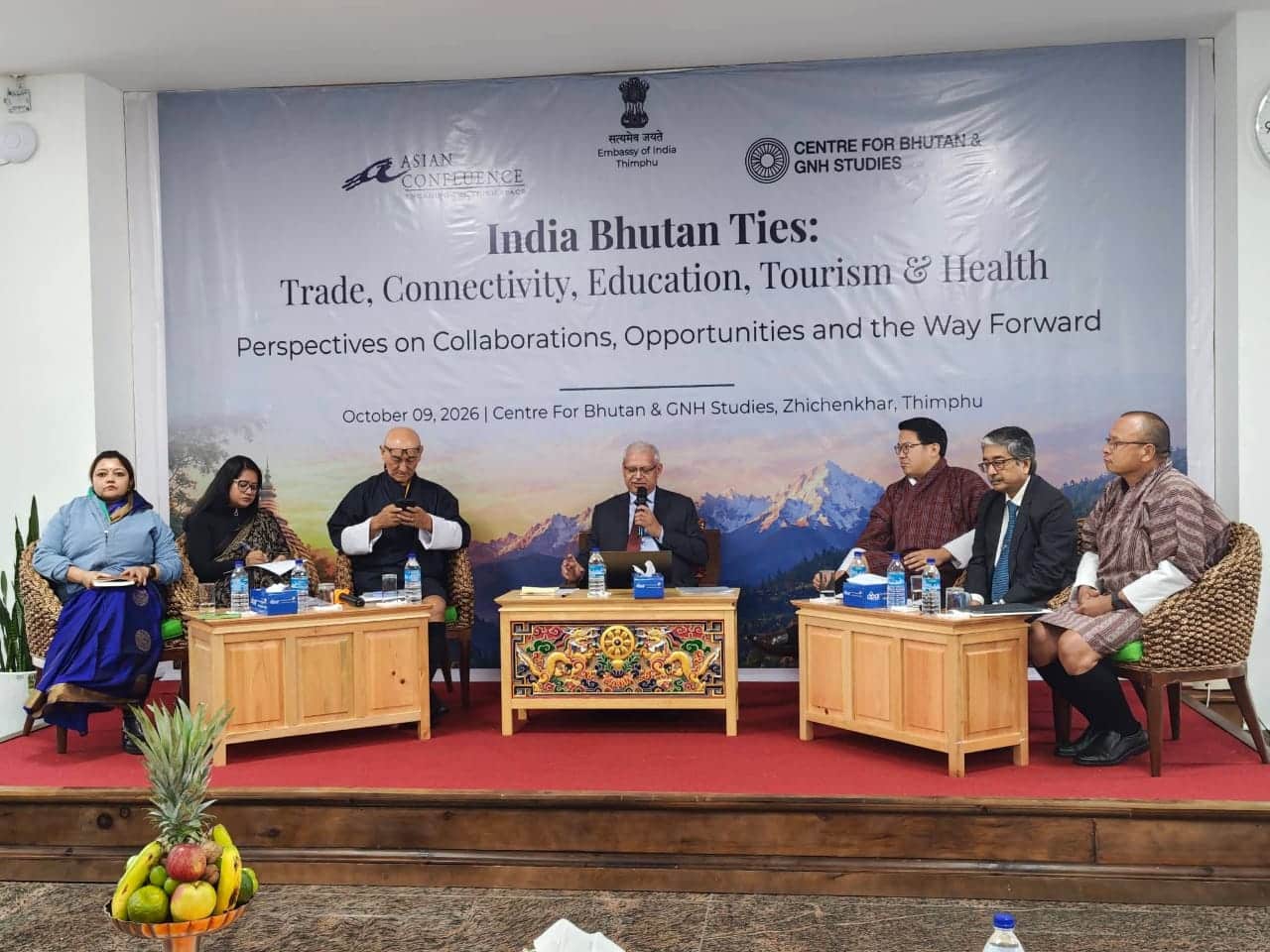
The seminar, titled “India-Bhutan Ties: Trade, Connectivity, Education, Tourism & Health: Perspectives on Collaborations, Opportunities and the Way Forward,” was organised by the Embassy of India in Thimphu, the Centre for Bhutan and GNH Studies (CBS) and the Asian Confluence.
The discussions focused on opportunities to deepen economic engagement between Bhutan and Eastern and Northeastern India, particularly through improved physical connectivity, trade facilitation and cross-border collaboration.
Speaking during a session on “East-North East India and Bhutan: Building the Trade Relationship on Physical Connectivity,” Ambarish Dasgupta, former president of the Bengal Chamber of Commerce and Industry and founder of Intueri Consulting, said commercial ties between Bhutan and India had not developed to their full potential.
He called for greater emphasis on commercial cooperation and suggested that Bhutan explore a shift towards a more trade- and finance-oriented economic model. He also highlighted the potential of digital connectivity in strengthening economic engagement between the two countries.
Medha Bisht, associate professor at South Asian University, emphasised the need for Bhutan to diversify its regional trade corridors and use diplomatic channels to expand market access. She also pointed to challenges associated with local trading networks and the need to improve market accessibility.
Neha Yadav, First Secretary for Trade and Commerce at the Embassy of India in Bhutan, highlighted government-to-government initiatives aimed at facilitating trade. These include frameworks to guide bilateral trade and sector-specific agreements, including the expansion of agricultural products traded between the two countries.
Sonam Tshering Dorji, Director of the Department of Trade under Bhutan’s Ministry of Industry, Commerce and Employment (MoICE), said Bhutan had reviewed its Foreign Direct Investment (FDI) policy and increased the number of trade routes from 18 to 28 as part of efforts to strengthen trade and investment.
Bhutan and India share longstanding relations rooted in historical ties, mutual trust and cooperation across development sectors. India remains Bhutan’s principal trading partner and an important development partner, with collaboration spanning infrastructure, energy, education, healthcare, agriculture and community development.
The geographical links between Bhutan, West Bengal and Northeastern India provide significant opportunities to strengthen cross-border economic activity. Shared ecological, cultural and social connections further support cooperation in trade, tourism and community development.
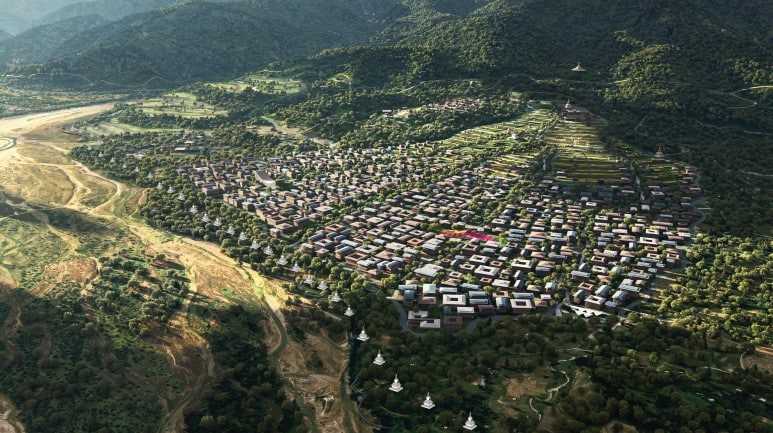
The Gelephu Mindfulness City (GMC) project, initiated under the vision of His Majesty The King, was highlighted as a potential gateway connecting Bhutan with Eastern and Northeastern India. Improved connectivity could support trade, investment, tourism and wider regional economic integration.
The proposed Kokrajhar-Gelephu railway link is another significant initiative expected to strengthen transport connectivity and create opportunities for economic growth. Bhutan also relies on Indian transport routes and customs facilities for bilateral and third-country trade.
As of 2026, more than 80 Project Tied Assistance (PTA) projects and over 570 community development initiatives are underway, covering sectors including infrastructure, transport, healthcare, livestock, agriculture, education, urban amenities and logistics.
Participants also highlighted the potential to expand cooperation beyond conventional trade and infrastructure.
Areas identified for greater collaboration include tourism, educational exchanges, skills development, wellness services, creative industries, medical tourism, academic research, scholarships and technology partnerships between institutions and communities on both sides of the border.
Stronger connections between Bhutan and Northeastern Indian states could create opportunities for students, entrepreneurs, businesses and healthcare providers while supporting local economic development.
The seminar also sought to assess trade potential and identify ways to improve trade facilitation and cooperation with West Bengal and neighbouring Northeastern states.
The Asian Confluence, an Indian think tank based in Northeast India, has been working with CBS to promote dialogue and strengthen cooperation between Bhutan and India.
The seminar provided a platform for policymakers, academics and trade representatives to discuss existing challenges and identify practical measures to advance bilateral cooperation.
As Bhutan and India continue to strengthen their longstanding partnership, participants underscored the importance of translating connectivity projects and policy initiatives into tangible economic opportunities, with stronger commercial ties and regional collaboration playing a central role in the partnership’s next phase.
Sangay Rabten, Thimphu