

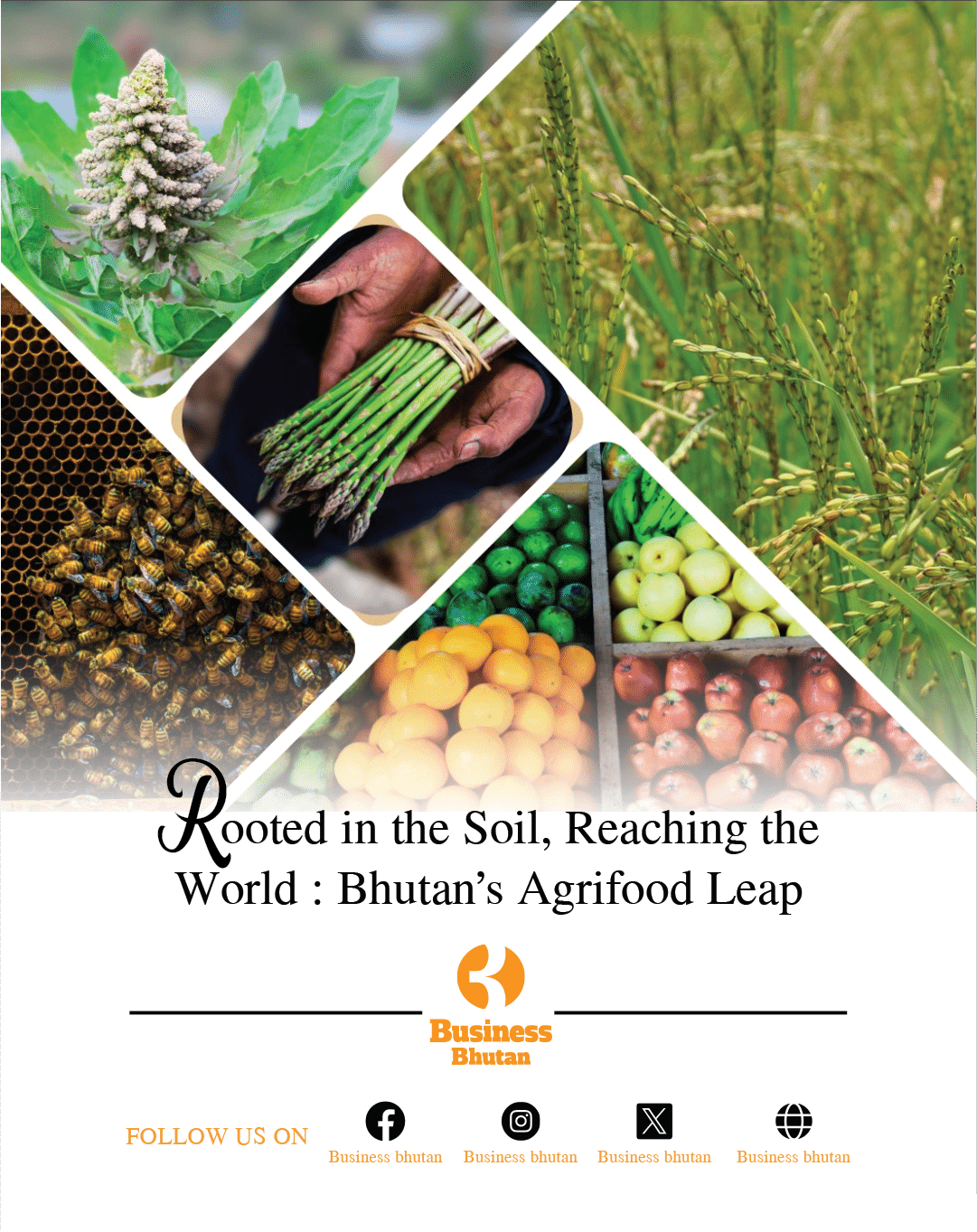
2025 has been a transformative year for Bhutan’s agriculture and livestock sector, defined by innovative initiatives, strategic partnerships, and climate-smart interventions. The Ministry of Agriculture and Livestock (MoAL) has reinforced Bhutan’s commitment to sustainable food systems, resilient rural livelihoods, and biodiversity conservation, advancing the nation’s vision for an inclusive, future-ready agrifood economy.
The year began with a milestone in post-harvest management: the Buelsa Integrated Cold Store in Zhemgang was inaugurated on January 3. With a capacity of 180 metric tonnes, developed collaboratively by MoAL, the Food Corporation of Bhutan, UNDP, GEF-LDCF, and the Royal Government, the facility reduces post-harvest losses, improves market access, and enhances farmers’ incomes, modernizing Bhutan’s agricultural value chains.
Trade and market linkages were further strengthened through potato trade facilitation centres and agri-trade fairs in Bumthang and Samdrup Jongkhar, connecting farmers to regional and national markets and improving profitability and sustainability.
Capacity building remained central to MoAL’s agenda. The Department of Livestock conducted refresher training for veterinary paraprofessionals under the Pandemic Fund Project in Phuentsholing and Gelephu, boosting preparedness for animal health emergencies. In June, the first phase of Training of Trainers for the Pig and Poultry Farm Registration System was completed, paving the way for a nationwide rollout. The launch of the Bhutan Standards for Animal Feeds 2025 in September enhanced livestock productivity and ensured quality, efficient practices.
A standout initiative was the One-Child, One-Egg Program, launched in February in schools nationwide, including Monggar, by the Prime Minister and FAO Director-General Dr. Qu Dongyu. The program combats child malnutrition while supporting local poultry farming and rural livelihoods, embodying Bhutan’s holistic vision of development and well-being.
In March, MoAL unveiled the Bhutan Agrifood Sector Strategy 2034, setting a long-term framework for resilient, sustainable, and inclusive growth aligned with national and global priorities. The National Crop and Livestock Insurance Scheme, launched later in the year, provided farmers with protection against climate risks, disasters, and production shocks, boosting confidence and investment in agriculture.
Bhutan’s rich biodiversity also shone in 2025. The National Biodiversity Centre discovered a new orchid species, Zeuxinedrukyulensis, bringing the national total to 499. MoAL facilitated eight Access and Benefit Sharing (ABS) agreements, ensuring ethical use of biological resources and channeling benefits to local communities, while several bioprospecting-based products were launched, highlighting Bhutan’s growing nature-based economy.
Climate-resilient agriculture was emphasized through participation in forums such as the Bhutan Conference on Climate and Resilient Agriculture, the UN Food Systems Summit Stocktake in Ethiopia, and the World Food Forum 2025 at FAO headquarters in Rome. The Accelerate Bhutan’s Job Transformation through Renewable Natural Resource Value Chains Project, supported by the World Bank, advanced sustainable rural development and job creation, demonstrating agriculture’s dual role in economic growth and climate adaptation.
International collaborations expanded with partners including FAO, SNV, JICA, the EU, France, Israel, India, and BIMSTEC. A Technical Cooperation MoU with India reinforced bilateral ties, while Bhutan hosted the Twelfth Annual Meeting of the Asian and Pacific Network for Testing of Agricultural Machinery (ANTAM), reflecting its growing regional influence. Mechanization and market access improved through mini power tillers, the opening of Bhutan Product Outlets in Guwahati and Siliguri, and the launch of Inno-Market, fostering youth engagement and enhancing productivity.
As 2025 concludes, MoAL stands at the forefront of Bhutan’s journey toward a resilient, inclusive, and sustainable agrifood system. From infrastructure and nutrition programs to biodiversity conservation and international partnerships, the year strengthened rural livelihoods, secured food systems, and positioned Bhutan as a regional leader in sustainable agriculture.
Sangay Rabten
From Thimphu