

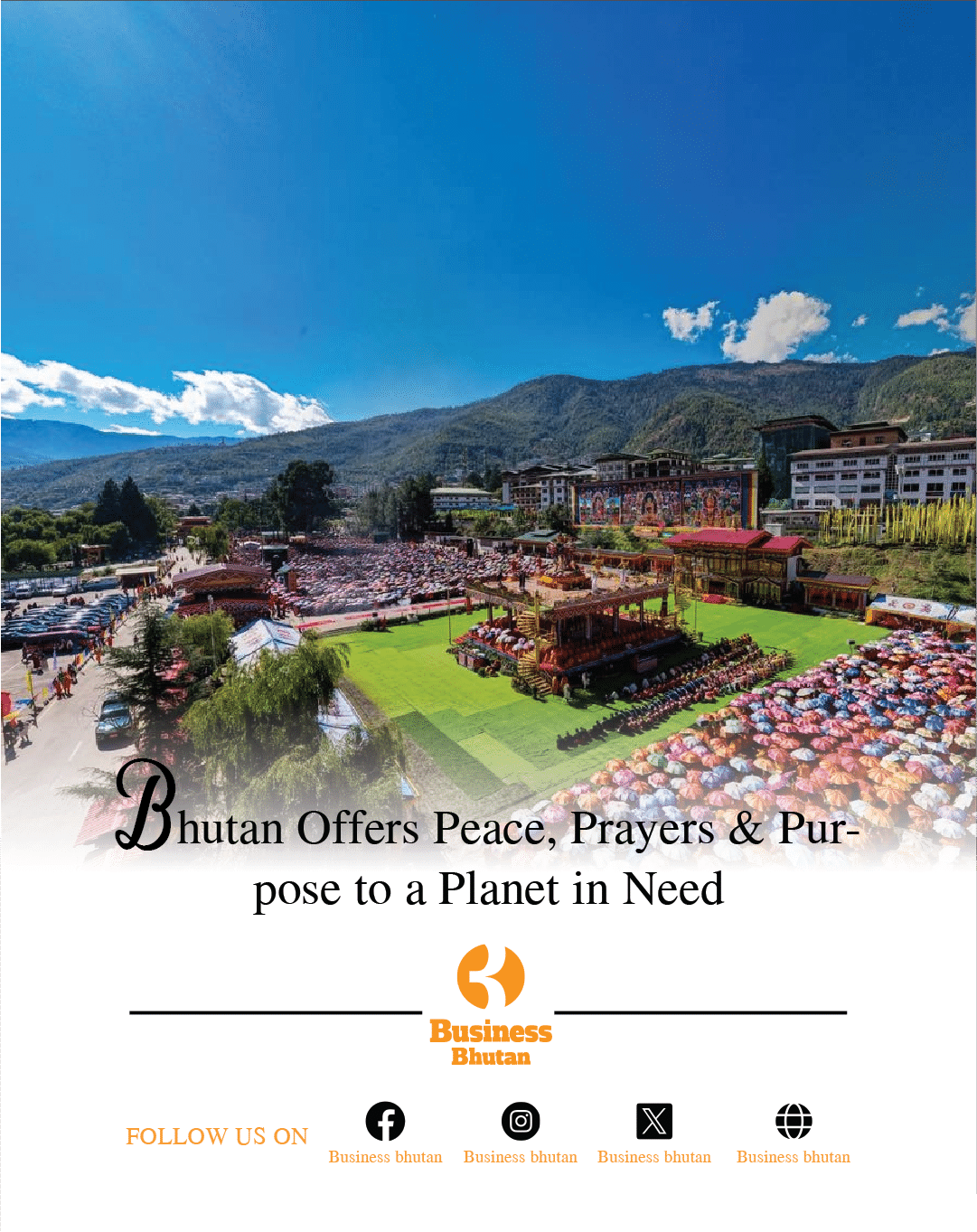
In what was one of the greatest moments for Bhutan, the Global Peace Prayer Festival (GPPF) 2025 concluded on a high note, reaffirming Bhutan’s growing role as a global advocate for peace, mindfulness, and compassionate leadership in an increasingly divided world. The multi-day festival brought together spiritual leaders, policymakers, youth representatives, artists, scholars, and peace advocates from across Bhutan and around the world.
Held against the backdrop of Bhutan’s philosophy of Gross National Happiness (GNH), the festival served as a platform to reflect on peace not merely as the absence of conflict, but as a living practice rooted in inner wellbeing, social equity, cultural harmony, and environmental balance.
The festival featured a series of keynote addresses, panel discussions, interfaith dialogues, cultural performances, and community engagements. Participants explored pressing global challenges—including conflict, climate change, mental health, inequality, and digital disruption—through the lens of mindfulness, ethics, and collective responsibility.
Speakers highlighted Bhutan’s development philosophy as a relevant model in a time when many societies are grappling with polarization and uncertainty. Several international delegates noted that Bhutan’s emphasis on values-based governance, environmental stewardship, and cultural preservation offers important lessons for sustainable peace building.
A key highlight of the 2025 edition was the strong participation of Bhutanese and international youth. Dedicated youth forums and dialogues focused on empowering young people as agents of peace, innovation, and social cohesion. Discussions emphasized the need to equip youth with not only technical skills, but also emotional intelligence, ethical grounding, and a sense of global citizenship.
Youth representatives shared initiatives ranging from grassroots peace campaigns to digital advocacy and climate action, reinforcing the message that peace building must be intergenerational and forward-looking.
Bhutanese cultural performances—traditional dances, music, and rituals—formed an integral part of the festival, underscoring culture as a powerful medium for unity and healing. Interfaith prayers and reflections highlighted shared human values across spiritual traditions, reinforcing mutual respect and understanding.
Artists and performers conveyed messages of compassion, resilience, and coexistence, reminding audiences that peace is as much an emotional and cultural experience as it is a political or institutional goal.
Beyond dialogue, the festival emphasized practical pathways to peace. Workshops and breakout sessions explored topics such as mindful leadership, community mediation, mental wellbeing, education for peace, and ethical use of technology. Participants stressed that peace must be translated into policies, institutions, and everyday practices.
Environmental sustainability also featured prominently, with discussions linking peace to harmony with nature. Bhutan’s commitment to environmental conservation was repeatedly cited as integral to long-term global stability.
The 2025 festival concluded with a collective call to action, urging individuals, institutions, and nations to cultivate peace from within and extend it outward through just systems, inclusive development, and responsible leadership.
As participants departed, the overarching message was clear: in a world facing complex and interconnected crises, peace cannot be postponed or delegated—it must be consciously nurtured. Bhutan’s hosting of the festival reinforced its position as a moral voice on the global stage, offering a reminder that enduring peace begins with mindful choices, shared responsibility, and compassion for all.
The festival is expected to continue as a recurring global platform, strengthening Bhutan’s engagement in international peace discourse while inspiring practical action at home and abroad.
Tashi Namgyal
From Thimphu