

From farmers in the southern foothills to young people and elders in the east and west, Project 108 is transforming gratitude into a national offering of faith, unity and devotion—and giving Bhutan a moment to share with the world.
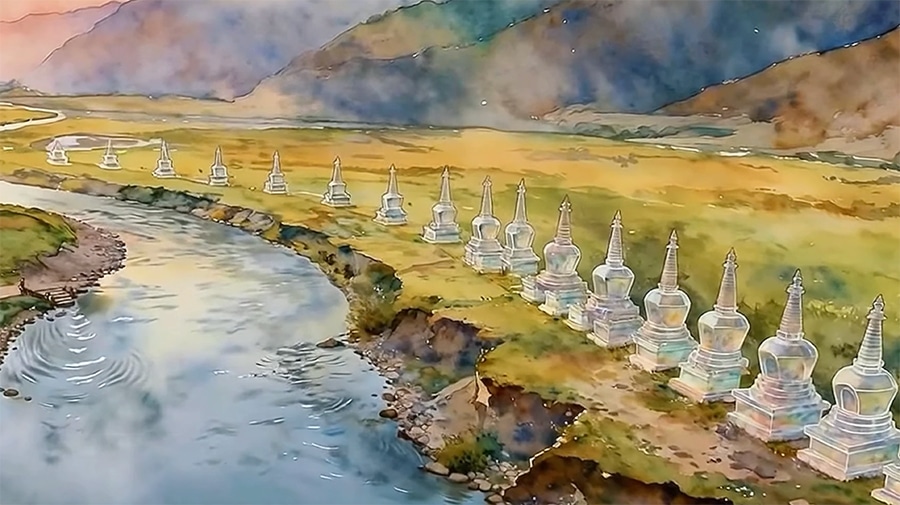
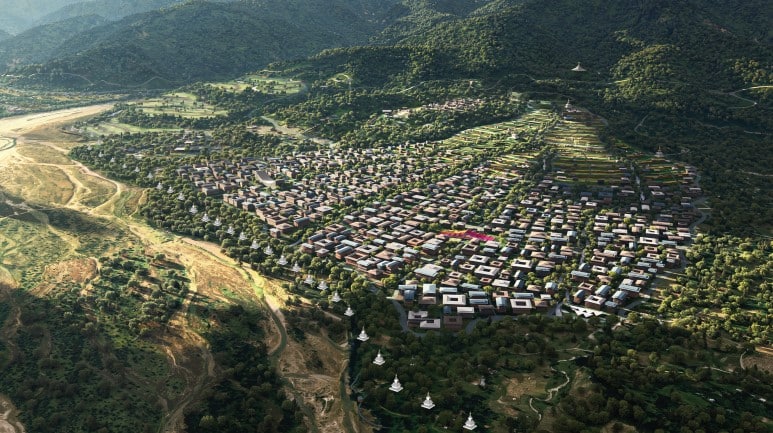
On November 1, 2026, 108 Jangchub Chortens will rise together at Gelephu Mindfulness City (GMC), turning a King’s vision into a sacred offering of an entire nation. Thousands of Bhutanese are preparing to travel from across the country to witness the historic undertaking, while communities in Gelephu ready themselves to welcome the visitors. For many, the journey is about far more than reaching a destination. It is an opportunity to offer their prayers, express their gratitude to His Majesty the King and become part of a moment that will live in Bhutan’s collective memory.
Behind the preparations, the journeys and the acts of generosity is a profound sense of gratitude to His Majesty King Jigme Khesar Namgyel Wangchuck. People see Project 108 as an extraordinary opportunity to contribute to something larger than themselves: a spiritual undertaking rooted in Buddhist faith, carrying the aspirations of a nation and extending its significance to the wider world.
For Tshering Gyapo, 67, a retired civil servant from Thimphu, the historic scale of the undertaking is matched by its spiritual significance. He believes the gathering will unite generations of Bhutanese, bringing people from across the country and the world together for a common purpose.
“This event will be one of the most impactful in modern Bhutanese history, spanning three generations of Bhutanese people. Its magnanimity lies in bringing people from across the globe to one place, on one day, for one special event. We owe our fervent prayers and gratitude to His Majesty the King for this benevolent act for the welfare of all sentient beings on earth,” he says.
For Tshering, the initiative also brings back a memory that has stayed with him for a decade. In 2016, he recalls seeing His Majesty personally carry one of the 55-kilogram boxes up to Cheri Monastery in Dodeyna, reached by an uphill walk from the road.
“That moment made me think: this is what a Dharma King would do. What is happening in Gelephu is beyond words. We are immensely blessed to be citizens of a country with such an extraordinary leader,” he says.
For Bhutan’s younger generation, Project 108 is also a reminder that the future of the country rests on the shoulders of its people.
Pema Tobgay, 27, a Gyalsung graduate from Pemagatshel, sees the raising of 108 Jangchub Chortens in a single day as a powerful demonstration of what collective determination can achieve under the leadership of His Majesty.
“The raising of 108 Jangchub Chortens in a single day is a testament to what we can achieve when we come together as one people under the leadership of such a benevolent King. Young people like me will draw inspiration from this initiative and strive to live up to His Majesty’s vision, shouldering the responsibilities entrusted to us, however big or small,” he says.
The opportunity to participate in a historic undertaking has also inspired people to turn gratitude into practical acts of generosity.
In eastern Bhutan, Sonam Zangmo, 46, a businesswoman from Samdrup Jongkhar, sees November 1 as an occasion to give something back to a King whose vision, she says, has given the people a rare opportunity to become part of history.
Recognising that thousands of visitors will travel to Gelephu and that accommodation may be difficult along the way, she has offered two three-bedroom flats in her building free of charge to people travelling through Samdrup Jongkhar during the event.
“This important event is bringing people from all corners of the country to Gelephu, something we have never experienced on this scale before. I know there will be logistical challenges for travellers. As a small expression of my gratitude to His Majesty, who has given us so much and now given us the opportunity to be part of history, I am offering two three-bedroom flats free of charge to those travelling through Samdrup Jongkhar,” she says.
For Pem Dorji, 50, a teacher from Punakha, the significance of Project 108 lies in the values it represents. He believes the chortens, alongside the development of GMC, will stand as a lasting reminder that progress must be measured not only in material achievements but also in compassion, respect for nature and responsibility towards others.
“Development is not merely about material gains. It must be grounded in values, care for the community, respect for nature and compassion for all sentient beings. The development of GMC, alongside the 108 Jangchub Chortens, will serve as a constant reminder of these values for younger generations as they grow up and assume their responsibilities,” he says.
For 66-year-old Nimchu from Rukha Chiwog under Adha Gewog in Wangdue, the timing presents a difficult choice. The harvest season is an important period for farmers, when every day matters. Yet the opportunity to witness the raising of the 108 chortens is too precious to pass up.
“It is a golden opportunity in our lifetime. We and the world will be witnessing the fruition of a vision that only our King could conceive. We are going to offer our prayers, express our gratitude and become part of history,” he says.
For Sangay Wangmo, a teacher, the occasion is also an opportunity to pass on an experience of lasting value to the next generation.
“I have always been grateful to His Majesty and to our country for everything. To hear about this event and now have the opportunity to witness it is truly extraordinary. This is not merely a construction project; it is a historic moment for our people,” she says.
Her message to His Majesty reflects the deep personal meaning she attaches to the initiative.
“Your Majesty, thank you for this noble and meaningful initiative. The construction of the 108 chortens reflects Your Majesty’s boundless compassion, wisdom and unwavering dedication to the peace and happiness of our nation and the world. As a Bhutanese citizen and teacher, I feel truly blessed to witness such a precious contribution to the world,” she says.
Kinley Samal, a health worker from Samtse, views the chortens through the lens of his profession, where compassion and care for others are central to everyday life.
“I am proud to be a Bhutanese guided by a leader like His Majesty the King. In my profession, caring for people is not only about treating physical illness; it is also about kindness, respect and compassion. His Majesty embodies these values, and the 108 chortens remind us to practise them in our own lives,” he says.
The significance of Project 108 extends beyond Bhutan’s borders. For Rinchen Wangchuk, a Buddhist monk, the initiative offers an opportunity to strengthen the bonds of the Dharma and demonstrate how spiritual values can remain central to a country’s development.
The participation of Buddhist masters from different countries, he says, reinforces Bhutan’s connections with the wider Buddhist world and highlights its heritage as a Vajrayana Buddhist Kingdom.
“We cannot fully express how grateful we are to His Majesty for taking this initiative to strengthen the Dharma and reaffirm the principles of love, compassion and unity in the world,” he says.
The prayers accompanying the undertaking also reach beyond the immediate event. For 81-year-old Kinzang Thinley from Thimphu, the significance of the 108 Jangchub Chortens is inseparable from the aspiration for peace and well-being for all sentient beings.
In his evening prayers, he offers a heartfelt wish: “May the 108 Jangchub Chortens stand as timeless symbols of faith, compassion and Bhutan’s enduring spiritual heritage. May this sacred undertaking become a cause for universal peace, boundless compassion and the ultimate well-being of all sentient beings.”
While thousands prepare to gather in Gelephu, the spirit of the undertaking is already visible along the Wangdue–Tsirang–Gelephu highway.
All 12 gewogs under Tsirang Dzongkhag have erected 108 prayer flags each at suitable locations along the Wakleytar–Tsirang Darachu stretch. The flags, fluttering along the route, represent a collective act of devotion and a shared wish for the success of the national initiative.
Passang Theeng Tamang, a gup, says the prayer flags carry the hopes of the communities that have joined the effort.
“With hundreds of prayer flags fluttering along the highway, we pray that the winds carry the aspirations for peace across the globe and help fulfil this national initiative under the profound guidance of His Majesty the King,” he says.
In Gelephu, meanwhile, the preparations have become a community undertaking in their own right. Residents, businesses and volunteers are working to accommodate the expected influx of visitors, with local households and establishments contributing in ways that reflect the spirit of Druk gi Damtsi—a sacred commitment to the country and its people.
Gang Ram Ghalley, 38, from Samtenling in Gelephu, says the preparations demonstrate how a national vision can bring people together long before the historic day arrives.
Residents have erected tents at different locations to accommodate visitors, while hotels have added beds to increase their capacity. Restaurants and community kitchens are preparing to serve the anticipated crowds, with food courts and designated food-stall areas being organised at convenient locations.
For Ghalley, these efforts are as important as the preparations at the construction site. The success of the initiative depends not only on those directly involved in raising the chortens but also on the countless people working behind the scenes to make the gathering possible.
A place to sleep, a meal offered to a traveller, a prayer flag raised along a highway or a journey undertaken despite the demands of daily life may appear modest in isolation. Together, they reveal the breadth of public participation in an undertaking that has given people across Bhutan a common purpose.
The hospitality also reflects the bonds among communities in southern Bhutan, where people from different cultural and linguistic backgrounds live and work alongside one another. As Gelephu prepares to welcome the nation, these acts of generosity are helping turn the city into a meeting place for faith, friendship and shared aspiration.
When the 108 Jangchub Chortens rise on November 1, the moment will be measured not only by the structures completed or the scale of the gathering. It will also be remembered through the people who travelled from distant villages, the prayers offered by elders, the hopes carried by young Bhutanese, and the generosity of those who opened their homes and gave their time.
For many, the deepest significance lies in the opportunity His Majesty’s vision has created: to move beyond being spectators of history and become participants in it.
One King’s vision has brought 108 sacred structures into the heart of a national undertaking. Across Bhutan, people are responding with their prayers, their labour, their generosity and their gratitude. And as they prepare to gather in Gelephu, they carry a shared aspiration—that the chortens will stand for generations as symbols of faith, compassion, unity and Bhutan’s contribution to the spiritual well-being of the world.
Tashi Namgyal and Nidup Lhamo, Thimphu