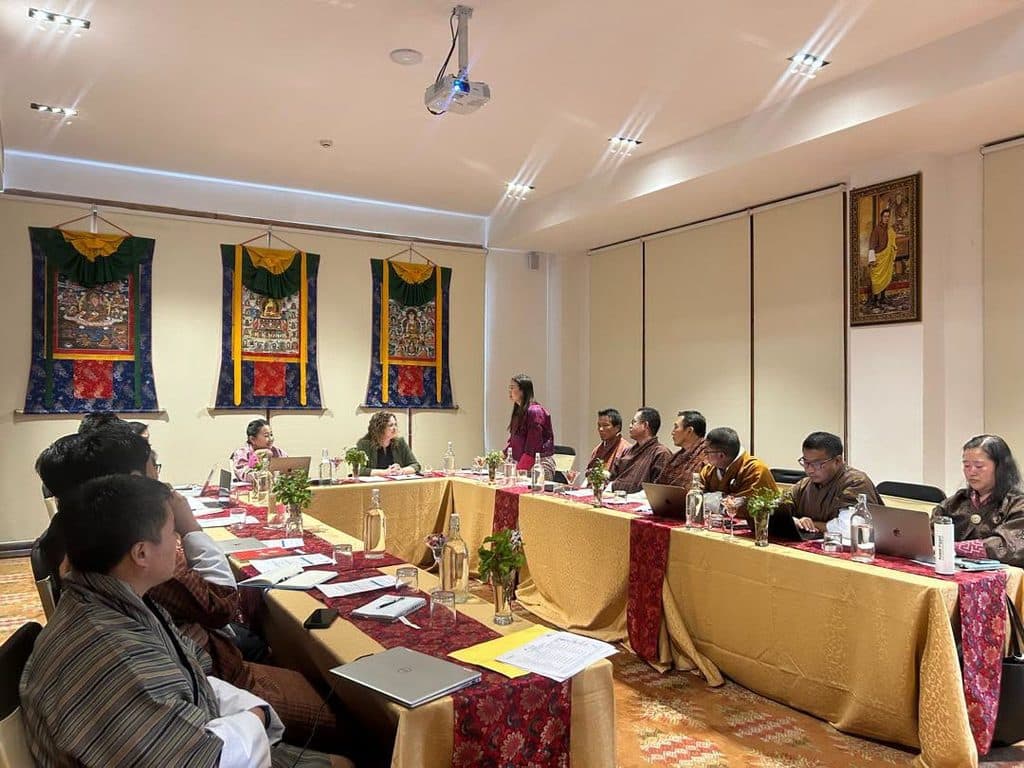


The National Land Use Zoning (NLUZ) initiative is emerging as a pivotal planning tool designed to oversee and regulate land development and use in Bhutan. According to Geley Norbu, Director of the Department of Land Administration and Management (DOLAM), NLUZ plays a crucial role in managing urban growth, safeguarding the environment, ensuring public safety, and fostering the overall well-being of citizens.
Achieving behavioral transformation in land use, however, is a more protracted process compared to structural changes, explained Geley Norbu. He noted that significant organizational changes often begin with structural modifications. “Transformative endeavors frequently start with altering the organizational framework, renaming departments, or merging units,” he said.
However, for behavioral transformation, it is essential to unite people and entities through strategic projects that everyone has a vested interest in. Geley highlighted the Gelephu Mindfulness City project, initiated by His Majesty the King, as an exemplary initiative in this regard.
The NLUZ exercise, initiated by NLCS, aims to provide a cohesive framework for the sustainable utilization of Bhutan’s finite land and natural resources. Historically, various agencies have utilized these resources for diverse purposes on a first-come, first-served basis. Despite their good intentions, these efforts have often fallen short of creating a sustainable framework.
The importance of comprehensive land use planning is underscored in several key documents, including the Land Act 2007, the Economic Development Policy (EDP) 2016, Bhutan’s National Adaptation Program of Action (NAPA) 2006, and the Bhutan National Human Settlement Strategy 2017. A study by the United Nations Convention to Combat Desertification (UNCCD) further emphasizes that countries lacking NLUZ systems incur an annual waste of about 9% of their Gross Domestic Product (GDP).
Progress towards NLUZ has already begun, with the production of a baseline report in collaboration with 12 agencies. This report draws from 45 databases and 17 fundamental datasets, involving over 30 agencies. Despite anticipated challenges, Geley stated that the NLUZ project promises to be a worthwhile endeavor.
“Beyond achieving the specific objectives of NLUZ, the project holds the potential to foster support and collaboration across numerous agencies and individuals, thereby catalyzing the much-needed behavioral transformation,” Geley added.
The NLUZ exercise is expected to revalidate and delineate prevailing designated areas and macro land uses in consultation with cross-agency stakeholders. This comprehensive approach is critical given that only 7% of Bhutan’s total geographical area is arable land—664,000 acres. Out of this, 500,000 acres are registered on freehold, while 13,776 acres are on leasehold for commercial uses, leaving just over 1.58% or 150,224 acres of arable land at the state’s disposal.
Improper land use management, in the absence of an integrated and reliable geospatial data repository, coupled with weak institutional structures, has been a significant issue. The Bhutan NLUZ report 2023 also points to inadequacy in cross-sectoral engagement for land use harmonization as a contributing factor to conflicts and predicaments.
As Bhutan continues to navigate these challenges, the NLUZ initiative stands out as a critical step towards sustainable land use management, aiming to harmonize efforts across sectors and ensure the responsible utilization of the country’s limited land resources.
By Sherab Dorji, Thimphu