

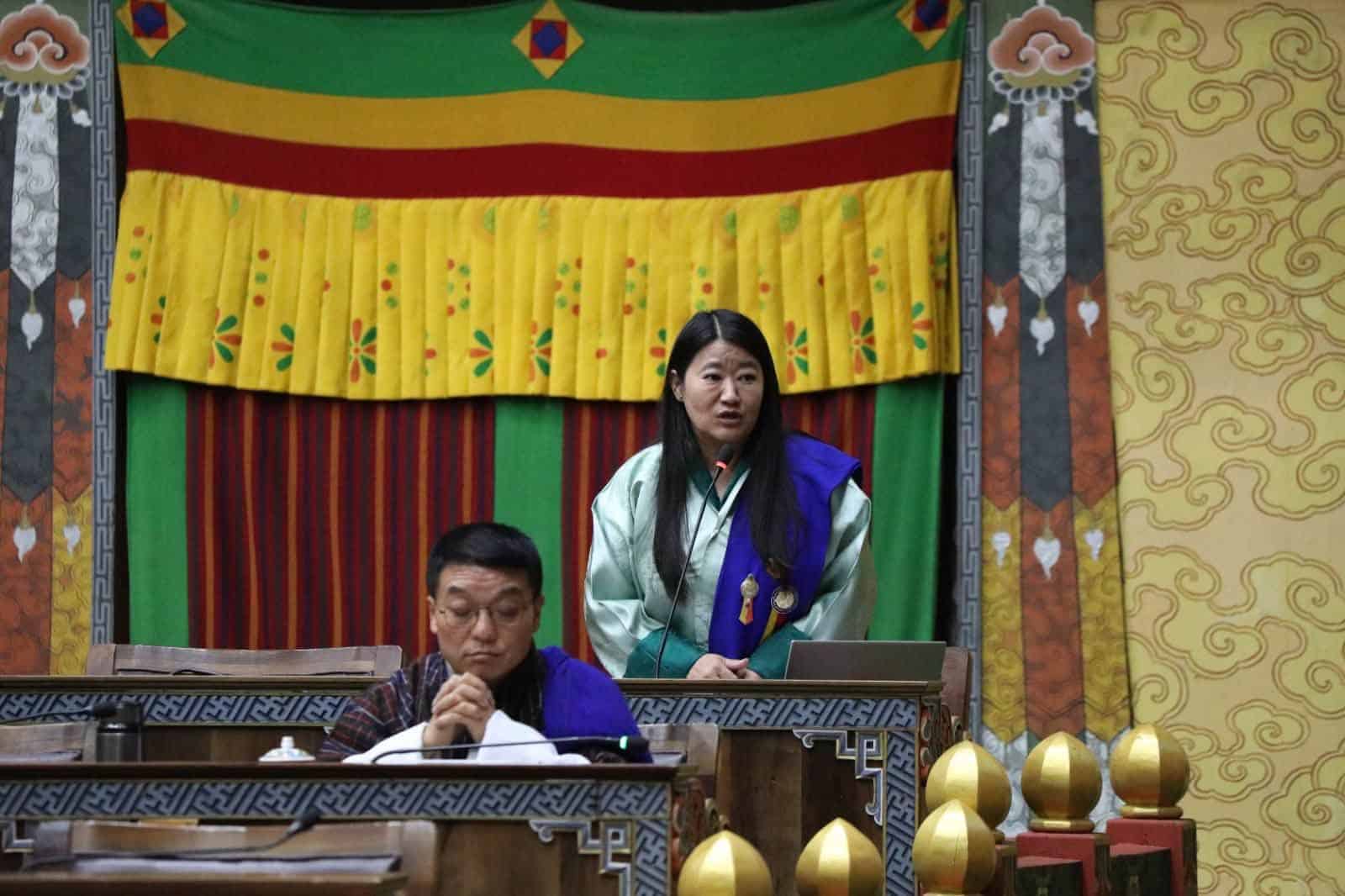
The National Assembly has adopted a motion calling for stronger child protection mechanisms, more effective prevention of sexual violence against children and comprehensive reforms to strengthen justice for young victims.
The motion, introduced by Member of Parliament for Kengkhar-Weringla, Dorji Wangmo, brings renewed parliamentary attention to the effectiveness of Bhutan’s existing child protection systems and the urgent need to identify and address gaps that leave children vulnerable to abuse and violence.
Moving the motion, Dorji Wangmo recalled the recent incident of the death of a 12-year-old child at Kabesa, Thimphu and said the tragedy should compel Parliament, government agencies and every institution entrusted with protecting children to undertake an immediate and honest examination of the safeguards in place.
She said the incident should not be viewed in isolation, pointing out that there had been earlier cases that raised serious questions about whether existing preventive and protective mechanisms were delivering the results expected of them.
“The question is where is the gap?” was the central concern underlying her motion.
She called for Parliament and relevant institutions to look beyond the existence of laws and policies and examine whether they were being effectively implemented, whether institutions were adequately equipped and whether warning signs were being recognised and acted upon before a child suffered harm.
The MP emphasised that child protection must begin long before a crime is committed. Preventing abuse, she said, requires a system that can identify risks, intervene in time, coordinate responses and ensure that children are protected in their homes, communities, schools and institutions.
Citing the Constitution and existing legislation, she reminded the House that protecting children is not merely a policy preference but a fundamental responsibility of the State and society.
While Bhutan has enacted laws to protect children and punish offenders, she questioned whether the existing institutional arrangements, enforcement mechanisms and preventive measures were sufficiently effective.
Sexual violence, she said, is a grave violation of human dignity, with consequences extending far beyond the immediate victim to families and communities. The response, therefore, must go beyond punishment and address the failures that allow such crimes to occur.
Dorji Wangmo said lawmakers had a solemn responsibility to ensure that the country’s legal and institutional frameworks were strong enough to protect children. Legislative reforms and preventive action, she stressed, must go hand in hand.
Her recommendations were anchored on two broad areas: strengthening accountability for prevention and child safeguarding, and undertaking comprehensive legislative reforms.
On prevention, she called for more effective crime prevention mechanisms and timely intervention, supported by stronger coordination among agencies responsible for child protection.
She also proposed establishing a dedicated Child Protection Service to strengthen the institutional response, improve coordination and ensure that children at risk receive timely attention and protection.
Another major concern was the capacity of investigative agencies. She called for enhanced investigation and forensic capabilities to ensure that cases involving sexual violence against children are handled professionally, sensitively and effectively.
The MP also underscored the importance of sustained public awareness and advocacy, saying that child protection cannot be left to law enforcement agencies alone. Families, communities, schools and institutions must understand their responsibilities and be equipped to recognise and report abuse.
She further called for effective implementation of the Sex Offender Registry, emphasising that existing mechanisms must translate into meaningful safeguards rather than remain provisions on paper.
Support for survivors and their families was another key recommendation. Children who experience sexual violence require more than legal remedies. They need appropriate medical, psychological, social and institutional support to recover and rebuild their lives.
On the legislative front, Dorji Wangmo called for a holistic review of the legal frameworks governing child protection, rape and sexual offences to identify weaknesses, inconsistencies and gaps that may undermine prevention, investigation, prosecution and justice.
She proposed that the review findings be presented and necessary amendments introduced during the next session of Parliament.
The motion places particular emphasis on the need to examine the entire child protection chain, from prevention and early identification to reporting, investigation, prosecution and rehabilitation. Strengthening one part of the system while leaving weaknesses elsewhere, she implied, would not provide the comprehensive protection children deserve.
“Children are protected not just by the severity of laws alone, but by a system,” she said, underscoring that the effectiveness of child protection depends on institutions working together and taking responsibility.
She cautioned that Parliament had both the responsibility and the opportunity to act now, rather than wait for another tragedy to expose shortcomings in the system.
The National Assembly supported the motion, signalling a collective commitment to examine the existing safeguards and pursue necessary improvements.
The government will present an action taken report during the next session, outlining the measures undertaken in response to the recommendations.
Tashi Namgyel, Thimphu