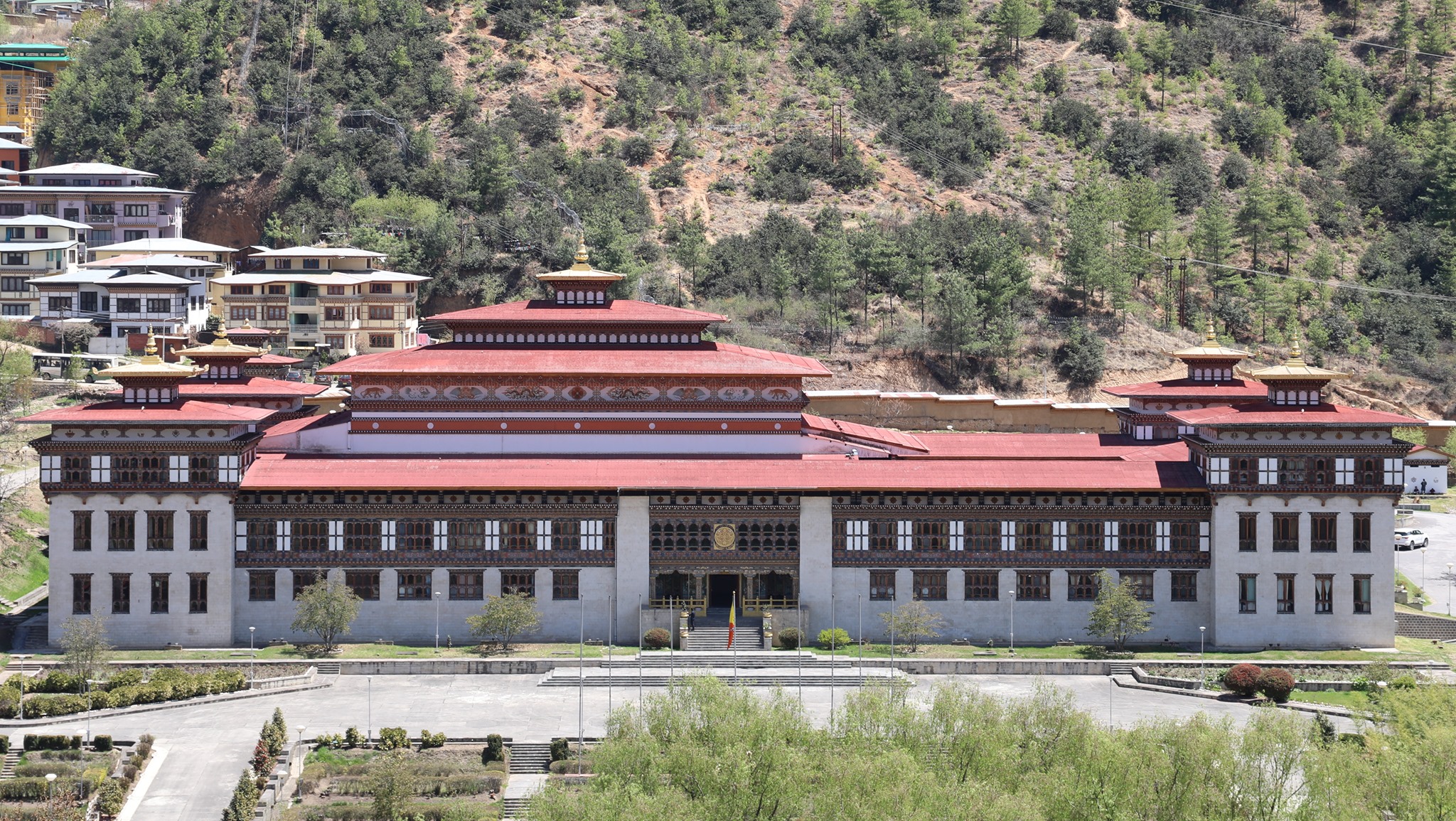
The Ministry of Foreign Affairs and External Trade (MoFAET) is facing mounting challenges due to a growing shortage of office space, as it continues to operate from the National Assembly building – making it the only ministry currently housed within the premises. The situation, officials say, is no longer sustainable and is beginning to affect both day-to-day operations and the ministry’s broader diplomatic functions.
During the ministry’s Mid-Term Review (MTR) of the 13th Five-Year Plan, senior officials highlighted that existing office facilities are increasingly inadequate to meet expanding institutional responsibilities. Over the years, as MoFAET’s mandate has evolved and staffing levels have grown, the demand for workspace has outpaced available infrastructure. This mismatch has created not only logistical constraints but also deeper operational inefficiencies.
The pressure to relocate has intensified, with the National Assembly of Bhutan urging the ministry to vacate its current premises. As the legislative body requires additional space for its own functions, MoFAET’s continued presence has become a point of concern, adding urgency to the need for a long-term solution.
At the heart of the issue is the critical role that physical workspace plays in ensuring effective governance. Adequate office space is not merely a matter of convenience – it is fundamental to productivity, coordination, and institutional coherence. Ministries such as MoFAET rely heavily on close collaboration between departments, frequent consultations, and the ability to respond swiftly to international developments. When teams are physically fragmented or operating in cramped conditions, communication slows, coordination suffers, and decision-making becomes less efficient.
Currently, MoFAET’s departments and divisions are dispersed across multiple locations, further complicating operations. The Consular Affairs Department, for instance, is housed above the Bhutan Chamber of Commerce and Industry (BCCI) office in Changangkha, while the Department of Economic and Tech Diplomacy remains within the National Assembly building but is expected to relocate soon due to ongoing renovations. This geographic fragmentation has created practical challenges in convening meetings, sharing information, and maintaining cohesive workflows.
Foreign Affairs and External Trade Minister Lyonpo DN Dhungyel acknowledged these constraints, noting that the shortage of space – especially with the recruitment of new officers has made it necessary to relocate certain departments. However, such temporary arrangements have introduced additional inefficiencies, as staff must often travel between locations for routine coordination, resulting in lost time and reduced productivity.
The dispersed setup has also limited the ministry’s ability to carry out its diplomatic responsibilities effectively. As the country’s primary institution for managing foreign relations, MoFAET frequently hosts international delegations, conducts high-level meetings, and engages in sensitive negotiations. Inadequate and fragmented office facilities make it difficult to provide an environment that reflects the professionalism and stature expected of a foreign ministry. This, in turn, can subtly affect the quality of engagement with international partners.
Beyond logistics, the issue also has implications for staff morale and organizational culture. A well-designed, centralized workspace fosters collaboration, strengthens team cohesion, and enhances overall job satisfaction. Conversely, overcrowded or scattered offices can lead to frustration, communication gaps, and a sense of disconnection among employees. For a ministry that must operate with precision and unity, such challenges can have far-reaching consequences.
To address these concerns, MoFAET has recommended expediting the construction of a dedicated Secretariat that would house all departments and divisions under one roof. Such a facility would not only resolve current space constraints but also significantly improve coordination, streamline workflows, and enhance institutional efficiency. A centralized office would enable quicker decision-making, better resource management, and a more integrated approach to policy implementation.
Prime Minister Dasho Tshering Tobgay has acknowledged the issue, stating that the government will examine possible solutions. These include both long-term options, such as constructing a new office complex, and short-term measures like identifying temporary premises to ease immediate pressures.
MoFAET currently comprises four departments – Bilateral Affairs, Multilateral Affairs, Protocol and Consular Affairs, and Economic and Tech Diplomacy – along with two divisions: Support Services and Planning and Public Diplomacy. As these units continue to expand in response to Bhutan’s growing international engagement, the need for a functional and unified workspace will only become more pressing.
Ultimately, the ministry’s space constraints highlight a broader lesson about governance: effective institutions require not just clear mandates and skilled personnel, but also the physical infrastructure to support their work. Without adequate space, even the most capable organizations can struggle to perform at their full potential. Officials say addressing MoFAET’s current challenges will therefore be essential not only for improving internal efficiency but also for strengthening Bhutan’s engagement on the global stage.
Sangay Rabten, Thimphu