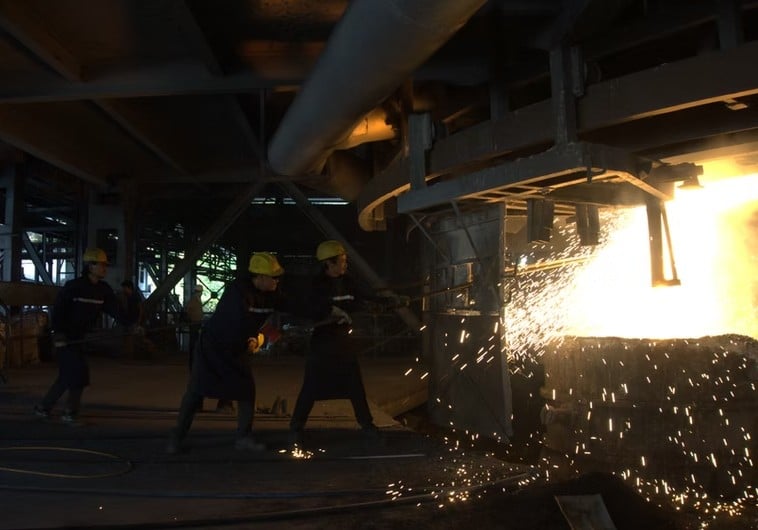


Bhutan’s industrial sector made steady and structured progress during the 2025–2026 fiscal year, supported by regulatory reforms, improved business services, and rising investor confidence, according to the Annual Industry Report 2025–2026 released by the Department of Industry under the Ministry of Industry, Commerce and Employment.
As of 20 June 2026, Bhutan recorded 31,952 active industrial licences, reflecting continued expansion in enterprise activity across the country. Cottage and Small Industries (CSI) remain the backbone of the industrial landscape, accounting for 95.7 percent of all licensed industries, underscoring the dominance of small-scale entrepreneurship in Bhutan’s economy.
The service sector continues to lead industrial composition, making up 79.8 percent of all businesses, while the production and manufacturing sector has grown to 13.9 percent. The gradual increase in manufacturing signals a slow but important shift toward value addition and diversification within the industrial base.
A major highlight of the year was the government’s continued push for regulatory reform aimed at improving the ease of doing business. The nationwide rollout of the Integrated Business Licensing Service (IBLS) streamlined licensing procedures, reducing administrative bottlenecks and improving access to services for entrepreneurs.
The Department also introduced the FDI Rules and Regulations 2025, designed to enhance transparency, strengthen investor confidence, and encourage foreign direct investment in priority sectors.
Several outdated frameworks were also revised or repealed. The 2004 Hard Currency Rules were revoked, the value addition formula was harmonised to ensure consistency, and a Standard Operating Procedure (SOP) for industrial landfills was introduced to strengthen environmental compliance in industrial operations.
In addition, a study on industrial park management was completed, while the Industrial Development Grant Scheme (IDGS) was revised to better align incentives with emerging industrial needs.
Beyond policy reform, the Department expanded its focus on enterprise support. Training programmes, advocacy workshops, and awareness campaigns were conducted to strengthen business capacity, particularly among small and medium enterprises.
Digital transformation also remained central to the reform agenda. Improvements to online systems have made government services more accessible, efficient, and user-friendly. Environmental reporting mechanisms were introduced to improve compliance monitoring, while post-licensing support services were expanded to assist businesses in meeting regulatory requirements and operational challenges.
Investment promotion remained a key priority throughout the year, with encouraging results. The Department issued 33 Foreign Direct Investment Registration Certificates (FDIRCs) and approved 21 FDI projects valued at approximately Nu 3.45 billion.
On the domestic front, 67 medium and large-scale industrial projects were approved, reflecting sustained local investor interest and growing confidence in Bhutan’s industrial outlook.
These investment flows indicate a strengthening industrial ecosystem, driven by policy stability, improved facilitation, and gradual diversification of the economy.
Efforts to expand market access and strengthen industrial infrastructure also gained momentum. The establishment of the fourth CSI Market in Bumthang created new opportunities for local entrepreneurs to reach consumers and expand their product visibility.
Annual CSI fairs and participation in regional and international exhibitions further supported market expansion for Bhutanese products. Business networking events also helped connect local enterprises with institutional buyers, creating new commercial linkages.
Industrial infrastructure development continued in parallel. The Bjemina and Pasakha industrial estates maintained high occupancy rates, indicating strong demand for industrial space. Meanwhile, ongoing infrastructure works in Norbugang and Phuentsholing are expected to support future industrial expansion and investment inflows.
Overall, the report highlights that Bhutan’s industrial sector is undergoing gradual but meaningful transformation. Policy reforms, digital systems, improved investment frameworks, and expanded business support services have collectively strengthened the foundation for industrial growth.
While challenges remain, particularly in scaling medium and large industries and improving overall competitiveness, the progress made during 2025–2026 reflects a clear policy direction: building a more resilient, diversified, and innovation-driven industrial economy capable of supporting Bhutan’s long-term development goals.
Sherab Dorji, Thimphu