

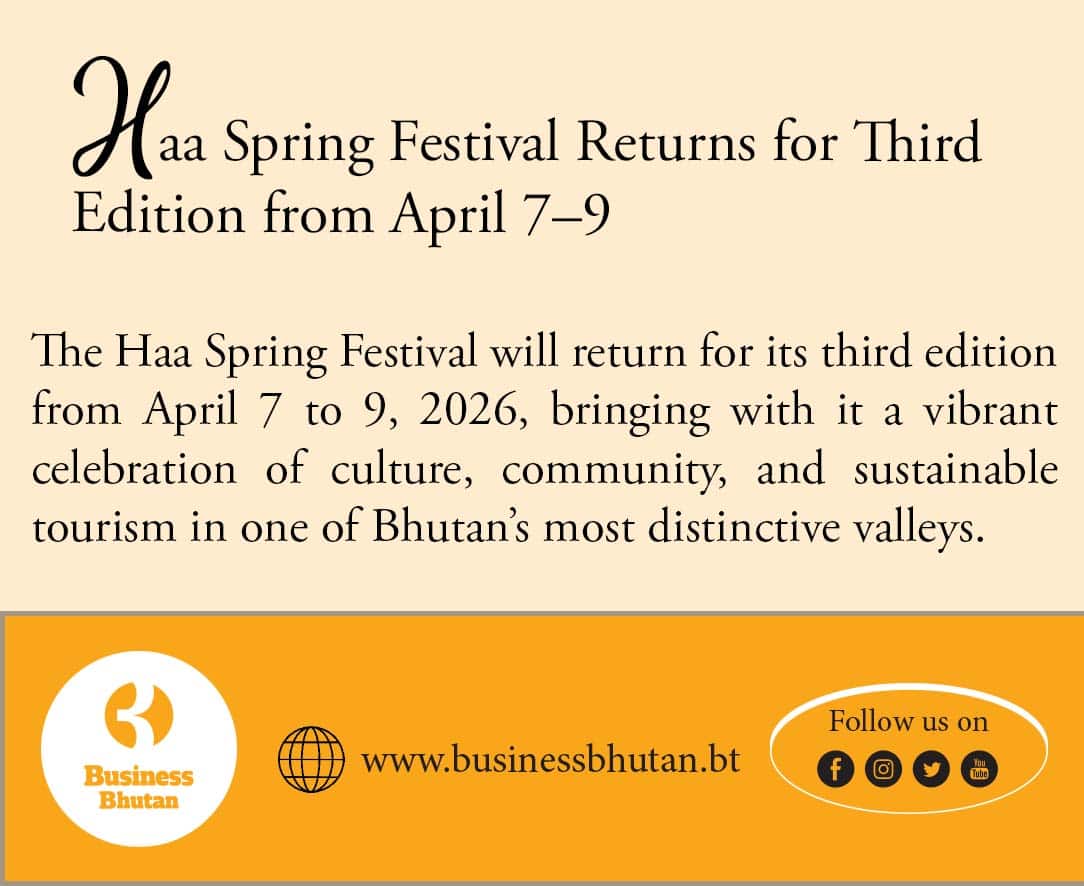
The Haa Spring Festival will return for its third edition from April 7 to 9, 2026, bringing with it a vibrant celebration of culture, community, and sustainable tourism in one of Bhutan’s most distinctive valleys. Her Majesty Queen Mother, Gyalyum Dorji Wangmo Wangchuck will grace the event, underscoring its national importance and the dzongkhag’s growing role in Bhutan’s cultural tourism landscape.
First introduced in 2010 as the Haa Summer Festival, the event emerged from the dzongkhag’s desire to showcase its rich cultural identity at a time when Haa lacked a major platform for tourism promotion. That same year, Haa became one of the first dzongkhags to adopt a Tourism Destination Development Plan, signaling a forward-looking commitment to structured and sustainable tourism long before such initiatives became national priorities.
Over the past decade, the festival has evolved significantly. What began as a niche summer gathering has matured into a flagship cultural event that highlights Haa’s heritage, its highland traditions, and its pristine natural environment. Today, the festival is central to the dzongkhag’s effort to position itself as a high-end tourism destination offering immersive, nature-based experiences—from fly-fishing and eco-tourism to guided cultural walks.
According to Haa Dzongdag Sonam Tobgay, the festival is designed not only to attract visitors but also to empower local communities. “A key objective is to create sustainable economic opportunities for local communities by encouraging their participation through stalls, exhibitions of agricultural and livestock products, and other income-generating activities,” he said. The festival, he added, has helped build a strong sense of ownership and pride among residents, with community engagement forming the backbone of its continued success.
Every element of the festival—from its food and crafts to its storytelling and performances—has been carefully curated to reflect the diversity of Haa’s six gewogs. The Dzongdag noted that this authenticity helps distinguish Haa from other destinations, while demonstrating how cultural preservation can coexist with modern tourism trends.
Why Spring? A Strategic Shift
The shift from a summer to a spring festival in 2024 was both practical and strategic. Summer in Haa is often dominated by monsoon rainfall, making travel difficult and impacting visitor experience. Spring, however, brings clear skies, mild temperatures, and the blooming of rhododendrons across the valley’s slopes—enhancing the region’s natural beauty and improving accessibility.
The success of the first two editions of the Haa Spring Festival demonstrated the advantages of the seasonal shift. Visitor numbers increased, community participation grew, and the festival began drawing national and international attention as a showcase of authentic Bhutanese culture set against one of the country’s most stunning landscapes.
This year’s festival comes at a time of renewed momentum for Haa’s tourism sector. The dzongkhag recently launched its branding campaign, “Haa-Lay Mi Lay,” aligned with Bhutan’s national tourism brand, “Bhutan Believe.” Building on this brand identity, Haa hopes to convert growing global recognition—including its selection by BBC Travel as one of the 25 Best Places to Visit in 2025—into sustainable tourism growth that benefits local communities while preserving the environment.
A Cultural Showcase
The 2026 festival promises an expanded program that dives deeper into Haa’s unique traditions. Each gewog will present cultural performances rarely showcased elsewhere in the country, offering visitors a rare opportunity to witness the region’s distinctive heritage in one place.
A key highlight this year is a 30-minute theatrical performance depicting the life of Ap Chundu, Haa’s protective deity. Presented publicly for the first time, the performance aims to preserve and promote the dzongkhag’s oral traditions and spiritual heritage. The dramatization of Ap Chundu’s story is expected to be one of the festival’s most anticipated events, blending mythology, history, and local artistry.
Visitors will also experience Haa’s unique Lolay culture, presented by the Haa Throm business community. Lolay—a traditional practice of chanting auspicious verses to welcome the New Year—symbolizes good fortune, unity, and the renewal of hope. Closely associated with the Lomba festival, Lolay derives from “Lo,” meaning year, and “Lay,” meaning good, encapsulating the community’s aspirations for well-being in the year ahead.
Another notable feature of this year’s program is Chundue Gongzhey, a musical tribute to Ap Chundu performed by the people of Uesu Gewog. Historically known as Jumbi Pawo, the tradition originated in Tibet and was introduced to Bhutan during the time of Gongzim Sonam Tobgay Dorji. Its inclusion in the festival reflects Haa’s deep cultural ties to its highland past and its desire to preserve ancient spiritual practices.
Meanwhile, the Dzongdag emphasized that the festival’s long-term success depends on striking the right balance between tourism promotion and cultural preservation. By prioritizing community involvement and environmental stewardship, he said, Haa aims to avoid the pitfalls of over-commercialized tourism.
With cultural authenticity, strategic tourism vision, and deep-rooted community participation at its core, the third Haa Spring Festival promises to reaffirm why the valley is one of Bhutan’s most enchanting and culturally rich destinations.
Sangay Rabten,
From Haa