The growing momentum surrounding the Gelephu Mindfulness City (GMC) project is beginning to breathe new life into rural communities in Tsirang, where modest infrastructure developments and rising tourist movement are quietly transforming local livelihoods and renewing hope among residents.
Far from the GMC, villages in Tsirang are experiencing something equally meaningful, the return of economic activity, community optimism and the emergence of rural tourism opportunities that many say they had long waited for.
At Lungisang, a newly developing local market space has become more than just a trading area. For 53-year-old Tsekom, it has become what she calls her “lifeline”.
Seated beside neatly arranged vegetables and locally produced goods, Tsekom watches a steady flow of visitors and travelers pass through the once-quiet area. She says the recent developments have brought not only customers, but also a renewed sense of purpose for villagers.
“Before this, earning even a small daily income was difficult,” she said. “Now there are people coming through the area every day. There is movement, activity and hope.”
Like many rural women in Tsirang, Tsekom had previously relied largely on subsistence farming and irregular seasonal earnings. Today, small-scale vending has begun providing a more reliable source of income.
Nearby, 55-year-old Dawa Tshering and 46-year-old Chuki share similar stories. The two villagers have also started earning modest but steady incomes through small roadside businesses serving travelers, workers and tourists visiting the area.
“We may not be making huge profits,” Dawa Tsherring said with a smile, “but at least we now have something dependable to support our families.”
For Chuki, even small daily earnings carry enormous significance.
“What may seem very little to others means a great deal to us,” she said. “For rural households, even a small income each day can change lives.”
Residents say the ripple effects of GMC-linked developments are becoming increasingly visible across nearby villages. While the investments at the local level may appear relatively small in scale, the psychological and economic impact on communities has been profound.
One recent construction initiative valued at around Nu 800,000 employed 14 local labourers over five months, creating temporary jobs while also improving public facilities designed to accommodate increasing visitor movement.
Local contractors involved in the work say the benefits extend well beyond infrastructure alone.
“It may not look like a very large project from the outside,” one contractor said, “but for communities here, it carries a much bigger purpose. These facilities are helping prepare the area for growing tourism and economic opportunities.”
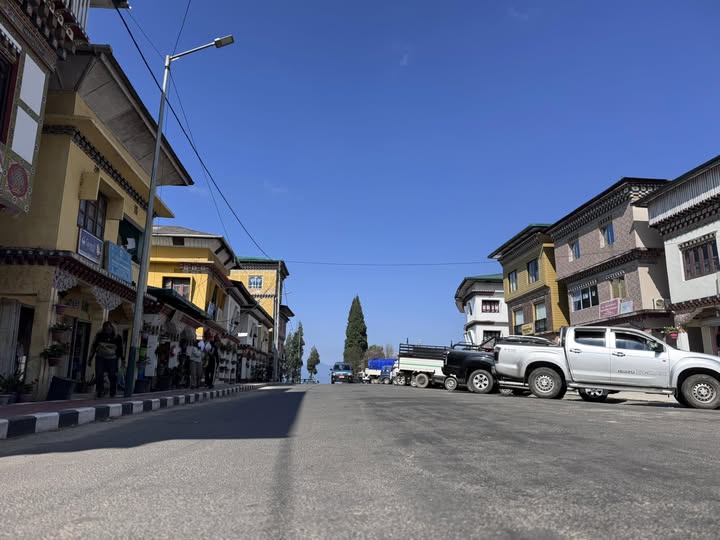
As movement through the region increases, local businesses are also beginning to flourish.
For 55-year-old restaurateur Karma Choki, the changes have been dramatic. Her small eatery, once dependent on occasional customers, is now witnessing an unprecedented surge in visitors.
“My business improved from the very first day,” she said. “I feel overwhelmed with happiness. The number of customers has increased almost tenfold.”
She says the atmosphere in the community has transformed completely.
“Earlier, there were days when hardly anyone came through this area,” she recalled. “Now there is activity throughout the day. The place feels alive.”
Residents believe Tsirang’s growing visibility within the broader GMC narrative could eventually position the district as an important stop for eco-tourism, community-based tourism and rural travel experiences.
Ongoing construction works, including a two-storied vegetable market shed and a one-storied cafeteria intended for tourists and travelers, are expected to further strengthen local income generation and improve visitor experiences.
“We are very happy about these facilities,” said another local builder overseeing part of the work. “The vegetable shed will support local vendors, while the cafeteria can attract more tourists and travelers. These are the kinds of developments that create real opportunities for ordinary people.”
Beyond economics, many villagers describe the emotional impact of the changes as equally powerful.
One local resident involved in coordinating community activities became visibly emotional while speaking about the growing optimism within the village.
“The more I talk about it, the more emotional I become,” he said. “People here feel genuinely happy because, for the first time in many years, they feel included in the country’s development journey.”
Community participation has also strengthened significantly, with villagers contributing labour, ideas and collective support to improve public spaces and tourism-related facilities.
Although the long-term outcomes of GMC’s wider economic vision remain to unfold, residents in Tsirang say the early signs of transformation are already visible through increased commercial activity, rising tourist movement and renewed confidence among rural households.
For many families, the developments symbolize far more than physical infrastructure. They represent a rare opportunity to become part of Bhutan’s evolving tourism and economic future.
“We have always heard about development happening somewhere else,” Tsekom said quietly, watching another group of visitors arrive at the roadside stall. “Now, for the first time, we feel that development is finally reaching us too.”
Tashi Namgyal, Tsirang