

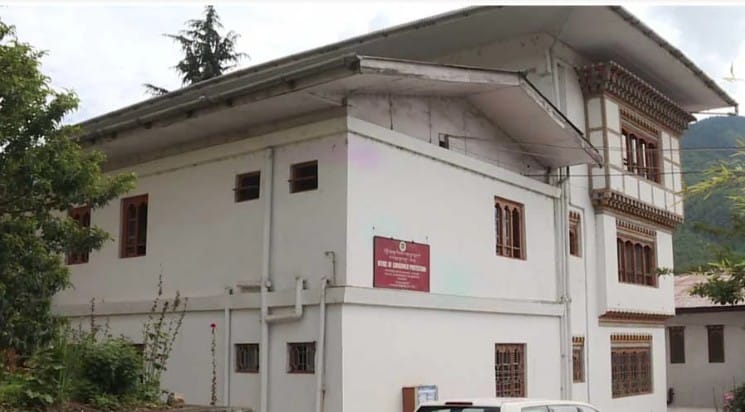
Concerns over unfair and unethical business practices, product and service delivery, pricing and consumer rights continued to surface in August, prompting the Competition and Consumer Affairs Authority (CCAA) to strengthen complaint redressal, market inspections and measures aimed at improving transparency and fair competition.
The CCAA received 41 consumer complaints during August, of which 37 were lodged by individual consumers and four were raised institutionally. The Authority resolved 18 cases during the month, while 23 remained open at the end of August. Notably, 15 of the 23 pending cases were linked to the State Trading Corporation of Bhutan Limited (STCBL) and the import of Toyota vehicles from India, making the dispute the single largest source of unresolved complaints.
More than half of the complaints—23 cases, or 56.1 percent—were categorised as “other unethical trade practices”. The broad category covered a diverse range of issues, including improper GST deductions on refunds, suspected Ponzi schemes, poor Wi-Fi services, online scams, misuse of identity in trading groups, alleged restrictions on direct Toyota imports, refurbished televisions supplied to an FDI hotel and automatic rounding of decimal prices at points of sale.
The second-largest category was non-delivery of goods and services, with five cases. Contaminated or defective products and misrepresentation of goods and services accounted for three cases each. Denial of refunds, substandard goods and services, and misrepresentation of prices accounted for two cases each, while one case involved a breach of terms and conditions.
Of the 18 cases resolved, CCAA relied primarily on advisory services, which accounted for six cases. Refund facilitation and referrals to other authorities accounted for four cases each, followed by mediation in three cases and rectification of business practices in one case.
The Authority also facilitated Nu 8,005.50 in direct refunds to four consumers during the month. The relatively small value of direct refunds compared with the number of complaints indicates that many consumer disputes are not necessarily resolved through monetary compensation. Advice, mediation, referral and changes in business practices remain important components of the redress system.
Complaint handling was accompanied by increased market surveillance, with CCAA inspectors visiting 156 business entities across Thimphu, Gasa and Punakha during August.
Thimphu accounted for the largest number of inspections, with 99 businesses inspected and 68 rectified on the spot—more than two-thirds of the establishments visited. In Gasa, inspectors covered 21 businesses, including one fuel retail outlet, with seven requiring rectification. Punakha accounted for 36 inspections, with two businesses requiring corrective action. Further inspections in Punakha and newly launched inspections in Wangdue Phodrang were still ongoing at the end of the month.
The inspection figures point to the importance of preventive enforcement. Rather than relying solely on complaints after consumers suffer losses, on-site inspections allow regulators to identify and correct non-compliant practices before they escalate.
The Authority’s study of the craft retail sector in Thimphu and Paro also identified significant concerns. Although 58 percent of surveyed shops had operated for more than a decade, around 50 percent of retailers acknowledged that imported goods are sometimes sold as locally made. At the same time, 84 percent of consumers actively sought to verify product origins.
Another major concern was the relationship between retailers and tour guides. Ninety-four percent of retailers surveyed said they paid commissions to tour guides for referrals, while tourists were found to pay 10–50 percent more than local buyers for identical products.
To address these problems, CCAA has proposed a national craft certification scheme, mandatory origin-disclosure requirements and greater transparency around guide commissions. The measures are intended to protect consumers while ensuring genuine Bhutanese products compete fairly.
There was, however, evidence of improvement in Thimphu’s meat market. CCAA found significant price differences between shops for beef, pork, sekam and shakam, suggesting that retailers are increasingly setting prices independently rather than following a common price list.
Meanwhile, CCAA also participated in the government’s 15-day Dzongkhag Consultation Programme, which found that of 196 regulatory issues identified nationwide, 151 had been resolved, while 31 required further higher-level intervention. Businesses raised concerns involving regulatory clearances, overlapping mandates, licensing, tourism, labour, infrastructure, market access and private-sector support.
Tashi Namgyal, Thimphu