

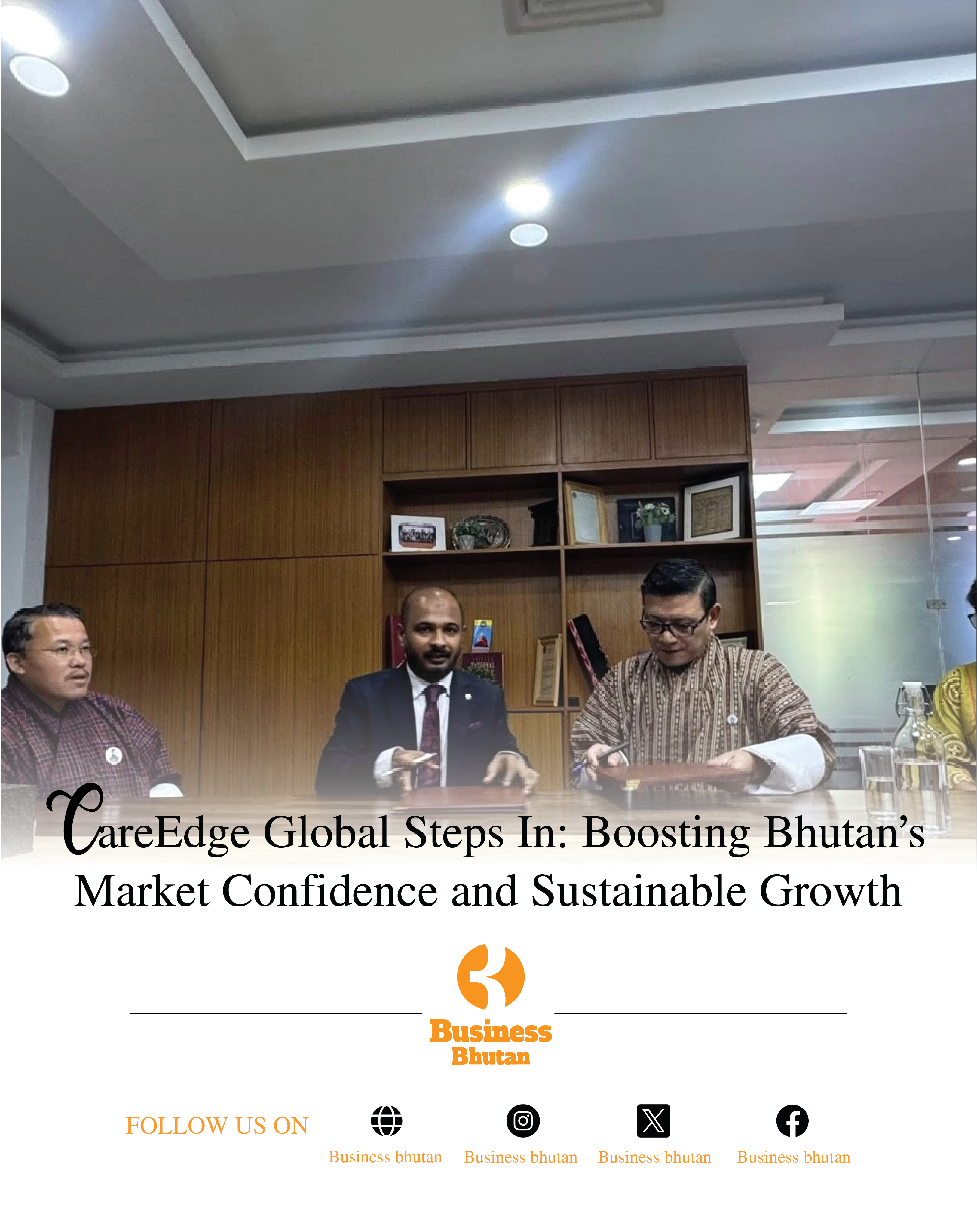
Bhutan, renowned for its philosophy of Gross National Happiness (GNH) and unwavering commitment to sustainable development, is entering a bold new chapter in its economic journey. CareEdge Global IFSC Limited, a leading international rating agency, has announced its strategic entry into the sovereign rating space for Bhutan, signaling a new era of transparency, market development, and investor confidence. The agency aims to provide nuanced, tailored assessments of Bhutan’s credit profile, reflecting both its impressive growth potential and the resilience embedded in its institutions.
The move is not merely symbolic. As Bhutan seeks to attract foreign investment, strengthen its bond and equity markets, and position itself as a credible participant in global financial systems, the presence of a respected international rating agency offers an external validation of the kingdom’s economic strength and policy credibility. By emphasizing a contextual, forward-looking approach, CareEdge Global seeks to shine a light on Bhutan’s unique financial landscape, highlighting opportunities that traditional rating frameworks might overlook.
Aakas Jain, Head of Corporate Affairs and Strategic Business Partnerships at CareEdge Global, outlined the firm’s philosophy: “Our methodology considers the unique characteristics of emerging economies like Bhutan. We look beyond traditional vulnerabilities to identify growth opportunities and structural strengths that can support long-term credit stability.” In other words, CareEdge is not simply weighing risks; it is analyzing Bhutan’s entire economic ecosystem, from its macroeconomic fundamentals to policy initiatives, institutional stability, and sustainable growth strategies.
CareEdge Global’s approach to Bhutan is particularly innovative. Unlike conventional credit rating models that focus predominantly on debt ratios and fiscal vulnerabilities, CareEdge evaluates Bhutan through a three-dimensional lens: growth potential, structural strength, and sustainability. For a country with a small but fast-growing economy, this methodology offers a more holistic picture of creditworthiness.
Bhutan has maintained an average annual GDP growth of over six percent in recent years, accompanied by rising GDP per capita. While its overall market size is modest, these indicators signal positive momentum. Coupled with ongoing reforms, such as the nationwide implementation of the Goods and Services Tax (GST) and a strategic push toward renewable energy projects and even regulated crypto-mining initiatives, Bhutan is positioning itself at the intersection of innovation, environmental stewardship, and fiscal responsibility. CareEdge’s analysis highlights how these policies collectively strengthen Bhutan’s economic resilience and enhance investor confidence.
Jain explained that the agency also considers Bhutan’s strategic relationships, particularly with India. “Bhutan’s close ties with India provide additional stability, helping to balance risks and create avenues for long-term development,” he said. These relationships underpin cross-border trade, infrastructure development, and energy cooperation, all of which feed directly into Bhutan’s growth narrative and its emerging financial markets.
What sets CareEdge apart is its commitment to a local presence. Unlike agencies that rely solely on macroeconomic indicators from afar, CareEdge is embedding a team within Bhutan to engage directly with policymakers, regulators, and market participants. Jain emphasized that this approach allows the agency to understand sector-specific dynamics, policy nuances, and on-the-ground realities, which are critical for accurate sovereign and non-sovereign credit assessments.
By being present in Bhutan, CareEdge can interpret fiscal, regulatory, and macroeconomic trends with a depth of context that remote assessments cannot achieve. This localized approach ensures that ratings are credible, relevant, and genuinely reflective of Bhutan’s unique developmental path. For investors and policymakers, this means clearer, more actionable insights into risk and opportunity.
One of the cornerstones of CareEdge’s entry into Bhutan is its emphasis on transparency. By offering rigorous, clear, and forward-looking ratings, the agency reduces information asymmetry, a common challenge in emerging markets where access to reliable data can be limited. According to Jain, this transparency is crucial for attracting foreign direct investment (FDI), fostering economic diversification, and building investor confidence.
“Our ratings are designed to provide clarity on Bhutan’s economic resilience and potential vulnerabilities,” Jain explained. “By highlighting structural strengths alongside risks, we aim to support Bhutan’s long-term financing needs and ensure investors can make informed decisions.” For a country with ambitions of sustainable development and global integration, this clarity is invaluable.
A credible sovereign rating can dramatically enhance Bhutan’s access to international capital markets. Investors rely on ratings to assess risk and determine borrowing costs. With a context-sensitive, independent rating, Bhutan can signal its reliability as a borrower, reduce the risk premium on loans, and diversify sources of external funding.
Jain explained, “A well-aligned rating helps Bhutan avoid higher risk premia that may arise from misjudged risk perceptions. Conversely, overlooking structural strengths could lead to unnecessary vulnerability. Our role is to ensure that ratings are accurate, reflective of the country’s unique debt structure, and supportive of its development trajectory.” In other words, a rating is not just a number; it is a strategic tool for managing the country’s economic relationships with global lenders, investors, and institutions.
Bhutan’s capital markets are still in early stages, with limited issuance volumes and a relatively small investor base. CareEdge sees a vital role in supporting the development of bond and structured finance markets. Independent, credible ratings can enhance transparency, improve price discovery, and attract institutional investors, which are crucial for market growth.
To address challenges in market education and disclosure, CareEdge plans to work closely with regulators and issuers. Jain stressed that building trust, standardizing practices, and promoting market discipline are essential for long-term sustainability. By providing transparent credit assessments, the agency aims to help Bhutan develop a more robust debt market, capable of supporting infrastructure projects, social programs, and strategic investments.
Beyond debt markets, CareEdge’s ratings have implications for Bhutan’s equity market. Ratings can serve as a signal of institutional strength and policy credibility, helping investors differentiate between high- and low-risk opportunities. Over time, this contributes to the development of a domestic yield curve, which supports liquidity, pricing transparency, and investor confidence.
Jain emphasized that ratings are not static; they provide ongoing signals about the country’s financial health, governance, and policy effectiveness. This dynamic assessment is particularly valuable as Bhutan continues its efforts to modernize reporting standards, improve corporate governance, and integrate more fully into the global financial system.
Bhutan’s economic and institutional framework positions it well for both sovereign and non-sovereign ratings. Stable institutions, prudent macroeconomic management, and ongoing reforms provide a solid foundation for credit assessments. While capital markets are still developing, improvements in transparency, reporting, and regulatory oversight enhance Bhutan’s readiness to benefit from the discipline and signaling effects of ratings.
By introducing tailored ratings, CareEdge Global not only provides investors with a reliable assessment of creditworthiness but also reinforces domestic confidence in Bhutanese institutions, policy-making, and market governance. This dual role—supporting both external and internal confidence—positions CareEdge as a strategic partner in Bhutan’s journey toward sustainable economic growth.
Bhutan’s development philosophy emphasizes environmental stewardship, social cohesion, and long-term prosperity. CareEdge Global’s approach aligns with these principles by incorporating sustainability indicators into its analysis. From renewable energy initiatives to fiscal policies promoting social welfare, the agency’s ratings consider factors that contribute to long-term resilience rather than short-term financial gain.
By highlighting Bhutan’s sustainable growth trajectory, CareEdge helps position the country as a credible, forward-looking economy capable of attracting responsible investment. Investors increasingly prioritize ESG (Environmental, Social, Governance) factors, and Bhutan’s policy orientation makes it uniquely attractive for global investors seeking opportunities that balance financial return with social and environmental impact.
As Bhutan steps into a new phase of economic development, CareEdge Global is positioning itself as more than a rating agency—it is a strategic partner in shaping the country’s financial future. Through tailored, transparent, and context-aware ratings, the agency seeks to support Bhutan’s aspirations for sustainable growth, capital market development, and enhanced investor confidence.
The timing could not be more opportune. With ongoing reforms, growing trade links, and ambitious infrastructure and renewable energy projects, Bhutan is poised for an era of accelerated development. In this context, having a credible international rating agency embedded within the country is a game-changer. It signals to the world that Bhutan is ready for serious investment, capable of managing risk, and committed to long-term, sustainable prosperity.
By providing clarity, fostering transparency, and enhancing market confidence, CareEdge Global is helping Bhutan bridge the gap between potential and performance, ensuring that its unique economic and social model is understood, valued, and supported in the global financial system. For investors, policymakers, and citizens alike, this is more than a rating—it is a vote of confidence in Bhutan’s future.
In a small but strategically poised nation, every step toward economic maturity matters. CareEdge Global’s entry into Bhutan’s sovereign rating space is not just a milestone; it is a signal that Bhutan’s financial credibility, sustainability, and growth potential are finally being recognized on the global stage, paving the way for a resilient, confident, and prosperous future.
Sherab Dorji
From Thimphu