

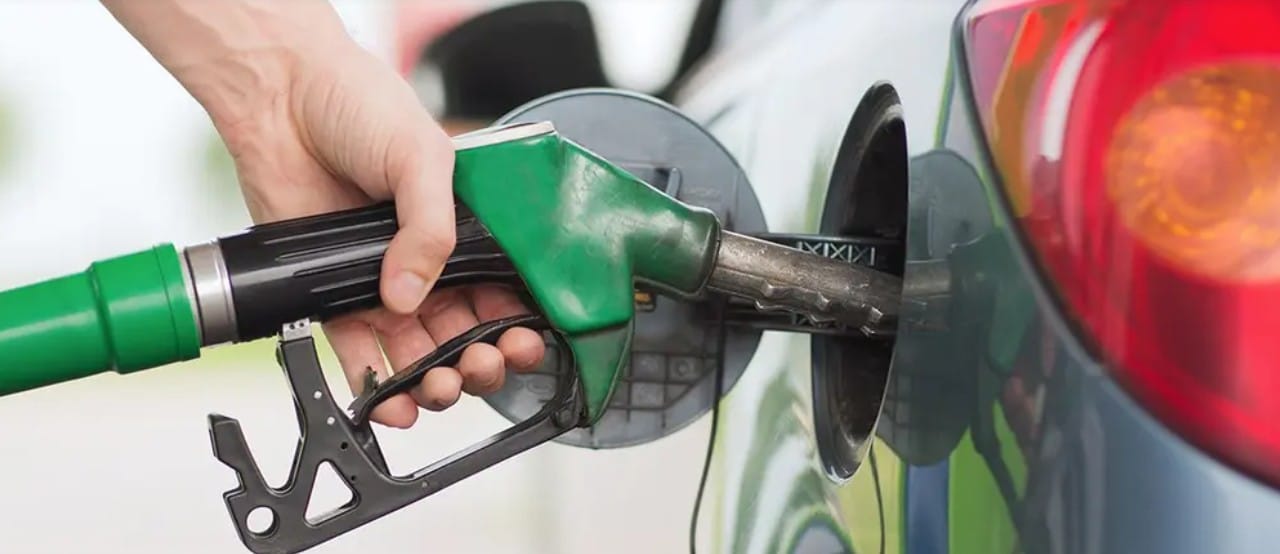
Expanding electricity supply and continued reliance on imported fossil fuels are exposing a central challenge in the country’s green economic transition: although hydropower remains a major source of domestic energy and export earnings, transport and other economic activities continue to depend heavily on petroleum products. National Statistics Bureau (NSB) data show electricity supply rose 32.8 percent in 2025, while petrol and diesel imports climbed sharply, highlighting the challenge of translating hydropower strength into reduced fossil-fuel dependence
The NSB’s Annual Environmental Accounts Statistics 2025 shows that total electricity supply increased by 32.8 percent to 17,439.38 gigawatt-hours (GWh) in 2025, from 13,131.77 GWh in 2024. At the same time, the country imported 345,072.87 kilolitres of oil from India, with petrol imports rising by 38.74 percent and diesel by 27.54 percent. The figures capture both the strength and the structural challenge of Bhutan’s energy system. The country generates and exports substantial amounts of renewable electricity, but its dependence on imported fuel leaves transport, businesses and households exposed to changes in petroleum demand and supply.
The report links environmental resources with economic activity. Its findings provide a basis for assessing whether economic growth is being accompanied by more efficient resource use and a lower dependence on non-renewable energy. Electricity supply in 2025 comprised 93.75 percent domestic generation and 6.25 percent imports. The monetary value of total electricity supply rose by 14.37 percent, from Nu 36.54 billion in 2024 to Nu 41.79 billion in 2025.
Electricity exports accounted for 45.46 percent of total supply, while domestic consumption represented 54.48 percent. Transmission losses accounted for approximately 0.06 percent.
The increase in supply was accompanied by stronger domestic demand. Industrial electricity consumption grew by 25.96 percent, while household consumption increased by 20.72 percent. Overall domestic electricity consumption rose by 25.29 percent compared with 2024. Manufacturing accounted for 75.20 percent of electricity consumption among economic sectors, followed by community, social and personal services at 9.88 percent, transport, storage and communication at 4.89 percent, mining and quarrying at 3.12 percent, and construction at 2.84 percent. Bhutan remained a net exporter of electricity in 2025. Electricity exports increased by 44.93 percent, while imports fell by 25.28 percent. Nevertheless, the country continued to import electricity during the lean season, reflecting the importance of seasonal supply conditions. The electricity sector contributed 14.39 percent to GDP in 2025, according to the report. As industrial activity expands, ensuring reliable electricity supply while maintaining export capacity will remain an important consideration for economic planning.
Despite the growth in hydropower, Bhutan relies on India for fossil fuels because it has no domestic petroleum and natural gas reserves. Petrol supply increased from 71,657.05 kilolitres in 2024 to 99,416.02 kilolitres in 2025, while diesel supply rose from 192,614.59 kilolitres to 245,656.85 kilolitres. The service sector accounted for the largest share of fuel consumption at 33.12 percent, followed by households at 25.04 percent, industry at 14.18 percent, and agriculture, livestock and forestry at 8.93 percent. The report notes that dependence on fossil fuels is expected to persist until electric vehicles become more affordable, indicating that the transition will depend not only on electricity availability but also on the affordability of electric vehicles, charging infrastructure and the pace at which transport users can shift away from conventional fuels. Fuel re-exports also rose sharply. In 2025, re-exported petrol and diesel increased by 84.71 percent to 64,643.70 kilolitres, from 34,997.11 kilolitres in 2024. Diesel re-exports rose by 127.79 percent to 46,663.45 kilolitres, while petrol re-exports increased by 23.90 percent to 17,980.25 kilolitres.
The report defines fuel re-exports as the portion of imported petrol and diesel attributed to Indian vehicles operating in Bhutan, including vehicles transporting goods, tourist vehicles and vehicles refueling in border towns. The report estimates total energy consumption at 1,253.22 thousand tonnes of oil equivalent (KToE) in 2025, an increase of 22.04 percent over 2024. Renewable sources accounted for 67.27 percent of energy consumption, mainly through hydropower. Domestic energy production increased by 30.26 percent to 1,483.61 KToE. Renewable energy production rose by 36.04 percent, while coal production declined by 21.72 percent.
Although renewable energy continues to dominate domestic production, the rise in overall consumption and oil imports shows that Bhutan’s energy transition involves more than expanding renewable generation. It also requires reducing the carbon and resource intensity of transport, industry and other activities where alternatives are available. The statistics point to several policy priorities. Reducing transport-related fuel dependence will require affordable electric mobility and supporting infrastructure. Industrial growth will require reliable electricity and greater attention to energy efficiency. Natural-resource extraction will need to be assessed against resource stocks, environmental safeguards and long-term economic returns.
The report also demonstrates the value of environmental accounting in policy decisions. By tracking the physical supply, consumption and value of resources, the NSB provides a framework for examining the relationship between economic output and environmental pressures.
For Bhutan, the central question is how to convert its renewable-energy advantage into broader economic resilience. Rising electricity generation and exports offer opportunities, but growing petroleum demand and resource extraction show that a green economy cannot be measured by hydropower alone.
Tashi Namgyal, Thimphu