National Council (NC) review report on the Forestry Sector’s contribution to GDP reveals that the sector is underutilized
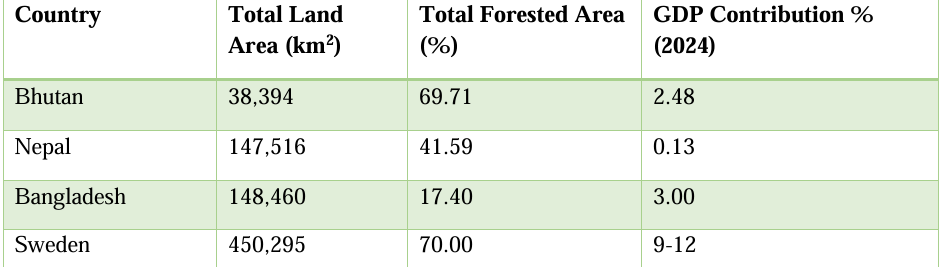
Despite Bhutan’s globally lauded environmental stewardship and its constitutionally mandated commitment to maintaining a minimum of 60% forest cover—a target it continues to surpass with 69.71% forest cover as of 2023—the economic contribution of its forestry sector remains modest.
According to the Forest Monitoring and Information Division (2023), Bhutan boasts over 2.68 million hectares of forest. However, data from the National Statistics Bureau (2024) shows that the sector accounted for only 2.48% of the Gross Domestic Product (GDP) in 2023. This striking contrast underscores a persistent challenge: Bhutan’s rich forest resources are not being translated into significant economic value.
Underutilized Potential
Only 5% of Bhutan’s forests are currently under commercial management (Bhutan Forest Note, 2019), a key reason for the sector’s underperformance. Much of the forest output remains confined to low-value products like fuelwood, with limited processing, industrial application, or market integration. Despite having the capacity for an estimated sustainable yield of 41.61 million cubic feet of timber annually from 971,494 hectares, Bhutan remains a net importer of forest products.
Structural limitations—including a nascent wood-processing industry, insufficient private sector participation, outdated technology, and a shortage of skilled labor—have all contributed to the sector’s stagnation. These constraints are further compounded by a strong conservation-oriented policy environment, which, while crucial for ecological sustainability, limits commercial expansion and economies of scale.
Missed Opportunities for Growth
Forestry and logging recorded a steady growth rate of 5.42% in 2023, improving from 4.07% in previous years. Yet, this growth is not reflected in GDP figures due to the narrow focus on low-value outputs and undervaluation of non-market ecosystem services.
“The national accounting system currently does not account for critical ecological contributions such as carbon sequestration, biodiversity preservation, and watershed protection,” states the State of the Environment Report (2020). These non-monetized services provide immense long-term value but are absent from conventional GDP calculations.
Legislative Challenges
While Bhutan has updated its legal framework through the Forest and Nature Conservation Act (FNCA) 2023, unresolved challenges within Chapters 7, 8, and 9 continue to impede sustainable forest utilization. The forestry sector is also governed by an array of other national laws, including the Land Act (2007), National Environment Protection Act (2007), Road Act (2004), Biodiversity Act (2003), and Environment Assessment Act (2000). While these laws collectively safeguard environmental integrity, they often create complex regulatory environments for investors and entrepreneurs.
Regional Comparisons Reveal the Gap
When compared with other countries, Bhutan’s underutilization of its forest assets becomes more evident. Nepal and Bangladesh, both with lower forest coverage (approximately 40.4% and 17.4%, respectively), have higher forestry GDP contributions, particularly Bangladesh at 3%. This suggests a more efficient or intensive use of forest resources, possibly through better-developed non-wood forest product (NWFP) markets and enhanced value chains.
Sweden presents another illustrative contrast. Despite having similar forest types and exportable timber species (such as pine), Sweden has built a robust, technology-driven forestry sector that is a major contributor to its economy. Bhutan, by contrast, maintains a conservation-first policy that prioritizes ecological preservation over commercial exploitation, resulting in low GDP contribution despite abundant resources.
A Strategic Path Forward
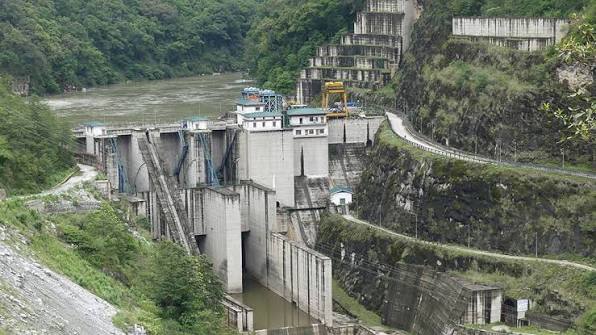
As Bhutan seeks to diversify its economy beyond hydropower and agriculture, the forestry sector presents a strategic opportunity for inclusive, sustainable growth. A modernized, GNH-aligned forestry industry could enhance rural employment, support import substitution, and enable environmentally responsible exports.
To achieve this, the NC recommends that Bhutan must consider expanding value addition through investment in wood-processing and NWFP industries; reforming regulations to encourage sustainable private sector participation; incorporating ecosystem services into national accounting frameworks; and promoting skill development to support a modern forestry workforce.
“With the right policy, institutional, and investment reforms, Bhutan can transform its forests from an underutilized natural treasure into a pillar of green economic growth—enhancing livelihoods while staying true to its environmental values,” the report underscores.
Tashi Namgyal from Thimphu