

Bhutan is investing billions in agriculture, protecting farmland, promoting commercial farming and expanding rural infrastructure. But for many farmers, one question remains: why is farming still not profitable enough to attract investment, retain young people and sustain livelihoods?
Low returns, limited market access, inadequate machinery, labour shortages and difficulties obtaining affordable credit are among the persistent obstacles. They raise a fundamental question about whether public investment is addressing the economics of farming or concentrating too heavily on increasing production and building infrastructure.
These concerns emerged from consultations conducted by the National Council’s (NC) Economic Affairs Committee with farmers, local governments and other stakeholders across the country. The committee will present its review of the agricultural investment ecosystem during the upcoming 38th session of the National Council.
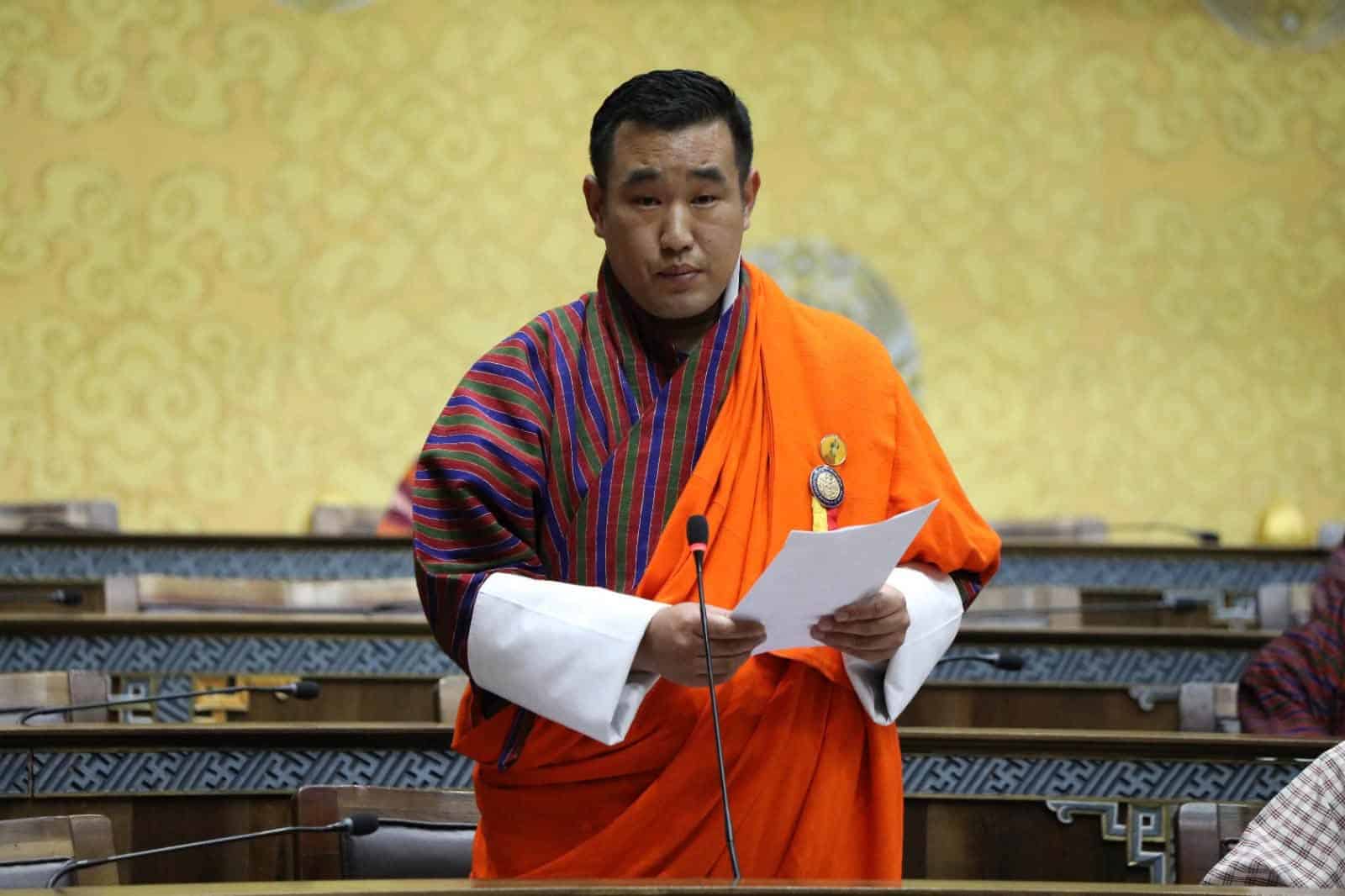
At a press conference, committee chairperson Sonam Tenzin said consultations had exposed persistent challenges in making agriculture commercially viable, despite substantial government support and investment. The most revealing concern is that producing more does not necessarily mean earning more. Farmers in Paro and Punakha, two important agricultural production centres, have reported difficulties finding markets and securing profitable prices for their produce. The problem exposes a weakness in the investment approach: production capacity is being expanded without sufficient assurance that farmers can sell what they grow.
An unsold harvest, or produce sold below its production cost, is not commercial success. It is a loss borne by the farmer. Agricultural investment must therefore extend beyond cultivation to aggregation, storage, processing, transportation and marketing. Without these links, higher production could simply mean more produce competing for limited markets.
The committee has also called for investment to reflect the agricultural potential of individual Dzongkhags rather than applying a uniform approach nationwide. Mongar, for instance, is a major maize-producing Dzongkhag, followed by Trashigang. Such regional strengths should guide decisions on machinery, processing facilities, infrastructure and market development.
Public investment must follow economic opportunity. Concentrating resources where production potential and market prospects are strongest can generate better returns than spreading them thinly without sufficient regard for local advantages. Mechanisation is another critical weakness. Farming remains heavily dependent on manual labour, making production physically demanding, costly and unattractive to younger generations.
According to the committee chairperson, Bhutan has approximately 13,000 power tillers, which he said are insufficient for farmers’ needs. The committee has called for more machinery and cost-sharing arrangements to help farmers acquire equipment without carrying the full financial burden.
This is not simply about convenience. Limited mechanisation affects productivity, production costs and the ability to cultivate larger areas. If farming remains labour-intensive and financially unrewarding, persuading young people to enter the sector will be difficult.
The consequences extend beyond farmers’ livelihoods. They directly affect Bhutan’s ambition to strengthen domestic food production and reduce dependence on imports. The 13th Five-Year Plan seeks to transform agriculture through commercialisation, mechanisation and stronger market linkages. It prioritises seven crops and three livestock products for increased production, aggregation, processing and marketing. However, the gap between policy ambitions and farmers’ experiences raises a difficult question: are these interventions creating viable farming businesses, or are farmers still being left to navigate the hardest parts of the market alone?
Infrastructure spending presents a similar challenge. The government has allocated Nu 5.1 billion under the 13th Plan for chain-link fencing, targeting approximately 3,400 kilometres to protect farmland from wildlife. The committee reported that around 43.6 percent of the target had been covered, citing approximately 1,400 kilometres.
Fencing is important, but farmers continue to face crop damage, including from monkeys, and inadequate irrigation. A fence must protect crops effectively; irrigation must deliver reliable water. The real measure is not kilometres constructed or money spent, but whether farmers can cultivate their land with greater security and confidence.
Access to finance is another barrier. Farmers with the potential to expand production often struggle to secure loans because of collateral requirements. Commercial farming needs capital for machinery, inputs, infrastructure and working capital, yet conventional lending arrangements may not reflect the risks and seasonal realities of agriculture.
The committee’s review therefore examines rural credit accessibility and whether existing financing mechanisms adequately support farmers seeking to expand. These concerns come as Bhutan receives further development assistance for agricultural transformation. In October 2026, the government launched the USD 27 million Inclusive Markets, Production, Agriculture Commercialisation and Transformation (IMPACT) project, covering Bumthang and six eastern Dzongkhags. It is expected to benefit around 15,500 smallholder households, with interventions in market access, irrigation, processing and agricultural financing. Its stated ambition is to help farmers move beyond producing more to earning more.
Ultimately, Bhutan’s agricultural challenge is no longer simply about producing more, protecting more farmland or spending more money. It is about making farming economically worthwhile. That requires dependable markets, affordable credit, accessible machinery, reliable irrigation, better storage and stronger processing and value addition. Above all, public investment must be judged by measurable outcomes: how much farmers earn, how much produce reaches markets, how much is lost, how many enterprises become commercially viable and whether young people see agriculture as a worthwhile future.
The National Council’s review comes at a critical time. Bhutan has committed substantial resources to transforming agriculture. The real test is whether that investment will finally translate into higher incomes and a better return for the people who produce the nation’s food.
Sherab Dorji, Thimphu