

The National Assembly (NA) on November 13 introduced the Mines and Minerals Bill of Bhutan 2026, reviving a major piece of legislation that remained unresolved in Parliament for five years following disagreements between the two Houses over the ownership and management of the country’s mineral resources.
The Bill, introduced during the Sixth Session of the Fourth Parliament, seeks to replace the Mines and Minerals Management Act of 1995 and establish a more comprehensive legal framework for regulating mining, attracting investment, strengthening accountability and ensuring that the country derives greater economic benefits from its mineral wealth.
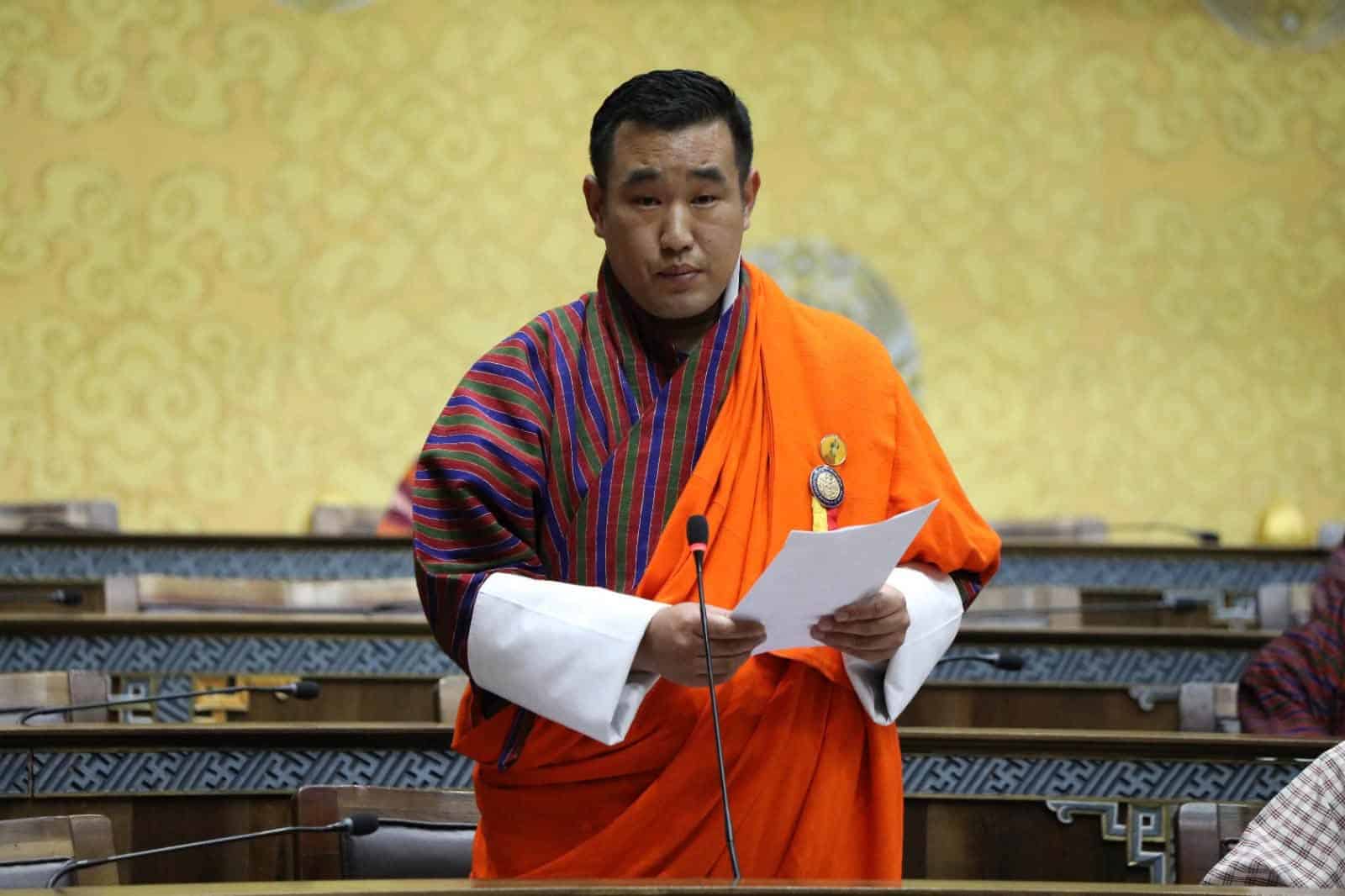
Presenting the Bill, the Minister for Energy and Natural Resources, Sonam Tashi, said the existing legislation placed greater emphasis on rules and regulations without adequately defining the roles and responsibilities of the institutions involved in managing the sector.
“No proper roles and responsibilities were designated,” the minister said, explaining the need for a more comprehensive legal framework.
He said the new legislation addresses administrative and institutional arrangements, including the rights and management of mineral resources and the powers and functions of the ministry and its department. It also seeks to establish clearer terms of reference for licensing and mineral allocation, while creating more competitive opportunities for private-sector participation.
The Bill’s objectives include ensuring transparency, equity and accountability in the effective and sustainable management of mines, mineral resources and geoscientific activities; strengthening regulatory and monitoring mechanisms; increasing socio-economic benefits and revenue to the State; and promoting environmentally responsible mining that respects social and cultural considerations.
It also seeks to strengthen investment security, encourage in-country value addition, improve environmental stewardship and ensure equitable benefit-sharing with affected communities. The proposed legislation marks a significant attempt to move beyond the limitations of the existing legal framework, which has governed Bhutan’s mining sector for nearly three decades.
The Department of Geology and Mines (DGM) had submitted the revised Bill to the Cabinet after reviewing contentious provisions, particularly those relating to strategic minerals. The draft draws on the Mineral Development Policy 2017, Mineral Exploration Guidelines 2023 and Mines and Minerals Management Regulations 2022.
The Bill proposes repealing the Mines and Minerals Management Act of 1995 and its subsidiary legislation, as well as Section 10 of the Revised Taxes and Levies Act of Bhutan 2016.
Deputy Speaker Sangay Khandu said the legislation had previously remained unresolved because of differences between the two Houses. He said the completion of the country’s airborne geophysical survey provided an important opportunity to resume deliberations, given the improved understanding of Bhutan’s mineral potential.
Five Years of Legislative Deadlock
The Mines and Minerals Bill originated in the NA during the Third Parliament and was expected to replace the 1995 Act. However, deliberations stalled in 2021 after the NA and National Counci l(NC) failed to reach an agreement on several contentious provisions.
During the Joint Sitting of the Fifth Session of the Third Parliament, the then Chairperson of the Joint Committee on the Mines and Minerals Bill, Athang-Thedtsho MP Kinley Wangchuk, recommended deferring the Bill after six committee meetings failed to produce consensus. Following the recommendation, former NA Speaker Wangchuk Namgyel deferred the Bill under Section 59A of the Legislative Rules of Procedure.
The decision drew criticism from several parliamentarians, particularly members of the NC who questioned the absence of a clear timeframe for resolving the differences and resuming deliberations.
The Bill subsequently remained outside Parliament’s active legislative agenda, leaving the 1995 Act in force.
Constitutional Questions Over the Deferment
The 2021 deferment also raised questions about the constitutional basis for suspending the legislative process.
Article 13(8) of the Constitution provides that where the House in which a Bill originated refuses to incorporate amendments or objections raised by the other House, the Bill must be submitted to the Druk Gyalpo, who shall command the two Houses to deliberate and vote on it in a joint sitting.
However, the constitutional provision does not expressly address indefinite deferment in such circumstances.
The decision to invoke Section 59A of the Legislative Rules of Procedure instead of proceeding through the constitutional mechanism prompted questions about the relationship between parliamentary procedural rules and constitutional requirements.
The issue remains significant as Parliament resumes deliberations, particularly in establishing clear and constitutionally consistent procedures for resolving disagreements between the two Houses.
Disagreement Over Ownership of Mineral Resources
At the heart of the previous disagreement was the question of who should operate strategic and non-strategic mines.
Article 1(12) of the Constitution states that the rights over mineral resources, rivers, lakes and forests vest in the State and are its properties, to be regulated by law.
The NA and the government had initially proposed that the State operate strategic mines while non-strategic mines could be opened to private-sector participation through competitive arrangements. An earlier proposal also considered allowing private shareholders to acquire up to 49 percent of shares in mining operations.
The NC however, favoured a stronger State-operated model, arguing that mineral resources must be managed in accordance with the constitutional principle of State ownership. It supported having a State mining corporation or State-owned enterprises operate all mines.
The disagreement was not simply about ownership but also about who should control extraction, how mining revenues should be distributed and whether private-sector participation could be accommodated without compromising the State’s constitutional rights over mineral resources.
These differences ultimately prevented the two Houses from reaching an agreement.
What the New Bill Means
The return of the legislation comes at a time when Bhutan is seeking to make greater economic use of its mineral resources while balancing investment opportunities with environmental sustainability.
The country’s airborne geophysical survey has expanded knowledge of its geological potential and identified areas requiring further investigation. However, geological indications must be verified through ground exploration before their commercial viability can be established.
A modern mining law could provide clearer rules for prospecting, exploration, licensing, extraction, environmental compliance and mine rehabilitation. It could also improve investment confidence and ensure that more economic value is retained within the country.
However, the real test will be whether the legislation can balance three competing priorities: protecting State ownership, attracting responsible private investment and ensuring that mining benefits the country and affected communities.
After five years of legislative disagreement, Parliament has another opportunity to settle a question fundamental to Bhutan’s economic future: how can the country unlock the value of its mineral wealth without compromising national interests, environmental protection and the rights of future generations?
Sangay Rabten, Thimphu