The two countries have reinforced their long-standing development partnership with renewed financial support and closer coordination under Bhutan’s 13th Five Year Plan (FYP), following the 17th Monthly Coordination Meeting between the Royal Government of Bhutan (RGoB) and the Embassy of India in Thimphu on April 6, 2026.
A key highlight of the meeting was the formal handover of financial assistance amounting to INR/Nu 423 million from the Government of India (GoI). The funds are earmarked for priority development projects aligned with Bhutan’s 13th FYP objectives.
Reaffirming India’s commitment, the Deputy Chief of Mission of the Indian Embassy stated that Bhutan remains a close and trusted partner, with cooperation focused on targeted investments that promote economic growth and long-term sustainability.
The financial support will be channeled into several strategic projects spanning infrastructure development, cultural preservation, and institutional strengthening.
A major allocation of Nu 168.6M has been designated for infrastructure development under the Zhung Dratshang. The project aims to improve living and learning conditions for monks and nuns while preserving Bhutan’s rich spiritual and cultural heritage. It will also enhance sanitation, safety, and overall wellbeing within monastic institutions.
In the transport sector, Nu 150.1M has been committed for the construction of the Khuru–Kuenphen bridge along the Bajo–Khuru Secondary National Highway. The bridge, inaugurated on March 27, 2026, is expected to improve connectivity, facilitate smoother transportation, and stimulate local economic activity in the region.
Further strengthening national connectivity, Nu 54.4M has been allocated for upgrading a 17-kilometre stretch of the Yongkola–Lingmethang road to Primary National Highway standards. The upgrade aligns with Bhutan’s broader efforts to improve the East–West Highway corridor, reducing travel time, lowering vehicle operating costs, and enhancing access to remote communities.
Investment in human capital also features prominently. The Royal Institute of Management (RIM) will receive Nu 49.9M to upgrade its facilities. The funding will support hostel renovations, procurement of library resources, computers, and laboratory equipment, as well as academic collaboration with Indian institutions. The initiative is expected to strengthen Bhutan’s capacity to develop a skilled and professional workforce.
In addition to new financial commitments, the meeting reviewed the progress of ongoing India-supported projects under the 13th FYP. These include programmes focused on human resource development and skills enhancement, which are essential for improving productivity and competitiveness across key sectors.
Discussions also covered the status of initiatives under Bhutan’s Economic Stimulus Programme (ESP), which aims to revitalize the economy through infrastructure investment, entrepreneurship support, and targeted social interventions.
Officials from the Ministry of Finance (MoF), RGoB, expressed satisfaction with the pace of implementation, noting that the projects reflect the strength of Bhutan–India cooperation and its tangible contributions to economic development, cultural preservation, and regional connectivity.
The 17th Monthly Coordination Meeting highlights the central role of India as Bhutan’s principal development partner. Regular engagement through such platforms has enabled both sides to closely monitor project implementation, resolve bottlenecks, and ensure effective utilisation of resources.
As Bhutan advances the goals of the 13th Five Year Plan, continued collaboration with India remains critical to sustaining development momentum and delivering meaningful outcomes for citizens.
Bhutan’s 13th Five Year Plan places strong emphasis on sustainable development, infrastructure expansion, cultural preservation, and human resource development. The plan seeks to improve the quality of life for all Bhutanese while safeguarding the country’s unique cultural identity and environmental integrity.
With continued financial assistance, technical expertise, and close coordination, Bhutan–India cooperation is expected to play a pivotal role in achieving these objectives. Both sides concluded the meeting on a positive note, reaffirming their shared commitment to deepening partnership and advancing mutual development goals.
As implementation of the 13th FYP progresses, the strengthened collaboration between Bhutan and India is set to remain a key driver of Bhutan’s development trajectory, supporting inclusive growth and long-term national resilience.
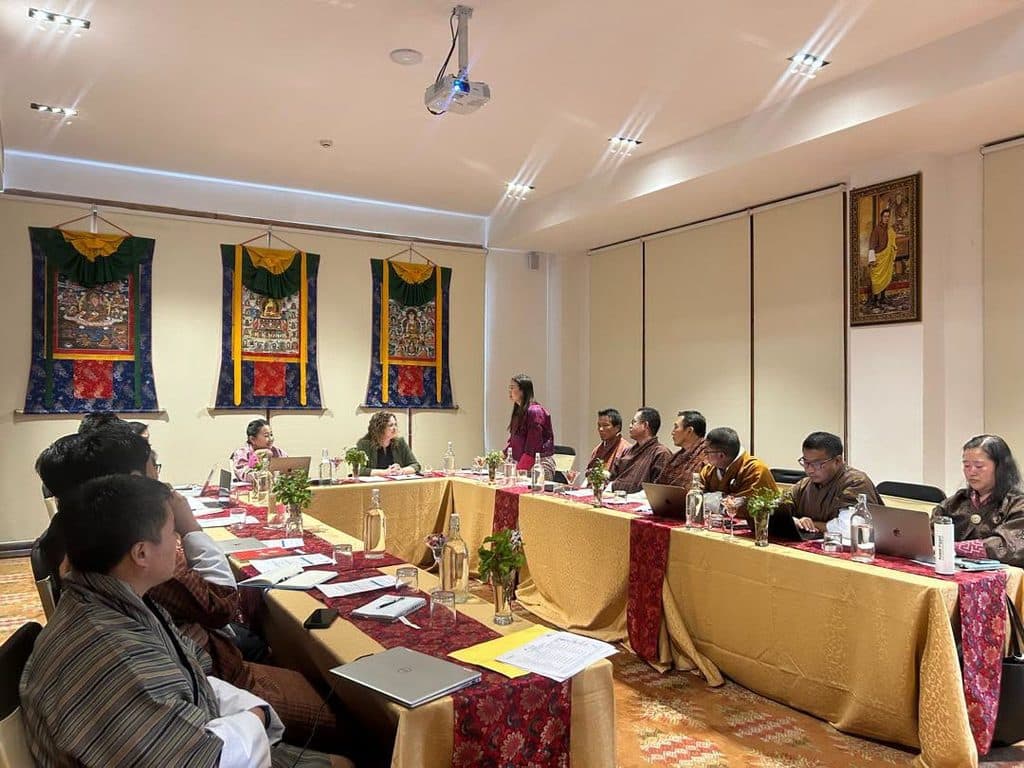
The meeting brought together senior officials from both governments to review progress, address implementation challenges, and aligns priorities under the 13th FYP—Bhutan’s overarching framework for sustainable and inclusive development.
It was co-chaired by the Director General of the Department of Macro-Fiscal and Development Finance under the MoF, RGoB, and the Deputy Chief of Mission of the Indian Embassy. Officials from multiple ministries and agencies participated, reflecting the broad scope of Bhutan–India cooperation across sectors.
Sherab Dorji, Thimphu