

It may not be a sector that is creating enough jobs, but it is doing something else. The country’s hydropower sector is quietly reshaping the narrative of gender inclusion in South Asia, with more women stepping into technical and leadership roles in an industry long dominated by men. This progress stands out in the South Asian context, where countries such as India, Nepal, Bangladesh, Sri Lanka, and Maldives report female participation in the power sector ranging between just 4 and 25 percent.
According to the World Bank (WB), women make up about 24 percent of the workforce in Bhutan’s energy sector today—an encouraging figure in a region where female participation remains limited. More notably, their roles extend far beyond administrative functions. Women now hold close to 22 percent of technical positions and 29 percent of managerial roles, with a growing number rising to senior leadership, including company directors.
Bhutan’s gains, while modest, signal a shift in what has traditionally been a male-dominated field. Still, change is taking root—often in quiet, determined ways. While challenges remain, the sector is emerging as one of the country’s most promising spaces for advancing gender equality alongside economic growth.
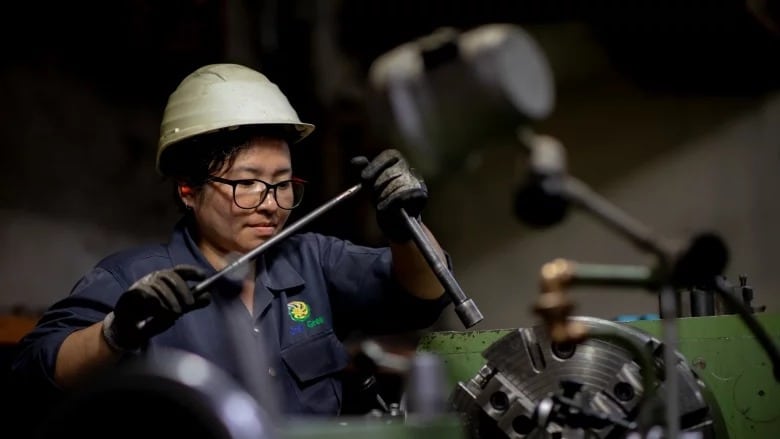
In the rugged terrain of Trongsa, as daylight fades over the hills, Plant Operations Manager Tashi Pema remains at her post at the Nikachu Hydropower Plant. Recently, when unexpected flooding threatened operations, she led emergency response efforts—coordinating teams, safeguarding critical equipment, and ensuring that power generation continued without disruption.
Her work reflects the dual realities of opportunity and challenge in Bhutan’s power sector. Roles in hydropower demand technical expertise, resilience, and a willingness to work in remote locations under demanding conditions—factors that have historically limited women’s participation.
Across South Asia, women like Tashi remain the exception rather than the norm. In 2023, only 32 percent of working-age women in the region were part of the labor force, compared to 77 percent of men. Economists warn that this disparity represents not just a social imbalance, but a significant economic loss. Bridging the gender gap in labor force participation could increase regional GDP by as much as 51 percent.
In Bhutan, the energy sector—particularly hydropower—offers a powerful avenue to narrow this gap. As the country’s largest export and a key contributor to the economy, hydropower accounts for between 12 and 15 percent of GDP, powering industries, institutions, and households nationwide.
With support from the World Bank Group, Bhutan is expanding its energy capacity through major projects such as the Dorjilung Hydroelectric Power Project, which is expected to increase electricity generation by up to 40 percent. The expansion promises not only economic growth, but also new employment opportunities in a job market grappling with youth unemployment and outward migration of skilled workers.
However, experts caution that growth alone will not ensure inclusion. “Expanding the sector must go hand in hand with policies that ensure women can access and thrive in these opportunities,” a sector specialist noted.
For many Bhutanese women, the power sector represents more than just a career—it offers financial independence, professional growth, and a chance to contribute to national development.
For Tandin Tshomo, an assistant engineer at the Mangdechhu Hydropower Plant, the choice was deeply personal. She says that hydropower is such an important part of Bhutan’s identity and economy, while reaffirming that it has always been the sector where she felt she could make a difference.
Supporting such ambitions is the South Asia WePOWER network, an initiative of the World Bank aimed at closing gender gaps in the energy sector. Since its launch in 2019, WePOWER has partnered with more than 50 public utilities across the region, benefiting over 235,000 women and girls through training, mentorship, internships, and career development support.
In Bhutan, key stakeholders—including Druk Green Power Corporation (DGPC)—have worked to localize these efforts. As the country’s primary hydropower generator and one of its largest employers, DGPC plays a central role in shaping workforce trends in the sector.
Through its collaboration with WePOWER, DGPC has introduced targeted initiatives to recruit and retain women. These include outreach programs for female students, structured internship and mentorship schemes, and technical and leadership training. Workplace improvements—such as separate sanitation facilities, lactation rooms, and childcare support—have also helped create a more inclusive environment, particularly in remote project sites.
Since 2020, these efforts have directly benefited 481 women across the organization. The company has also increased its female workforce by 15 percent, hiring 64 young women, many of them in technical roles.
For early-career professionals like Tandin, mentorship has been transformative. She reiterates that senior engineers helped her understand how theory translates into real-world operations, guiding her confidence to navigate her work.
Mid-career professionals are also seeing new pathways open. Specialized training in renewable energy, contract management, and project leadership is enabling women to expand their skill sets and move into more senior roles.
For Tashi Pema, such opportunities have broadened her career trajectory beyond core engineering.
These efforts are not only helping women enter the sector—they are enabling them to stay, grow, and lead.
For Ugyen Rangdol, a design engineer working in hydromechanical systems, the journey reflects both ambition and possibility. According to Ugyen, what matters most is equal opportunity and continued support.
Yet, challenges remain. Hydropower projects often require long hours in remote areas, making it difficult—particularly for working mothers—to balance professional responsibilities with family life.
Recognizing this, stakeholders including DGPC, Bhutan Power Corporation, the Electricity Regulatory Authority, and academic institutions are expanding outreach and support programs. These include connecting schoolgirls with STEM professionals, organizing site visits to hydropower facilities, and offering leadership training to prepare women for long-term careers in the sector.
As Bhutan’s power sector continues to expand, it holds significant potential not only to drive economic growth, but also to advance gender equality.
For the women already shaping its future, the message is clear: representation matters, but capability matters more. Tandin believes that it takes courage to work in a field where one is a minority, but adds that once a person builds competence, their work speaks for itself, and that gender should never define one’s potential.
Tashi Namgyal, Thimphu