


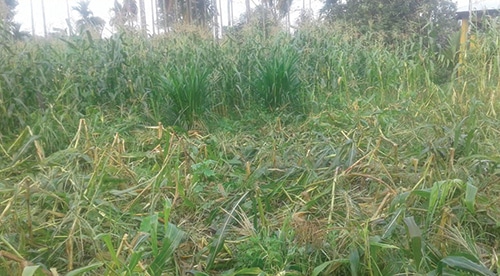
Unreported wildlife-related losses could leave farming communities out of future government support, as authorities depend on recorded incidents to identify human-wildlife conflict hotspots and determine where mitigation measures are most urgently needed.
Chief Forestry Officer Tshering Dendup said communities should report wildlife-related incidents even when there are no immediate financial incentives, as the information is essential for planning future interventions. He explained that areas experiencing frequent wildlife attacks could be overlooked if incidents remain unreported, while communities that consistently report losses are more likely to receive attention because authorities have evidence of the scale of the problem. He said Bhutan’s approach to human-wildlife conflict had largely been reactive and called for better reporting to support more informed and preventive interventions.
The extent of underreporting is reflected in ongoing research by researcher Lethro, which found that more than 60 percent of people affected by carnivore-related livestock losses in the communities covered by the study had never reported the incidents to government agencies. The research identified four major barriers: the absence of tangible benefits from reporting, limited institutional follow-up, uncertainty over which agency to approach and difficulties reporting incidents occurring in remote forests and mountainous areas.
Lethro said these challenges meant authorities were likely seeing only part of the burden borne by affected communities. He recommended establishing a centralised repository for human-wildlife conflict data and clearer reporting channels among relevant agencies.
However, recording losses is only part of the challenge. The design and implementation of mitigation programmes can also determine whether vulnerable households receive protection.
Chimi Dorji, Director of the Tarayana Centre for Research and Development under the Tarayana Foundation, said existing policies and programmes did not always account for the different circumstances of affected communities. He cited chain-link fencing as an example, where minimum household numbers, land requirements and community contributions could exclude farmers with small or scattered plots. Poorer households, particularly those headed by elderly people, often struggle to contribute the required labour or money. He said the cost of living alongside wildlife extended beyond damaged crops and livestock. Farmers spend considerable time guarding their fields, sometimes throughout the night, at the expense of other productive activities and their peace of mind.
Drawing on an assessment he conducted in 1997, Chimi Dorji said the time and labour farmers invest in protecting their crops should be recognised when calculating the economic cost of human-wildlife conflict. He argued that farmers should be recognised as partners in conservation rather than merely recipients of government and donor assistance.
Tshering Dendup also cautioned against the uneven distribution of mitigation measures, describing what he called the conservation island effect. Solar and chain-link fencing may protect one area but push wildlife-related pressure towards neighbouring communities without similar protection. He said the government was working to scale up agricultural mitigation interventions across all 205 gewogs.
The Bhutan Coexistence Agenda, he said, should help shift the country from responding to incidents after they occur towards a forward-looking approach that promotes harmony between people and wildlife. One initiative is the tiger impact certificate, being piloted in Trongsa, which is intended to help communities explore alternative livelihood opportunities in areas affected by tiger-related conflict.
Trongsa Dzongda Wangdi Gyeltshen said tiger-related incidents affected household food security and undermined farmers’ confidence in continuing agricultural activities. Women and elderly people often bore a disproportionate share of the burden, while recovery from losses could take considerable time.
In Samtse, Gup Shajog Khaling Rai of Tashicholing Gewog described the impact of elephants moving along a cross-border migration corridor between India’s Gorumara National Park and Chapramari Wildlife Sanctuary. He reported that several houses had been destroyed and around 500 areca trees lost, representing an estimated annual income of Nu 0.5 million for affected communities.
Villagers have introduced solar electric fencing, watchtowers and boulder barriers at entry points. A rapid response team involving local government officials, forestry officials and residents monitors elephant movements and circulates alerts through social media. However, maintaining these measures remains difficult. Fences and other infrastructure are frequently damaged by lightning and heavy rainfall, while communities lack sufficient funds for repairs.
The experiences in Trongsa and Samtse demonstrate that human-wildlife conflict is not simply a conservation issue. It affects household income, food security, agricultural productivity and the willingness of rural communities to continue farming. Addressing the problem requires more than fencing and compensation. Communities need accessible reporting systems, reliable institutional follow-up and mitigation programmes designed around their actual circumstances.
Most importantly, farmers who bear the daily costs of living alongside wildlife must be recognised as partners in conservation. Without reliable information and equitable support, the communities carrying the greatest burden risk remaining invisible in the very interventions intended to help them.
Nidup Lhamo, Thimphu