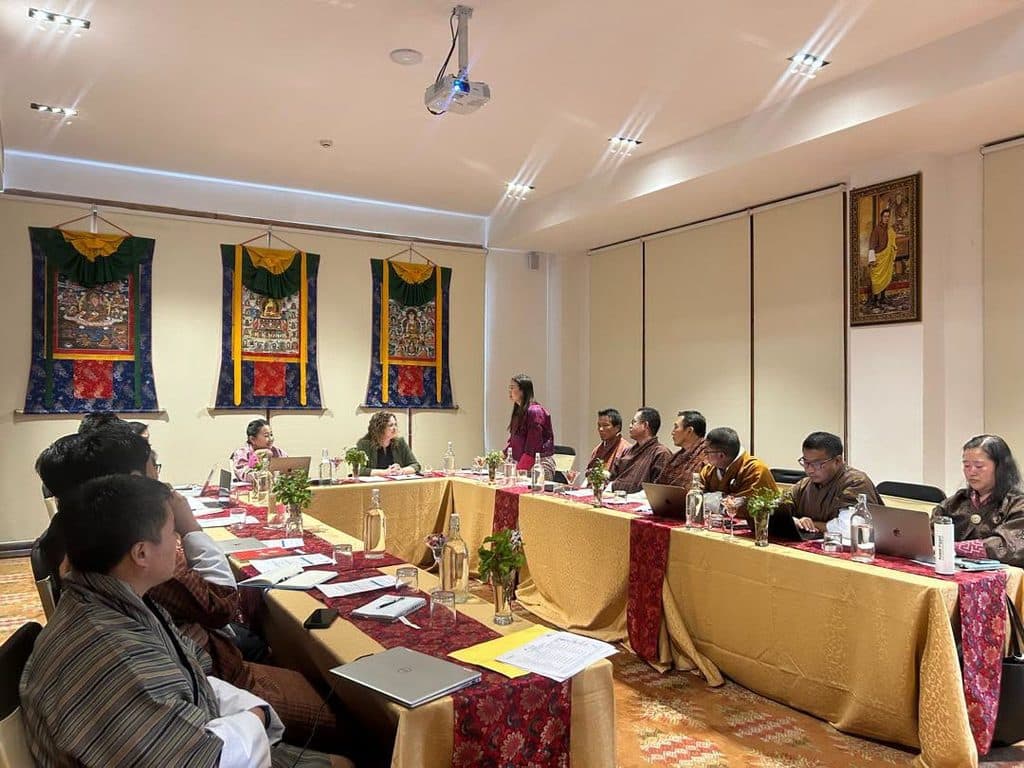
Highlighting the immense opportunities in Bhutan’s agri-food sector, UN Resident Coordinator (RC) Karla Robin Hershey said that Bhutan offers exciting prospects for high-value products produced under a unique geographical environment.
Speaking at the opening ceremony of the Bhutan Agri-food Trade and Investment Forum (BATIF) 2024 on May 15, she emphasized that strategic investment in priority value chains could significantly boost national economic development and unlock Bhutan’s full potential.
Hershey noted that Bhutan needs to harness support from donors and the private sector, establish robust links, bolster policy frameworks, and streamline logistical operations to create and sustain efficient supply chains. These supply chains should seamlessly connect growers, producers, traders, and consumers. She cited BATIF as a testament to Bhutan’s proactive approach in engaging with investors and showcasing investment opportunities, particularly in national agriculture and food value chain development.
“Having lived in Bhutan for a few years, I have come to realize the unique potential and opportunities that the country holds,” Hershey added.
By 2029, Bhutan aims to enhance productivity, broaden market access, and foster innovation, targeting a Gross Domestic Product (GDP) contribution of about Nu 600 million from the agricultural sector. Additionally, Bhutan seeks to increase export value and reduce greenhouse gas emissions, demonstrating a commitment to sustainable development as it transitions from its Least Developed Country (LDC) status in 2023.
Thriving in a clean and green environment, Bhutan is committed to inclusive economic development by increasing commercialization while ensuring inclusiveness for farmers. Hershey emphasized that sustainable growth should benefit all stakeholders, including farmers and consumers. She believes that investing in the agri-food sector is a true investment in Bhutan’s people and regional growth.
“The agricultural sector can be transformed into an attractive industry, providing meaningful, dignified, and well-enumerated employment while proactively mitigating carbon emissions,” Hershey said, adding that it must also ensure thriving biodiversity and ecosystems.
To achieve this transformation, Hershey stressed the need for crucial interventions, particularly in building market networks, innovative financing, and increasing partnerships or investments and trade. These steps can help transform the agricultural sector into a vibrant industry that provides meaningful employment, preserves nature, and contributes to the nation’s prosperity.
Currently, the agriculture sector in Bhutan employs a large portion of the population, reflected in a high Labor Force Participation Rate (LFPR). However, its contribution to the country’s economic output remains relatively low, as seen by negative growth in the primary sector due to lower crop production and deceleration in livestock growth.
In 2022, agriculture generated 43.4% of total employment, yet its contribution to GDP was only 14.7%. This development aligns with global trends as the Bhutanese economy transitions from agriculture to industry and services. The gap in agriculture productivity decreased to 4.5% from a high of 7.5% in 2018, indicating a shift in the economy from primary to secondary and tertiary sectors.
The agriculture sector also faces issues such as disproportionate regional and gender distribution. In rural areas, approximately 64% of the working population was employed in agriculture in 2022. In contrast, the service sector employed 76.6% and the industry sector 19.4% in urban areas during the same period.
Despite an increase in the Gross Value Added (GVA) from agriculture over the past six years, the share of employment in this sector has been steadily declining. From a GVA of 12.9% and an employment share of 51.3% in 2017, GVA increased to 14.7% while employment share declined to 43.4% in 2022.
Bhutan aims for the agricultural sector to contribute about 8% to GDP growth, targeting Nu 50 billion by 2029. This ambitious goal reflects the country’s commitment to transforming its agriculture sector into a key driver of economic development.
By Sherab Dorji, Thimphu