

75.7% withdrawn from 2026 auction as collectors reject low bids; only 73kg sold for Nu 162.5 million
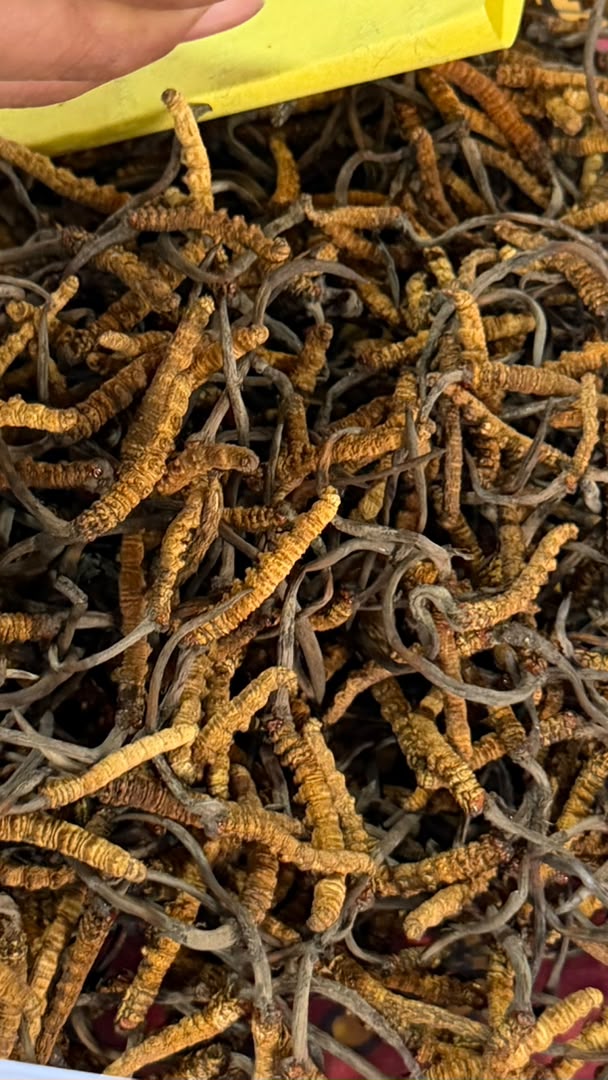
Bhutan’s prized Yartsa Goenbub faced a bruising auction season this year, with collectors withdrawing more than three-quarters of the cordyceps brought to the annual auction after rejecting the prices offered by bidders.
Of the 300.16kg of cordyceps presented across eight auction venues, only 73.02kg, or 24.33 percent, was sold, while a staggering 227.15kg, or 75.67 percent, was withdrawn.
The scale of the withdrawals marks a sharp departure from the expectations surrounding one of Bhutan’s most lucrative natural resources, which provides an important source of income for highland communities.
According to the Cordyceps Auction 2026 report, the overwhelming majority of collectors chose to take their harvest home rather than accept what they considered inadequate bids.
The report attributes the high withdrawal primarily to low bid prices, noting that collectors did not receive their expected prices and consequently withdrew their cordyceps from the auction.
Yet the auction produced a striking paradox: the quantity sold plunged to its lowest level in five years, while the value of the cordyceps sold rose sharply to Nu 162.5 million.
The annual auction, conducted from July 10 to August 6, involved 2,317 collectors across eight auction venues in cordyceps-producing areas.
The venue-level records show 105 bidder participations, while the report’s overall summary records 29 bidders.
99.58kg withdrawn in Khatoed
Khatoed Gewog Office in Gasa recorded the largest quantity presented, with 100.86kg reported. Almost the entire quantity—99.58kg—was withdrawn.
That represents about 43.8 percent of all cordyceps withdrawn nationwide.
Sephu Gewog Office in Wangduephodrang, meanwhile, recorded the highest quantity successfully auctioned, with 29.38kg, accounting for about 40.2 percent of the total quantity sold.
Khamaed Gewog Office recorded the highest bidder participation, with 25 bidders, while Khatoed recorded the lowest, with five.
The highest bid value recorded at an auction venue was Nu 3.602 million at Khamaed Gewog Office, while the lowest was Nu 55,000 at Kawang Gewog Office in Thimphu.
The auction at Bumdeling Gewog Centre in Trashiyangtse was cancelled altogether after no bidders turned up.
Lowest quantity sold in five years
The 2026 results stand out even more against the backdrop of the past five years.
In 2022, about 695kg of cordyceps was auctioned, generating an auction value of Nu 414.7 million.
The quantity fell sharply to 128kg in 2023, before increasing to 138kg in 2024 and 169.79kg in 2025.
This year, however, only 73.02kg was actually sold—the lowest quantity recorded during the five-year period.
Despite the dramatic fall in quantity, the reported auction value climbed to Nu 162.5 million, significantly higher than the 2025 figure.
The report attributes the decline in auction value in 2025 mainly to falling international market prices for cordyceps.
The 2026 results suggest that price expectations have become an increasingly important factor in the auction, with collectors choosing to hold back their produce rather than sell at prices they consider too low.
Need for better market information
The report also points to weaknesses in the information available from the auctions and recommends improving the collection of detailed, lot-level data.
It recommends recording the winning bidder, number of bids, winning price and quantity purchased for each lot. Such information would allow authorities to better assess competition, pricing and market trends.
It also recommends maintaining consistent records for each auction venue from year to year so that changes in quantities, prices and bidder participation can be properly compared.
The report specifically recommends reviewing venues where large quantities are withdrawn alongside relatively low bidder participation, as these may indicate weaknesses in competition or market access.
The annual auction is coordinated by the Department of Agricultural Marketing and Cooperatives (DAMC) in collaboration with the Department of Forests and Park Services, gewog administrations and the Royal Bhutan Police.
The 2026 auction followed the Annual Cordyceps Stakeholders Meeting held in Punakha on April 29–30, with auction activities beginning on July 10.
For the thousands of highland collectors who depend on Yartsa Goenbub, this year’s figures point to a difficult market: a record share of their prized harvest remained in their hands, not because there was no produce to sell, but because the prices offered were not high enough for many collectors to let it go.
Sangay Rabten, Thimphu