

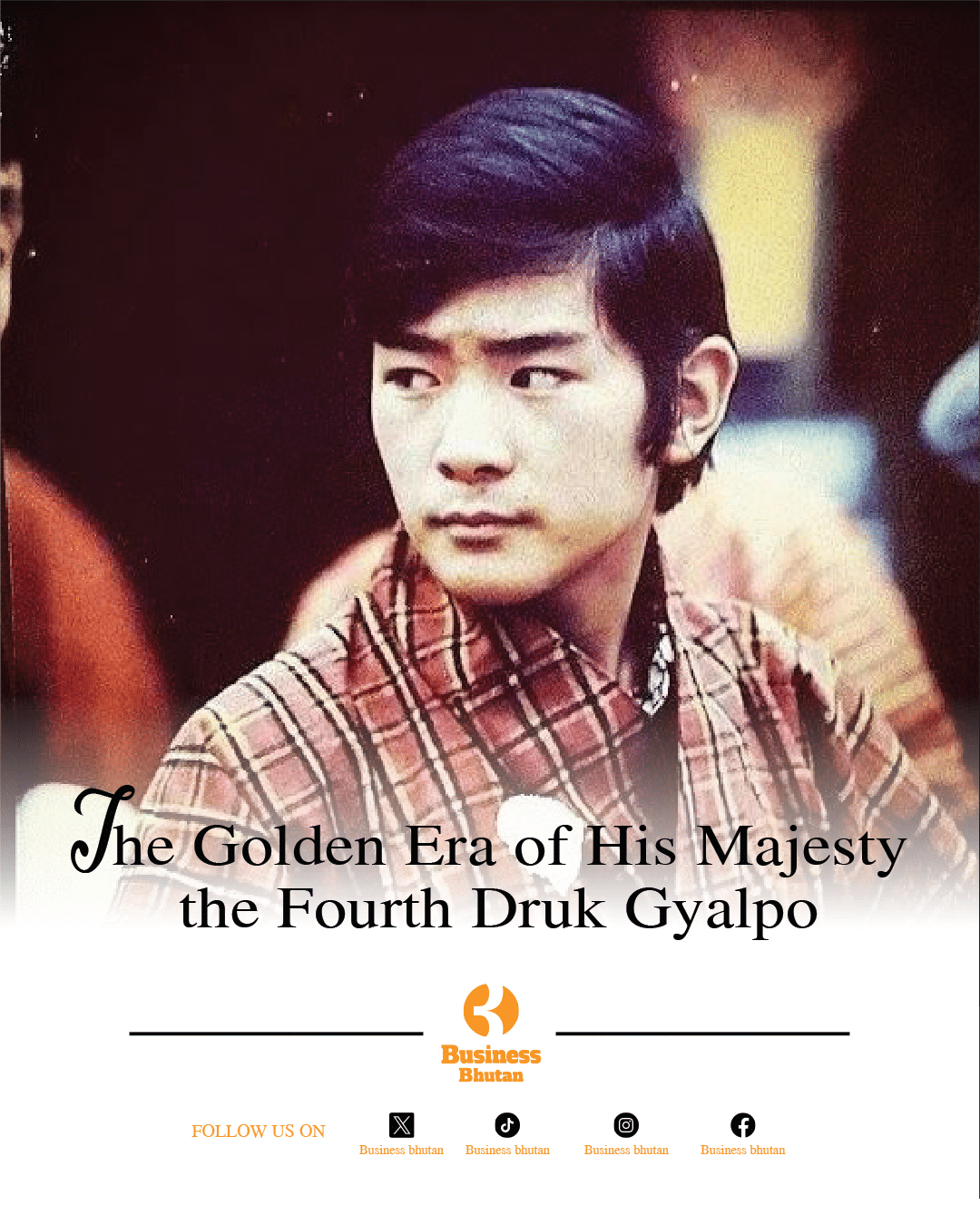
His Majesty the Fourth Druk Gyalpo, Jigme Singye Wangchuck, ascended the throne at a time when Bhutan had completed just two Five Year Plans. Yet, with unwavering dedication and a profound sense of responsibility, he fulfilled the dreams of his late father and guided the nation for 34 years, ushering in what is celebrated as the “Golden Era” of Bhutanese history.
Recognized as one of Asia’s greatest contemporary leaders, His Majesty combined visionary leadership, pragmatic strategy, selfless service, humility, and tireless hard work. A skilled diplomat and statesman, he earned international recognition as “the star on the Asian stage”, admired for his wisdom and foresight.
Taking on the responsibilities of Chairman of the Planning Commission, His Majesty ensured that all plan periods were successfully carried out. It is the success of the plan periods which led to developments in all spheres of Bhutanese lives. Seven Five Year Plans were implemented under the supervision and guidance of His Majesty, who spent months reviewing plans and programs, correcting mistakes and proposing alternative policies.
Every FYP was unique in their priorities: the first and second FYPs focused on road infrastructure and basic social amenities; the third FYP on improving communications, irrigation, health, education and agriculture; and the fourth FYP on the growth of economy like trade and industries, tourism, power, agriculture, livestock and forests. The fifth FYP stressed on making large industrial investments and decentralization of development activities to the local governments.
In the sixth FYP, the administrative system was strengthened to close the gap between increasing volume of development activities and capacity to implement them. The seventh and eighth FYPs focused on sustainable development, improvement of private sector efficiency, corporatization of government enterprises, people’s participation, decentralization, strengthening of the institutions, human resource development, balanced economic development, preservation of culture and improving the quality of life. In the ninth FYP, the responsibility of planning and implementing development works were taken further down to the block (gewog) level. As can be seen from the FYPs, His Majesty ensured that every aspect of development was encapsulated in one or the other plan periods.
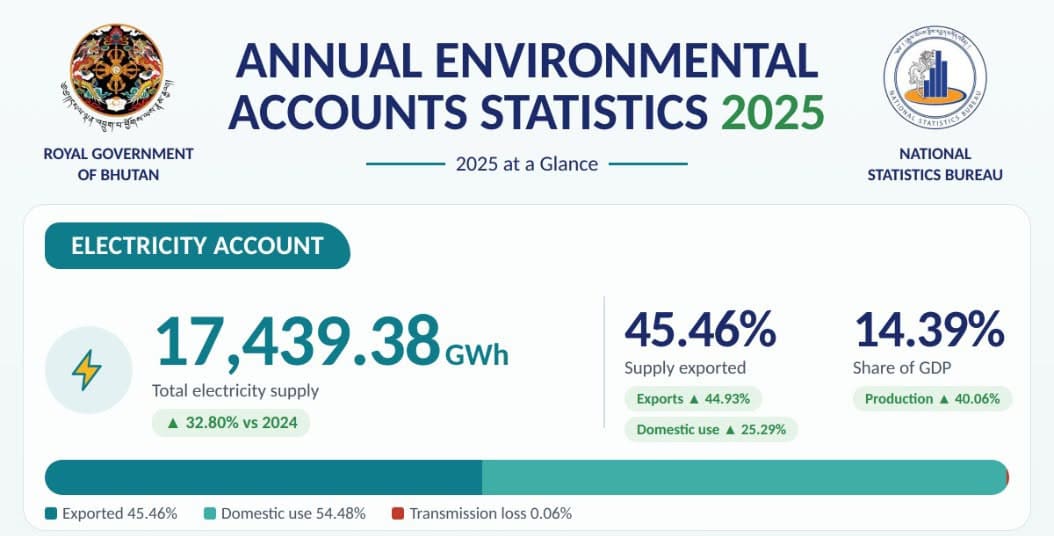
A comparative study of data in 1974 and 2006 provides a vivid picture of development that ensued during the Fourth Druk Gyalpo’s reign. In 1974, there were 13,410 students enrolled in schools compared to about 151,260 in 2006. 56 health establishments existed in 1974, which rose to 715 by 2006. In 1974, a sparse network of 1,332 km of roads had been laid out. By the end of 2006, Bhutan had 4,544 km of motorable roads. Electricity generated in 1974 was four million units, compared to 3.357 billion units by the end of 2006. The first group of 20 tourists entered Bhutan in 1974. In 2006, 17,365 tourists visited the country.
Alternatively, several large-scale investments like the Chukha Hydropower Project, Penden Cement Plant and major irrigation schemes were initiated outside the Plan. One of the landmark developments, soon after His Majesty’s Coronation, was the signing of the ambitious Chukha Hydro-Project in March 1974. It paved way for similar projects to be initiated within Bhutan. Hydropower is today the top generator of revenue. Similarly, it was in 1979 that the construction of Penden Cement Plant began. It was operational by 1983. The Penden Cement Authority produced about half a million MTs of cement every day in 2008.
The reign of the Fourth Druk Gyalpo saw Bhutan’s entry into the age of Information Technology which started from the late 1980s. Digital telecommunication networks were expanded connecting different dzongkhags internally and with the outside world. The introduction of internet and satellite TVs in 1998 brought Bhutan closer to the globalized world.
His Majesty’s reign, especially the decade between 1980 and 1990 is called as the decade of diplomacy. After establishing the United Nations office in Bhutan in 1979, Bhutan forged diplomatic relations and became associated with UN related organizations, international organizations and sports and other international organizations. Diplomatic links were established with nations such as Bangladesh in 1973; Kuwait and Nepal in 1983; the Maldives in 1984; Denmark, Norway, Sweden, Switzerland and the Netherlands in 1985; Japan and Finland in 1986; South Korea and Sri Lanka in 1987; Austria in 1989; Thailand in 1991; Bahrain in 1992; Singapore and Australia in 2002; and Canada in 2003. Towards the North, Foreign Ministers of Bhutan and China met at New York in 1983. This led to the first Sino-Bhutan border talks in 1984.
Sharab Dorji
From Thimphu