

Nine in ten children in Bhutan are exposed to at least one climate hazard, with drought emerging as the most widespread threat, according to the Children’s Climate Risk Report 2026 released by UNICEF.
The report maps children’s exposure to multiple climate hazards, including droughts, floods, heatwaves, fires, storms, and air pollution. It also introduces a multi-hazard framework that assesses not only exposure but also children’s vulnerability based on access to essential services such as healthcare, education, clean water, and protection systems.
According to the findings, 89.6 percent of children in Bhutan are exposed to at least one climate hazard, while 19.63 percent are exposed to at least two hazards. Less than one percent are exposed to three or more overlapping hazards.
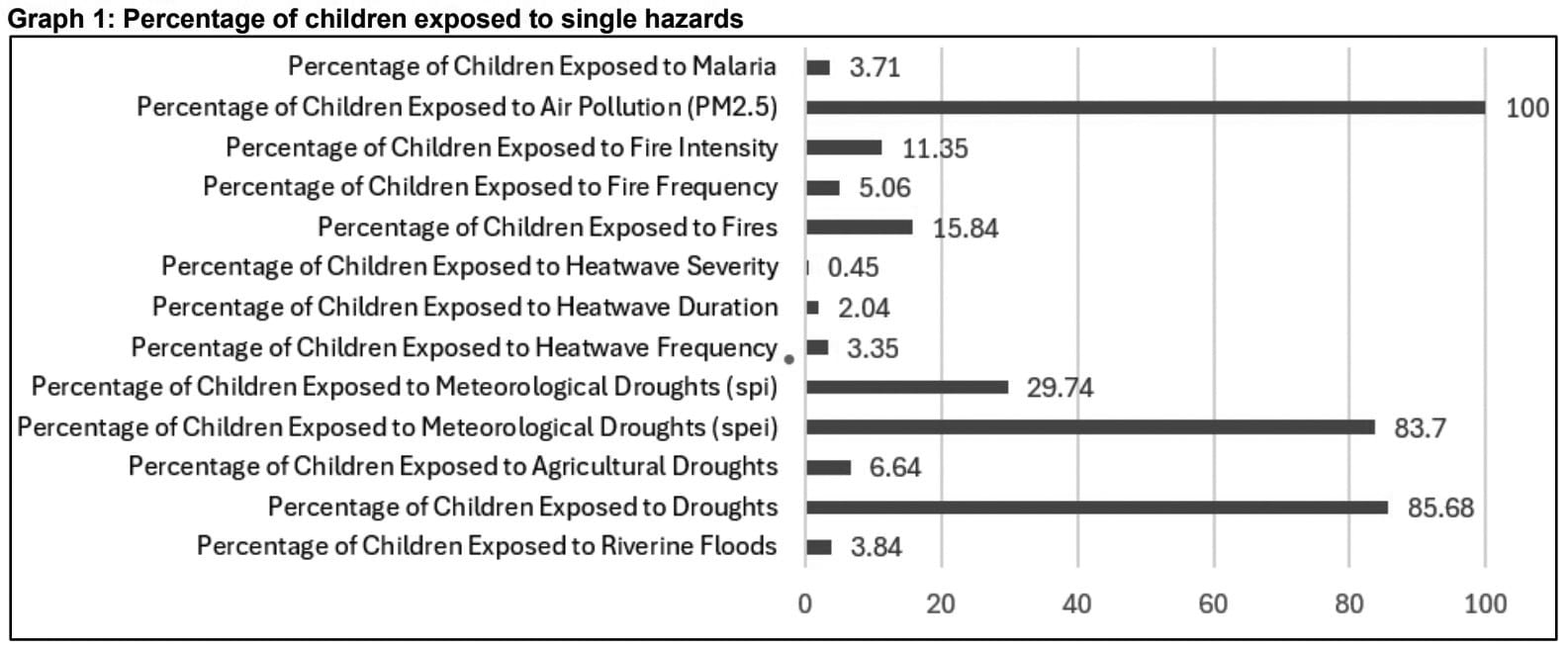
Drought is the most widespread hazard, affecting 85.68 percent of children, largely driven by shifting rainfall patterns. Other hazards include exposure to fires (15.84 percent), riverine floods (3.84 percent), and heatwaves, which affect a much smaller proportion of children.
The report also highlights that 32.14 percent of children fall within the 75th percentile of multi-hazard intensity exposure, indicating moderate levels of overlapping climate risks. However, exposure declines sharply at higher intensity levels, with only 0.09 percent of children falling within the 95th percentile.
It notes that while exposure to PM2.5 air pollution affects 100 percent of children in Bhutan, it is classified as a climate-sensitive hazard rather than a direct climate hazard.
Beyond exposure, the report stresses that vulnerability significantly shapes children’s overall climate risk. More than three-quarters of children (77.34 percent) live in severe food poverty, while 17.87 percent are affected by stunting. Only 4 percent of children are covered by social protection programmes, limiting household resilience to climate-related shocks.
The report also finds that early childhood development coverage remains limited, with 38 percent enrolment in Early Childhood Care and Development (ECCD). In addition, 1,326 children require special education services, while 7,944 children are enrolled in the monastic education system.
Protection-related concerns further increase children’s vulnerability. Around 9 percent of women aged 20–24 were married before the age of 18, while 82.8 percent of children experience violent discipline.
These combined factors reduce children’s ability to cope with and recover from climate-related shocks such as droughts, floods, and heatwaves, increasing the risk of long-term impacts on their health, education, and wellbeing.
Karma Galay, Director General of the Department of Local Governance and Disaster Management (DLGDM), said the increasing frequency of climate-induced disasters highlights the urgent need to prioritise children in disaster risk reduction and climate adaptation efforts.
“By strengthening early warning systems, preparedness, resilient public services, and local response capacities, we can better protect children and ensure no child is left behind in a changing climate,” he said, adding that the department remains committed to working with UNICEF and its partners to build a safer and more resilient Bhutan.
UNICEF Bhutan Representative Rushnan Murtaza said the report provides critical evidence to strengthen climate resilience planning and investment.
“Recent heavy rainfall and flooding are a reminder that these risks are not distant—children are already feeling the impacts,” she said. “UNICEF remains committed to working with the Royal Government of Bhutan and its partners to ensure every child is protected and able to thrive in a changing climate.”
The report also calls for urgent investment in climate-resilient systems, particularly in water, sanitation, healthcare, education, and social protection services. It warns that without timely action, increasing climate hazards will place greater strain on families, communities, and national systems.
Nidup Lhamo, Thimphu