

The National Reintegration Program is steadily emerging as a vital lifeline for Bhutanese returnees seeking to rebuild their lives, reconnect with society, and re-enter the workforce. With growing coordination among government agencies and a renewed focus on aligning opportunities with individual skills and aspirations, the program is beginning to show tangible results—offering hope to those who once left the country in search of better prospects.
According to an official from the Ministry of Industry, Commerce and Employment (MoICE), the program has made notable progress in recent months, despite facing structural and market-related challenges. The official underscored that the true strength of the reintegration initiative lies not in mass placement numbers, but in its careful, interest-driven approach that prioritizes sustainability and long-term impact over quick fixes.
Encouraging Returnee Numbers Signal Growing Trust
As of the fiscal year 2025–2026, a total of 42 individuals registered under the National Reintegration Program, expressing interest in returning to Bhutan and accessing reintegration support. Of these, 38 individuals have already completed their return journey—an achievement the Ministry sees as a strong indicator of growing trust in the system.
“Our data shows that the majority of registered returnees have successfully come back home, which is a positive sign,” the official said. “It demonstrates that people are increasingly confident that there is institutional support waiting for them when they return.”
This return rate, the official added, reflects improved outreach and communication efforts, as well as greater awareness among Bhutanese living abroad about the assistance available through the program.
Employment Placements: Quality Over Quantity
Among the 38 returnees, 11 individuals have already secured employment opportunities. These placements span both domestic jobs and overseas employment engagements, facilitated through relevant recruitment channels and partner agencies.
While the number may appear modest at first glance, the Ministry is clear that this is a deliberate outcome. “We are not chasing numbers for the sake of statistics,” the official explained. “Our focus is on ensuring that placements are appropriate, meaningful, and aligned with the returnees’ skills, experiences, and personal preferences.”
Some returnees have found opportunities within Bhutan, while others have chosen to re-enter overseas labor markets under more structured and informed arrangements. In both cases, the Ministry views these outcomes as progress toward stable livelihoods rather than short-term employment.
A Demand-Driven, Individual-Centered Approach
One of the defining features of the National Reintegration Program is its demand- and interest-driven design. Unlike traditional employment schemes that prioritize predefined sectors, this program starts with the individual.
“We do not impose sectoral priorities,” the official said. “Instead, we profile each returnee, understand their competencies and aspirations, and then facilitate referrals to relevant agencies or employers.”
This flexible approach has helped ensure that returnees are not forced into unsuitable roles simply to meet placement targets. It also increases the likelihood that placements will be sustainable, reducing the risk of repeat migration driven by dissatisfaction or underemployment.
Interestingly, a significant number of returnees have expressed a preference for overseas employment. This trend, according to the Ministry, reflects both economic realities and accumulated experience.
“Many of these individuals have already worked abroad and gained valuable skills,” the official noted. “They want to leverage that experience to improve their livelihoods, whether through higher wages or better working conditions.”
Facilitator, Not Employer
The Ministry has been careful to clarify its role in the reintegration process. MoICE does not directly place individuals into jobs; instead, it acts as a facilitator—connecting returnees with potential employers, recruitment agencies, and support services.
“Employment outcomes depend on multiple factors,” the official explained. “Labor market demand, recruitment standards, employer requirements, and even timing all play a role. Our responsibility is to ensure that returnees are informed, prepared, and connected.”
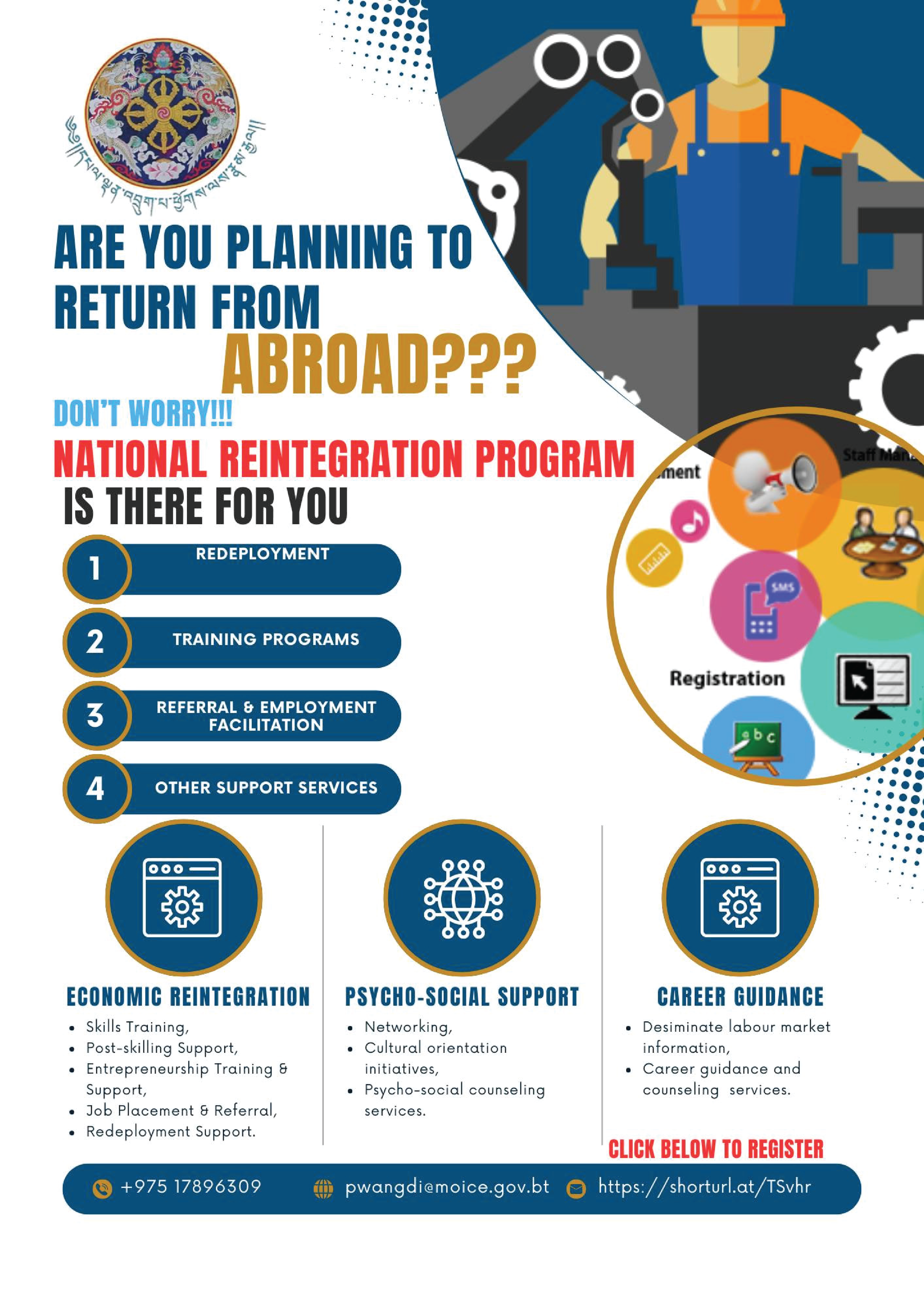
Through registration, profiling, counseling, and referrals, the program creates a structured pathway for returnees to navigate the often complex employment landscape—something many struggle with when returning independently.
Challenges Persist, but Momentum Is Building
Despite the progress, the program is not without challenges. Limited job availability in certain sectors, mismatches between skills and market demand, and external recruitment requirements continue to influence outcomes. Additionally, global labor market fluctuations can affect overseas employment prospects.
However, the Ministry remains optimistic. “Even when immediate placement is not possible, the program still adds value,” the official said. “It provides coordination, guidance, and a sense of direction during a critical transition period.”
Stakeholder collaboration has also improved, with closer coordination among government agencies, training institutions, and recruitment partners. This ecosystem approach, the Ministry believes, is essential for long-term success.
Looking Ahead: A More Inclusive and Responsive Program
MoICE plans to further strengthen the National Reintegration Program in the coming years by expanding its reach, refining its services, and enhancing responsiveness to returnee needs. This includes improving data systems, deepening partnerships, and exploring additional support mechanisms such as skills upgrading and entrepreneurship linkages.
“We are committed to making this program more effective and inclusive,” the official said. “Our goal is to ensure that every Bhutanese who wishes to return can do so with confidence—knowing that there are pathways to meaningful opportunities.”
A Quiet but Crucial Success Story
While the National Reintegration Program may not dominate headlines, its steady progress tells an important story: with the right facilitation, coordination, and people-centered policies, returnees can successfully reintegrate into the labor market and contribute to national development.
As Bhutan continues to navigate migration dynamics and workforce transitions, the program stands as a reminder that coming home does not have to mean starting over alone. For many returnees, it marks the beginning of a new chapter—one built on support, dignity, and renewed possibility.
Sherab Dorji
From Thimphu