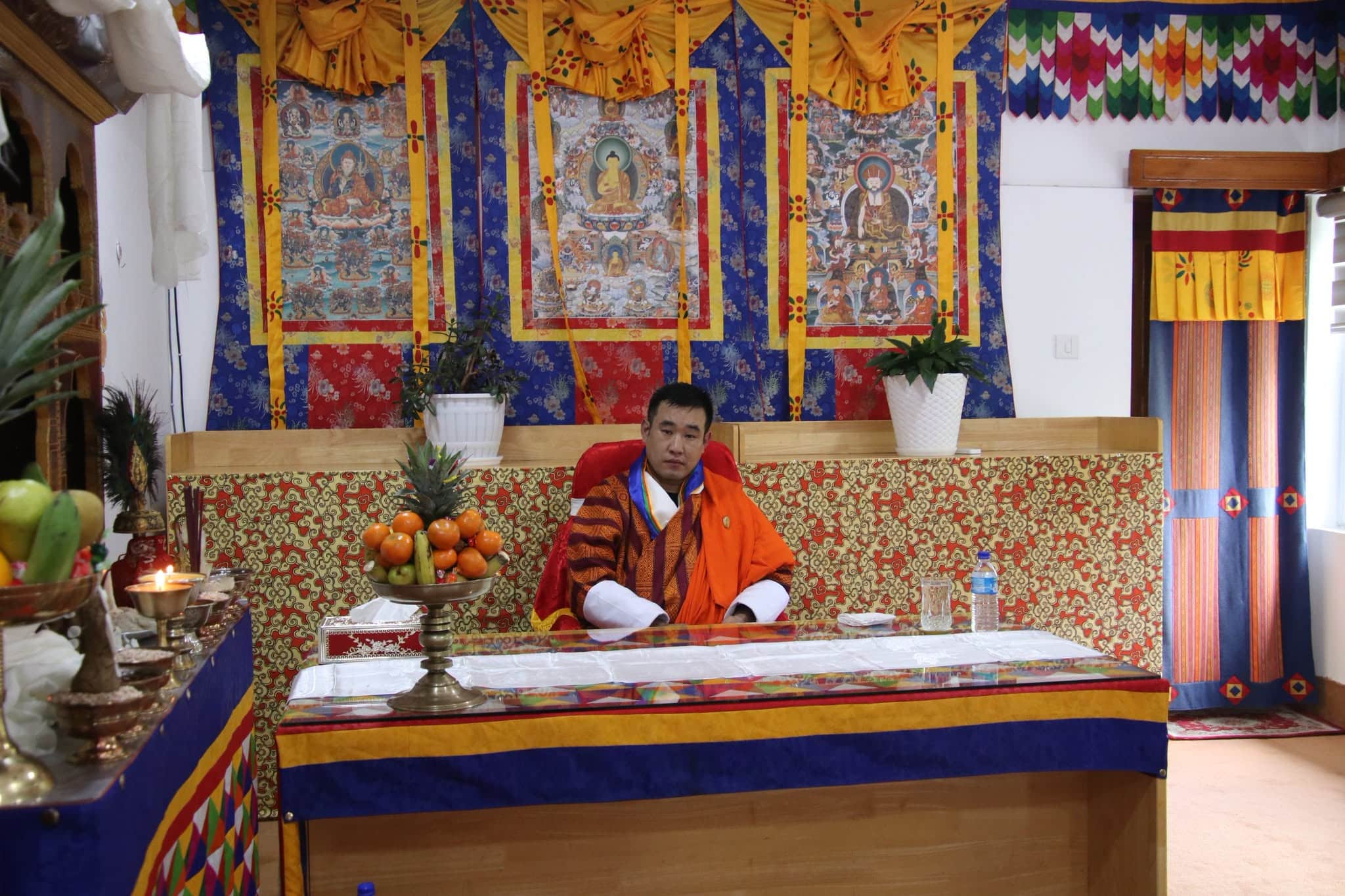
New Energy Minister, Lyonpo Sonam Tashi in a candid conversation with Business Bhutan shortly after assuming office
Q. What was your initial feeling when you were appointed?
A. I felt deeply honoured and humbled by the trust and confidence placed in me by His Majesty The King and the Government. At the same time, I felt the full weight of the responsibility.
The Ministry manages some of Bhutan’s most important national assets—from the energy that powers our homes and economy to the forests, water, minerals and environment that sustain our people and define our identity as a carbon-negative nation. How we manage these resources today will shape our economy, environment and opportunities for our youth tomorrow.
I am excited by this opportunity, but I do not underestimate the scale and complexity of the responsibility. I assume this role with humility and a firm commitment to listen, learn and serve to the best of my ability.
Q. How prepared are you to lead the Ministry?
A. No one can honestly claim to know everything from the first day, particularly in a Ministry with such a broad and highly technical mandate.
I bring my technical and professional experience, my experience as a people’s representative, and my understanding of the Government’s priorities. The Ministry also has experienced officials and highly capable technical professionals across its departments.
My responsibility is to provide clear direction, ask the right questions, remove bottlenecks and take responsibility for results. I will draw fully on the Ministry’s institutional experience, seek regular technical briefings and consult relevant stakeholders before making major decisions.
Preparedness is not limited to what one brings on the first day. It must be strengthened continuously through listening, learning and close engagement with the people and institutions responsible for implementation.
Q. What are your immediate priorities? Do you also have party pledges to fulfill?
A. My immediate priority is to obtain a clear picture of all ongoing policies, programmes, projects and commitments—what is progressing well, what is delayed and where ministerial intervention is required.
All sectors under the Ministry are important and closely interconnected. We must strengthen energy security, accelerate hydropower development, diversify into solar and other renewable energy sources, improve transmission and distribution, and ensure reliable electricity for households and businesses. At the same time, we must manage our forests, water, minerals and environment responsibly and sustainably.
Youth will be central to these priorities. Major projects should be assessed not only by the power generated or revenue earned, but also by the Bhutanese jobs, skills and enterprises they create. Our young people must become skilled professionals, innovators, entrepreneurs and future leaders in these sectors.
Significant progress has already been made on many of the party’s pledges related to hydropower, renewable energy and mining. My responsibility is to consolidate these achievements, complete the remaining commitments and ensure that their benefits reach the people. Once a party forms the Government, its pledges become a public responsibility and must be pursued within the law, available resources and technical feasibility.
Q. Before becoming a Minister, what improvements did you wish to see in the sector?
A. Like many citizens, I wanted to see faster implementation, stronger coordination, clearer communication and more reliable and predictable public services.
Bhutan also needs to accelerate the diversification of its energy mix beyond hydropower. Expanding solar, wind and other renewable energy sources will strengthen our resilience against seasonal shortages and climate-related variability. The Ministry has already undertaken important work through the Renewable Energy Development Roadmap 2024 and the National Energy Policy 2025. I will focus on ensuring that the plans and targets under these frameworks are implemented within the timelines set by the Ministry.
I also want the sector to become more accessible to young Bhutanese. Energy, forestry, mining, environmental services, waste management and climate technology can create meaningful careers and business opportunities. Our youth need the right skills, access to opportunities and confidence that they can build their future in Bhutan.
We must also optimize the economic benefits from our natural resources in support of the country’s 10X economic growth aspirations while ensuring sustainable development. Conservation and economic development should not always be viewed as opposing choices. Bhutan must continue demonstrating that we can protect our environment while creating jobs, revenue and opportunities for our people.
Q. Since assuming office, what issues require urgent attention and reform?
A. I was appointed on 27 August 2026 and have only recently joined the Ministry. It would therefore be premature and unfair to label any area as a failure or shortcoming before completing a proper assessment.
I am currently meeting with the departments to understand their mandates, functions, programmes under the 13th FYP and the APA for the 2026–2027 financial year. Following these meetings, I will review the progress of ongoing activities and projects. I also intend to make regular site visits to understand implementation challenges and provide the necessary guidance for timely completion.
From the initial briefings, areas such as timely project execution, reliable year-round energy supply, stronger transmission and distribution systems, efficient approval processes, inter-agency coordination and effective monitoring of natural resources will require continued attention.
Any reform must be based on evidence, consultation and the law. We must improve efficiency without weakening environmental and social safeguards. I will be in a better position to provide a more detailed assessment after completing the review.
Q. What key changes do you intend to introduce during your tenure?
A. I do not intend to change systems merely for the sake of change. We will preserve what is working, strengthen what can perform better and address genuine gaps identified through evidence and consultation.
I want to promote a stronger culture of delivery, supported by clear priorities, realistic timelines and accountability for results. We will work towards a more diversified and resilient energy portfolio, simpler and more transparent public services, better use of data and technology, stronger governance in natural resource management, and closer cooperation with communities, the private sector and development partners.
We must also improve coordination within the Ministry and across government so that policies are translated into tangible benefits for ordinary Bhutanese—reliable electricity, sustainable livelihoods, responsible use of natural resources, and meaningful opportunities for our youth.
My tenure should ultimately be judged by projects completed, services improved, resources protected and opportunities created for the Bhutanese people.
Sherab Dorji, Thimphu