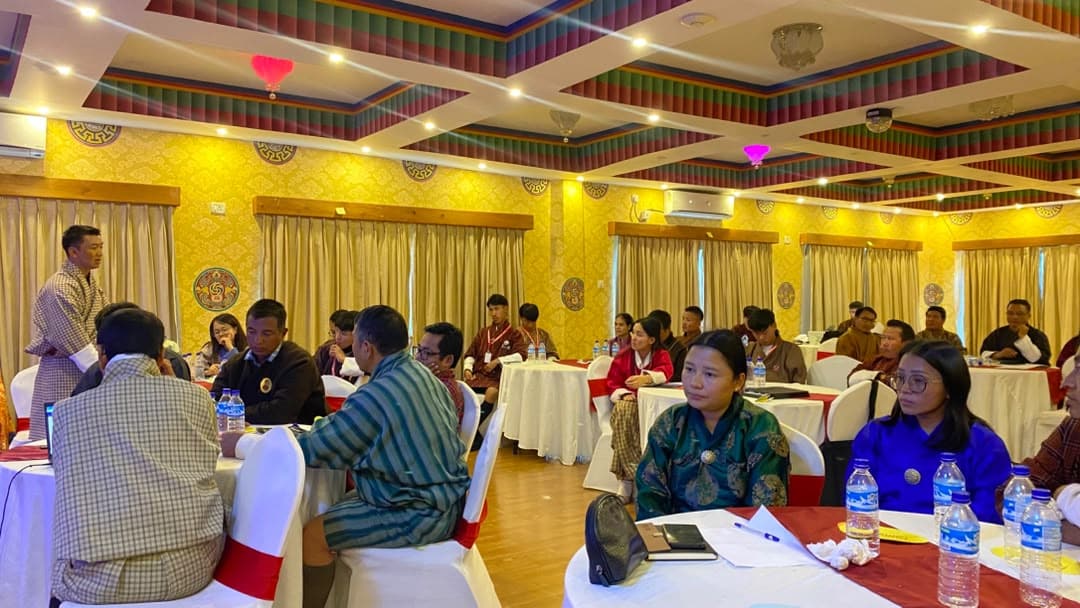
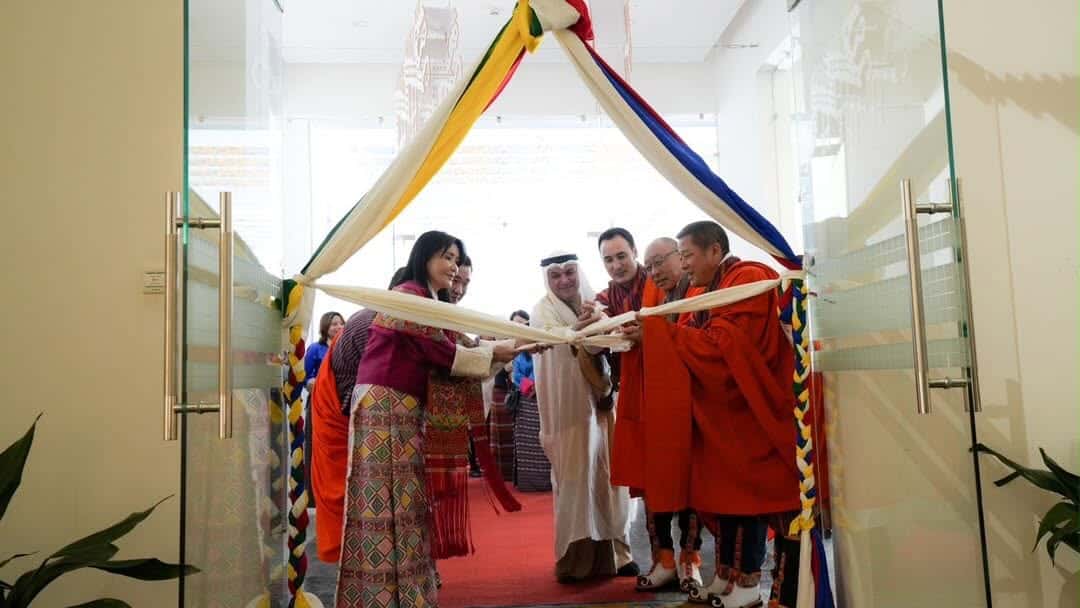
In a major step toward economic diversification and sustainable development, the Ministry of Industry, Commerce and Employment (MoICE) has unveiled its Industrial Development Roadmap (IDR), which targets the creation of more than 15,000 renewable energy jobs by 2035.
According to the Ministry, the roadmap is designed to generate large-scale, decent employment across high-growth sectors, while ensuring equitable access for youth, women and rural communities. The IDR also aims to contribute to a 12 percent rise in GDP through renewable energy, and to achieve 10,000 MW of hydropower and 3,000 MW of solar energy generation by 2035.
“The IDR marks a pivotal step in our journey toward economic diversification, industrial transformation, and sustainable development,” said Industry, Commerce and Employment Minister Namgyal Dorji. “Aligned with the vision of Gross National Happiness and the 21st Century Economic Roadmap, it offers a strategic blueprint for building a dynamic, resilient and inclusive industrial economy.”
The roadmap identifies ten high-potential sectors: agro-industries, creative industries, data centres, education industries, forest-based industries, ICT industries, med-tech and wellness, mineral-based industries, renewable energy and tourism. These sectors, the Minister noted, were chosen for their ability to generate employment, expand domestic value chains, reduce import dependency and promote exports while protecting social equity and environmental sustainability.
The Ministry highlighted Bhutan’s abundant hydropower and solar potential, supported by strong government backing. However, challenges remain, including fragmented policies, slow approval processes, high capital costs, limited financing, and shortages of skilled renewable energy technicians. Heavy reliance on hydropower, climate risks, regional competition—especially from India—and emerging cyber security threats were also identified as constraints.
To address these challenges, the Ministry has proposed strategic interventions, including regulatory support, infrastructure development, capacity building, technology adoption, market linkages, and financial incentives.
With growing seasonal variability in river flows and the impacts of climate change, Bhutan is moving toward a more diversified energy mix that includes solar, wind, and new technologies such as green hydrogen.
Under the Renewable Energy Development Roadmap 2024, Bhutan has set targets of 20,000 MW of hydropower and 5,000 MW of solar energy by 2040. To support this expansion, the government has opened the sector to private investment, allowing up to 49 percent foreign direct investment in hydropower and fully liberalising the solar energy sector. Wind power is also being explored for remote and off-grid areas, while green hydrogen is being considered as a future strategic export, leveraging Bhutan’s clean energy surplus.
With coordinated investments, regulatory reforms and international partnerships, the Ministry believes Bhutan’s renewable energy sector can become a key driver of industrial innovation, export growth and long-term national prosperity.
Sherab Dorji from Thimphu