


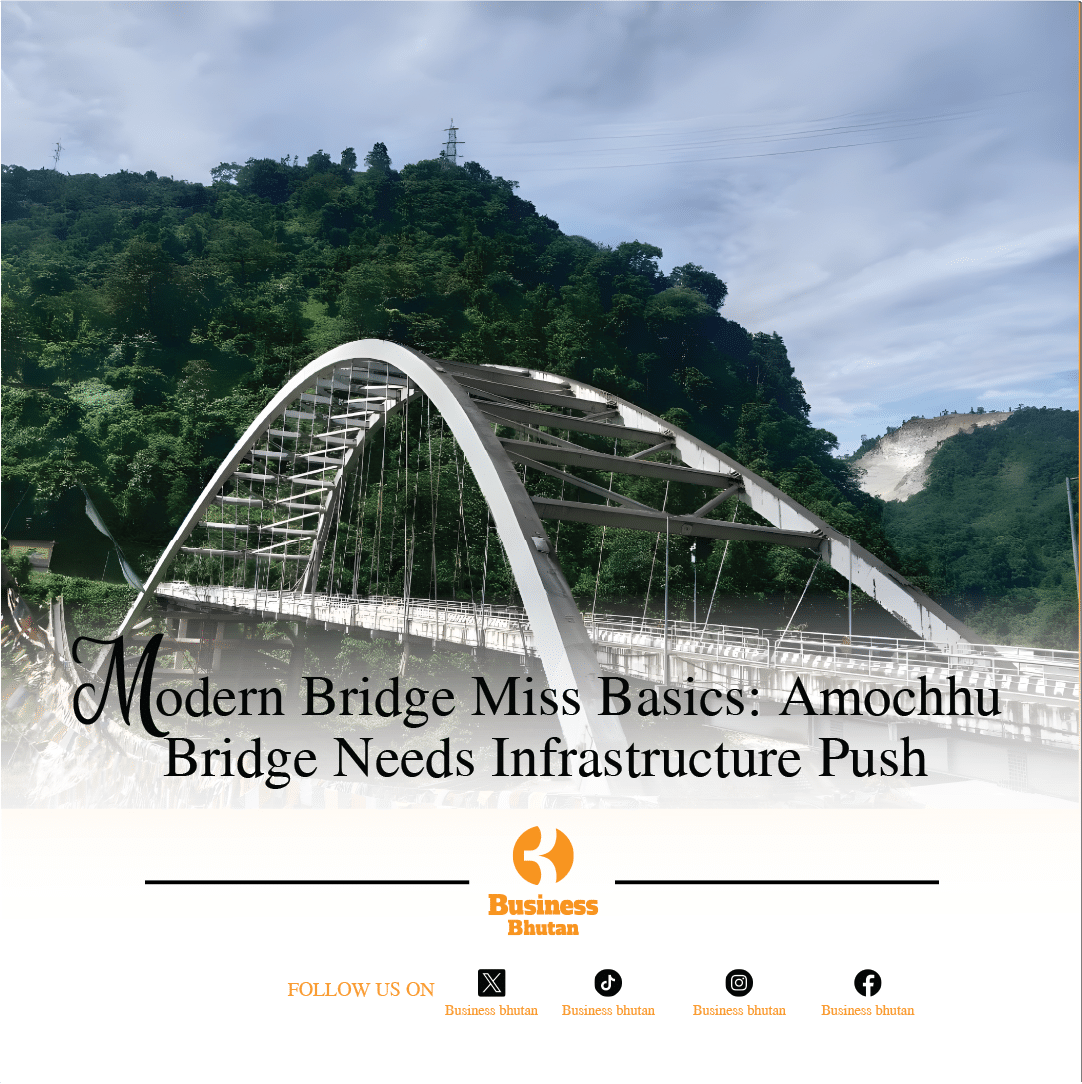
Phuentsholing, Bhutan’s bustling border town long seen as little more than a gateway is steadily reimagining itself as a tourist destination. At the hills cradle the wide, glistening river, the bridge offers both spectacle and serenity. On clear afternoons, warm subtropical breezes drift across the water, while the monsoon turnsthe river into a roaring force beneath the swaying walkway. truck stationed nearby. In the evenings, the crowds linger as the sky glows amber over the forested ridges and the river mirrors the fading light. Access to the site has been made easier by the 7.18km Chamkuna road, built with support from the Asian Development Bank (ADB) under the South Asia Subregional Economic Cooperation (SASEC) project, linking the bridge directly to Phuentsholing town. Yet despite the road, the views, and the growing footfall, one thing remains painfully absent: the basics. Toilets, clean drinking water, and proper lighting are missing—essentials and Nu 5,000 on weekends. During the season, we earn Nu 4,000 on weekdays and Nu 7,000 on weekends,” says Nauraj Subbha, one of the three. For his colleague, 22-year- old Imraj Gurung, a Dessung Skilling Programme (DSP) graduate, the income supports his elderly parents. For Migma Dolma, a mother of two, it keeps her family afloat. But the trio—and many of their customers—are united in their plea: without basic infrastructure, the bridge’s potential will remain undercut. “The place has so much potential, but without proper lighting and clean water and sanitation, I’m sure more people will come and the local businesses will thrive,” added Tashi Dorji, a local tourist. He reiterated that the Amochhu Bridge is already a magnet—a place where modern engineering meets natural beauty, where subtropical warmth and forested ridgelines create a postcard-perfect setting. “Yet without toilets, clean water, and lighting, its promise risks being dimmed.” A hotelier at the upcoming Amochhu Town voices out her concerns. “If Bhutan is serious about turning Phuentsholing from a border stop into a destination, then investing in center of this transformation In winter, crisp mornings and that determine whether a scenic facilities, it feels incomplete for infrastructure here is not just rises the Amochhu Bridge— golden light paint a picture that spot becomes a short photo visitors like us,” said a tourist desirable—it is essential.” an elegant modern arch for vehicles paired with a thrilling suspension “hanging” bridge that invites visitors to pause, stroll, and take in the views of the river valley below. Set against the lush backdrop of the Amochhu valley, where rolling green makes the bridge a magnet for visitors year-round. And visitors do come. On average, more than 80 people—mostly Indian families during peak season—arrive daily to experience the bridge, capture the sweeping views, and grab snacks from a small food stop or a thriving tourism hub. For three young entrepreneurs who run the food truck business at the site, the bridge is both a livelihood and a symbol of untapped opportunity. “During off-season, we earn around Nu 3,000 on weekdays from India. Similarly, a visitor from Paro, Sonam Choden noted, “We enjoyed our time here, but the lack of proper toilets makes it difficult for families to stay longer.” “If they can just improve basic amenities like lighting. Officials have acknowledged the concerns but remain cautious, weighing long-term viability before committing resources. In the meantime, visitors continue to arrive, drawn by the beauty of the Amochhu but frustrated by its shortcomings.
Tashi Namgyal
From Thimphu