

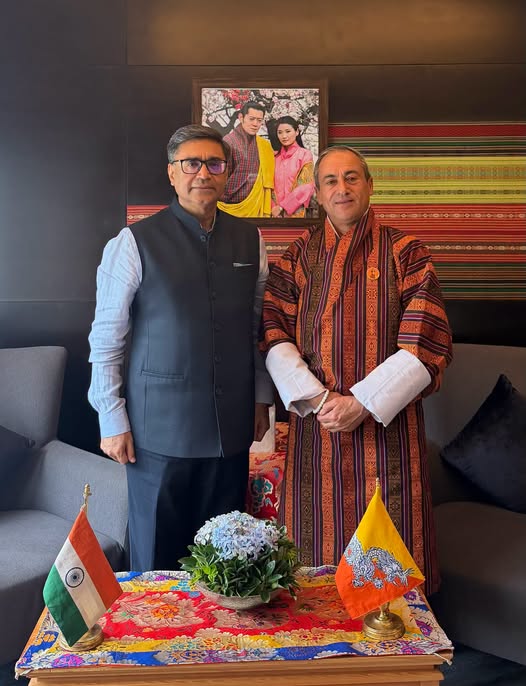
India has reaffirmed its enduring commitment to Bhutan’s development, describing development cooperation as the cornerstone of the two countries’ “special and unique friendship” and pledging continued support for the successful implementation of Bhutan’s 13th Five-Year Plan (2024–2029).
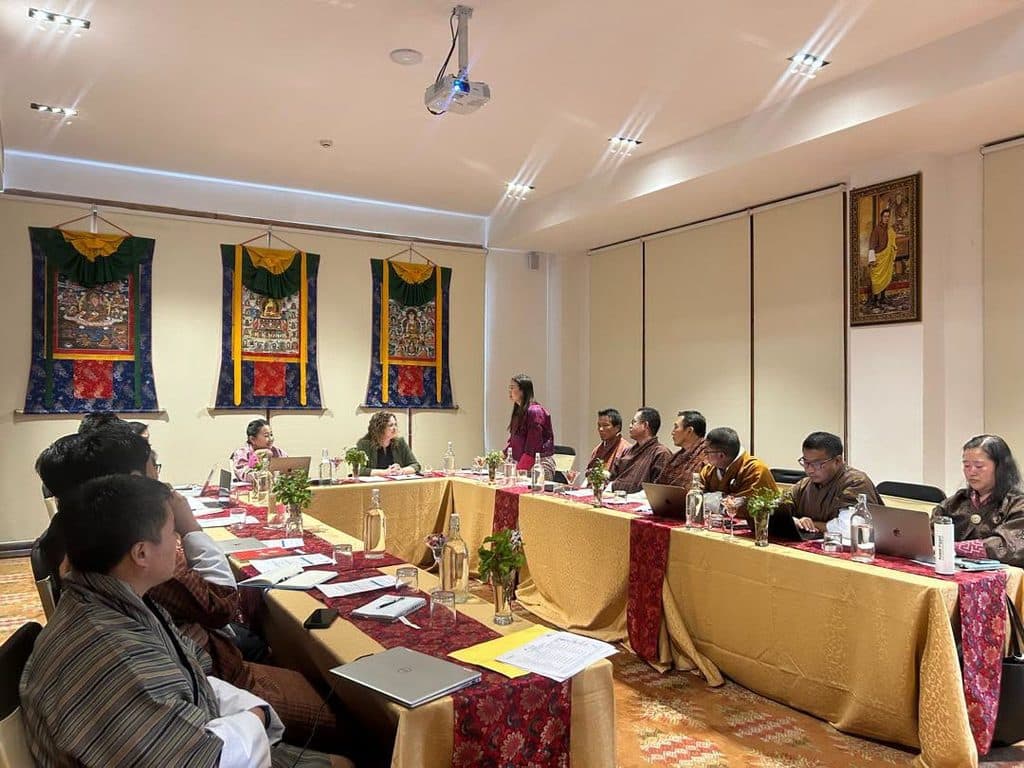
The assurance came during the Fifth Bhutan–India Development Cooperation Talks, co-chaired by Indian Foreign Secretary Vikram Misri and senior officials of the Bhutanese government. The high-level dialogue reviewed the progress of Indian assisted projects under the 13th Five-Year Plan(FYP) and charted the next phase of one of South Asia’s longest-standing and most successful development partnerships.
The talks underscored that the Bhutan-India relationship extends well beyond conventional diplomacy, reflecting a strategic partnership anchored in mutual trust, shared interests and an enduring commitment to Bhutan’s socio-economic development.
Addressing the meeting, the visiting Foreign Secretary noted that India and Bhutan have completed 65 years of development cooperation, dating back to Bhutan’s First FYP.
“Development cooperation is the central component of the special and unique friendship between India and Bhutan,” he said.
He described the six-and-a-half decades of cooperation as a reflection of the exceptional bonds between the two neighbours, built on mutual respect, goodwill, trust and sustained engagement at every level under the guidance of the leadership of both countries.
He also said that recent high-level exchanges have injected fresh momentum into bilateral relations. These included the State Visit of Indian Prime Minister Narendra Modi to Bhutan and subsequent visits by Bhutanese Prime Minister Dasho Tshering Tobgay to India, reinforcing regular political engagement and strategic coordination.
He noted that bilateral cooperation has continued to expand across an increasingly diverse range of sectors, including connectivity, trade and commerce, hydropower, healthcare, space technology, agriculture, education, environmental conservation, culture, the judiciary and parliamentary exchanges.
“The steady progress in these areas is a testament to the strength of our partnership and our shared commitment to advancing the development aspirations of our peoples,” he said.
The talks also reviewed several landmark initiatives that have strengthened bilateral cooperation over the past year.
Among the major milestones highlighted were the inauguration of the Punatsangchhu Hydroelectric Project-II, the signing of its tariff protocol, the resumption of construction at the Punatsangchhu-I Hydroelectric Project, and the finalisation of the umbrella agreement for India’s ₹4,000 crore Line of Credit, which is expected to support priority infrastructure and development projects in Bhutan.
Connectivity featured prominently in the discussions as both sides reviewed progress on transformational cross-border infrastructure initiatives. These include the proposed railway links connecting Gelephu with Kokrajhar and Samtse with Banarhat, which are expected to enhance regional connectivity, facilitate trade and improve the movement of people and goods.
The Foreign Secretary also referred to India’s notification of the Land Customs Station at Samrang and the announcement of an Immigration Check Post at Hatisar, initiatives expected to strengthen cross-border trade and facilitate greater economic integration.
Beyond infrastructure and economic cooperation, both countries reaffirmed the importance of their deep civilisational, cultural and people-to-people ties.
wOthers highlighted during the talk included the construction of the Royal Bhutan Temple in Rajgir, Bihar, the exposition of the Holy Relics of Lord Buddha, Prime Minister Modi’s participation in the Global Peace Prayer Festival in Thimphu last year, and India’s allocation of land for the construction of the Royal Bhutan Temple in Varanasi as enduring symbols of the close spiritual and cultural bonds shared by the two countries.
Describing the Development Cooperation Talks as an important institutional mechanism, he said the platform enables both governments to regularly review implementation, align priorities and ensure that development assistance remains responsive to Bhutan’s evolving needs.
“It is a matter of satisfaction that projects supported by the Government of India have consistently demonstrated effective implementation,” he said.
On the financial aspects of cooperation, the Indian Foreign Secretary reaffirmed India’s commitment to ensuring the timely release of funds for approved projects, emphasising that predictable financing is essential for effective implementation and prudent fiscal management. He also underscored the importance of receiving realistic annual funding projections from the Royal Government of Bhutan to facilitate efficient budget planning.
Referring to Bhutan’s Economic Stimulus Programme (ESP), he noted that India had adopted a flexible approach in the utilisation of grant assistance in recognition of Bhutan’s exceptional economic circumstances. While expressing satisfaction with the implementation of the ESP grant and the High Impact Community Development Projects (HICDPs), he expressed confidence that implementation across other projects under the Five-Year Plan would gather further momentum.
The discussions reflected the evolving nature of the Bhutan-India partnership, which has expanded from its traditional focus on development assistance to encompass connectivity, trade, energy security, technology, cultural cooperation and regional integration. As Bhutan pursues ambitious national priorities, including economic transformation, private sector development and the Gelephu Mindfulness City initiative, India’s continued support is expected to remain central to the successful implementation of these long-term goals.
During his two-day official visit to Bhutan which began on July 30, 2026, the Indian Foreign Secretary was granted an audience with His Majesty The King. He also called on Prime Minister Dasho Tshering Tobgay and Foreign Minister D. N. Dhungyel.
Sangay Rabten, Thimphu