

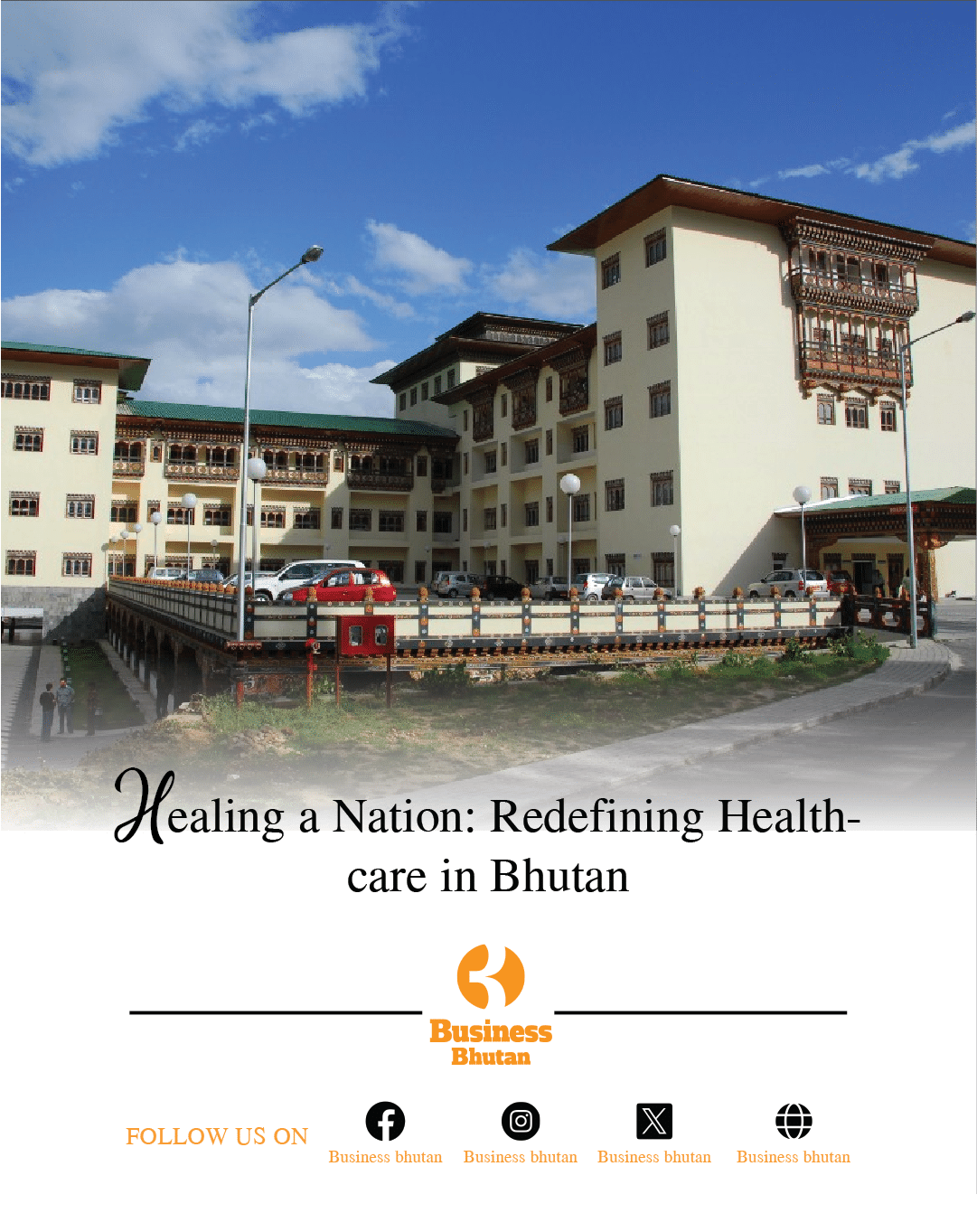
The health of a nation is important. So is the need for the health system to progress and 2025 marked a landmark period for Bhutan’s health sector, driven by transformative initiatives, strengthened partnerships, and a renewed focus on community-centered care. From pandemic preparedness to maternal and child health, the Ministry of Health (MoH) demonstrated resilience, innovation, and inclusivity, reflecting Bhutan’s commitment to equitable, high-quality healthcare for all.
A major highlight was the strengthened emphasis on pandemic preparedness. In coordination with One Health stakeholders, MoH conducted a tabletop simulation in Phuentsholing to test response systems and inter-agency coordination. The exercise identified gaps and reinforced the importance of the One Health approach in tackling zoonotic diseases and future outbreaks. Building on this momentum, the 5th National One Health Symposium convened after a pandemic-related hiatus, providing a platform for knowledge exchange, multi-sectoral collaboration, and innovative strategies to safeguard public health.
Maternal and child health received special focus with the launch of the Accelerating Maternal and Child Health Program (1000 Golden Days initiative), inaugurated by Health Minister Tandin Wangchuk. The program emphasizes nutrition, timely health check-ups, and parental education, ensuring children receive vital early care. A nationwide video campaign accompanied the launch, raising awareness and equipping parents with critical health knowledge.
Tuberculosis detection and treatment continued to be a priority. On World TB Day, a mobile screening van, supported by UNDP, visited Royal Thimphu College, providing handheld X-ray screening, AI-assisted readings, and GeneXpert testing for 64 students and faculty. Awareness campaigns across districts reinforced early testing, treatment adherence, and prevention, underscoring Bhutan’s commitment to becoming a TB-free nation.
Reaching remote communities remained central. At Laya Middle Secondary School, catch-up vaccinations were administered to children with incomplete records. Similar initiatives across highland regions maintained high immunization coverage, supporting Bhutan’s polio-free status and the elimination of measles, rubella, maternal and neonatal tetanus, and cervical cancer by 2030.
Bringing services closer to households, the Ministry piloted the Annual Household-Health Surveillance initiative in Mongar and Wangdue Phodrang, combining house-to-house outreach, WASH promotion, non-communicable disease screening, elderly care, counseling, and real-time data collection, with plans for nationwide expansion in 2026.
Regional and global partnerships strengthened healthcare delivery. Discussions with the Ambassador of France focused on dermatology and zoonotic disease prevention, while Thai experts supported the Laparoscopic Endoscopic Surgery Program. Bhutanese officials, led by Health Secretary Pemba Wangchuk, attended the 78th World Health Assembly in Geneva, highlighting progress toward Universal Health Coverage. Bilateral engagements with the WHO Academy in Lyon and participation in the WHO Regional Committee for South East Asia further reinforced Bhutan’s international health profile.
Community and workplace health initiatives flourished, including NCD screenings for construction workers and monastic communities. The National Cancer Control Program expanded to five pilot districts, complemented by JHPIEGO’s Standard-Based Management & Recognition (SBM-R) for cervical cancer.
Infrastructure and technology advanced healthcare delivery. The Royal Centre for Infectious Diseases (RCID) reached its topping-out milestone, while the Economic and Social Development Programme with JICA, providing CT scanners, MRI machines, and ambulances, enhanced diagnostic and emergency response capacities. The launch of the National Center for Traditional Medicine Services (NCTMS) and the National Traditional Medicine Strategy 2025–2034 reinforced Bhutan’s commitment to integrating modern and traditional medicine.
Through innovation, inclusivity, and global partnerships, 2025 redefined Bhutan’s healthcare landscape, ensuring resilience, accessibility, and holistic well-being for all citizens.
Nidup Lhamo
From Thimphu