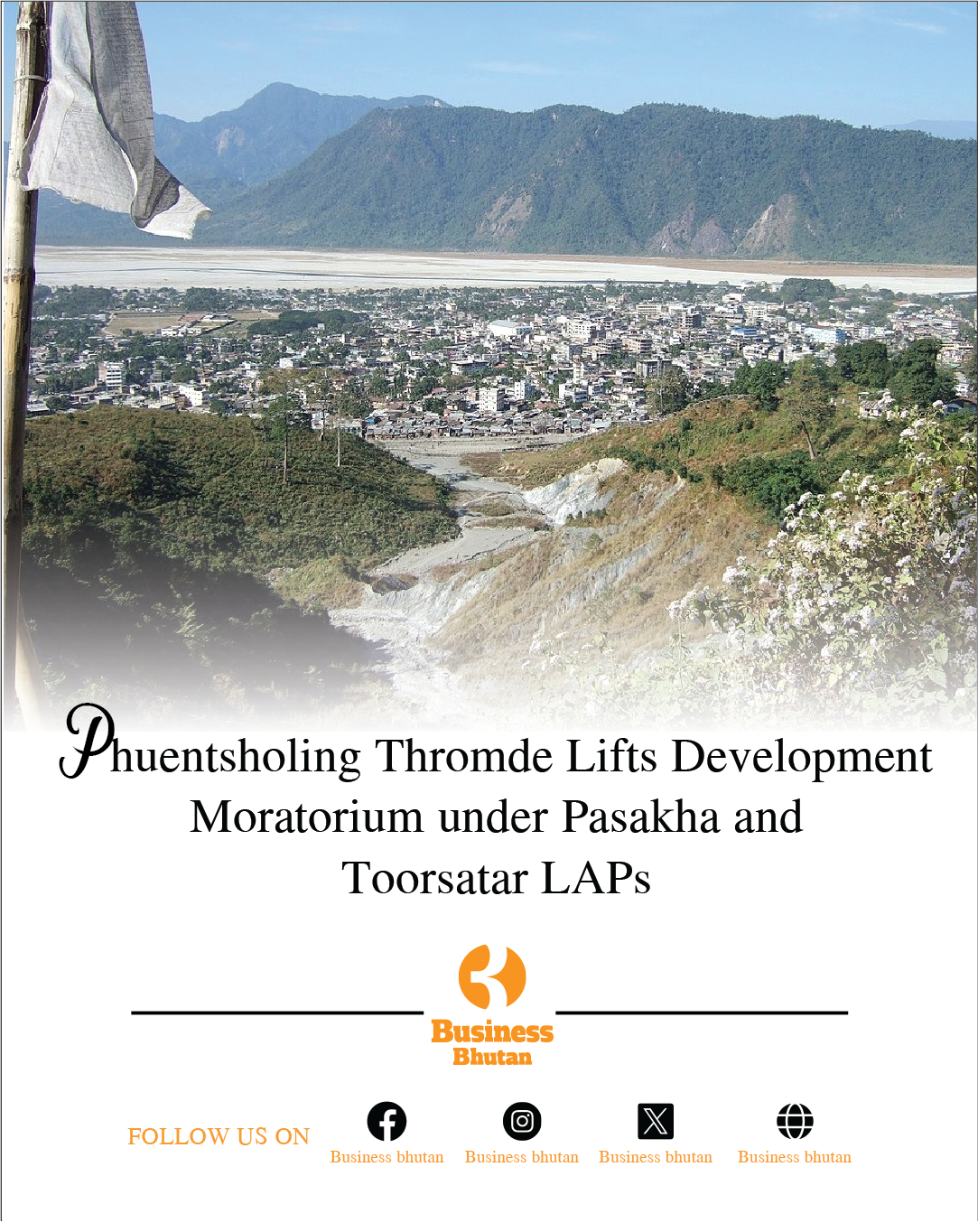
Phuentsholing Thromde has lifted the moratorium on development-related activities under the Pasakha and Toorsatar Local Area Plans (LAPs) on December 30, 2025, following the decision to defer the proposed review of the two LAPs in favour of prioritizing the review of the Phuentsholing Structure Plan.
The moratorium had earlier been imposed in anticipation of a comprehensive revision of the Pasakha and Toorsatar LAPs. However, the Thromde has since cancelled the LAP review process to focus on updating the Structure Plan, which serves as the city’s overarching framework for spatial planning, land use, infrastructure development and risk-informed urban growth.
According to the Thromde, prioritizing the Structure Plan review is critical to ensure strategic coherence, prevent fragmented planning interventions, and establish clear and consistent planning directives. These directives will guide any future amendments to LAPs in a structured and sustainable manner.
“All future revisions to LAPs, if required, will be undertaken only after the completion of the Structure Plan review to ensure alignment with updated planning objectives,” the Thromde stated, while thanking the public for their patience, cooperation and continued support.
The development moratorium, which had actually been been enforced from October 2025 to December 2026, was intended to prevent uncoordinated construction during the anticipated planning review and to ensure that future developments comply with updated, climate-resilient standards.
During the moratorium period, construction activities with valid site plans and building permits issued prior to the notification were allowed to proceed without interruption. The Thromde clarified that the moratorium did not affect ongoing public or private investments that had already received necessary approvals.
While no formal support mechanism was in place, the Thromde said it considered genuine concerns from affected landowners on a case-by-case basis.
The Thromde reiterated its commitment to inclusive and transparent stakeholder engagement in future planning processes. Measures outlined include in-person and online consultation meetings announced at least two weeks in advance, the establishment of a project office in Phuentsholing by consultants, joint field visits and draft plot demarcations with landowners, real-time communication platforms, and acceptance of written submissions through email or authorised representatives.
Officials emphasised that active participation from landowners is essential, noting that low engagement during previous consultations had led to grievances during implementation stages, when changes are often difficult and disruptive.
Although immediate impacts on land values cannot be quantified, officials said revised LAPs—once undertaken—are expected to significantly enhance infrastructure quality, improve safety, and strengthen long-term business and investment prospects.
Key improvements anticipated in future LAP updates include more accurate land-use zoning based on ground realities; upgraded physical and social infrastructure; improved geological safety and hazard zoning, including non-developable precincts in high-risk areas; consistent Development Control Regulations across LAPs; climate-resilient and environmentally sustainable infrastructure designs; and the adoption of modern urban design and smart city principles.
Given Phuentsholing’s vulnerability to landslides, flooding and riverbank erosion, future planning frameworks will integrate geotechnical assessments, hazard zoning, improved drainage systems, buffer zones and climate-adaptive urban design to prevent unsafe development.
The Thromde reaffirmed that any future review of the Pasakha and Toorsatar LAPs will be undertaken only after the completion of the Structure Plan review, ensuring long-term safety, resilience and orderly urban growth in Bhutan’s commercial capital.
Tashi Namgyal
From Thimphu