

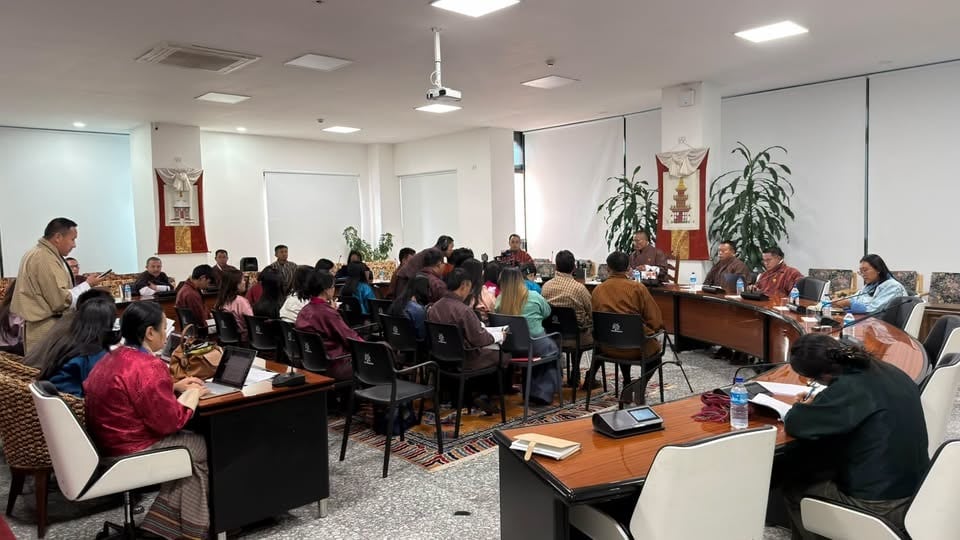
The government has launched a comprehensive 20-week legislative review aimed at strengthening penalties for sexual offences against children, introducing mandatory minimum sentences and closing legal loopholes that allow perpetrators to escape appropriate punishment.
The review, which follows growing public concern over child sexual abuse and the effectiveness of existing legal safeguards, will examine provisions of the Penal Code of Bhutan to ensure that punishments reflect the gravity of offences and the lifelong consequences suffered by victims.
At the 33rd Meet the Press, the government confirmed that the Prime Minister’s Office had directed the Office of the Attorney General (OAG) on October 15 to undertake a comprehensive review of sexual offences and child protection. The OAG has since submitted a strategic roadmap outlining the process and timelines.
The initiative comes amid renewed national scrutiny of the country’s child protection system, particularly following the death of a 12-year-old girl in Kabesa. The incident has raised serious questions about prevention, institutional accountability, the effectiveness of existing laws and whether the justice system adequately protects children.
The government said strengthening deterrence through tougher and more proportionate punishment would be central to the exercise.
Existing provisions governing rape and other serious sexual offences will be reviewed to address penalties considered inadequate, introduce sentencing distinctions based on the vulnerability of victims and close loopholes that may allow offenders against children to avoid the maximum punishment.
A key proposed reform is the introduction of mandatory minimum sentences for sexual offences committed against children. This is intended to ensure that serious crimes carry meaningful and consistent consequences and that sentencing adequately reflects the vulnerability of victims.
However, the review will extend beyond punishment. The government has identified four broad objectives: proportionate punishment, survivor-centred justice, swift protection of children and responsible reintegration.
Under survivor-centred justice, the review will examine how children experience the judicial process, including procedures for questioning young victims and receiving their testimony in court. The intention is to strengthen safeguards so that children are not subjected to unnecessary distress or further trauma while seeking justice.
The government also intends to simplify emergency protection procedures to ensure that children facing immediate danger can receive protection without being held back by bureaucratic delays.
This aspect of the review recognises that child protection cannot begin only after an offence has occurred. Timely identification of risks, reporting, intervention and coordinated institutional responses are essential to preventing abuse and protecting vulnerable children.
The fourth objective, responsible reintegration, will examine structured rehabilitation pathways for reformed individuals who are not repeat offenders, allowing them to rebuild their lives while maintaining public safety and appropriate safeguards.
The 20-week review will be implemented in four phases.
During the first four weeks, the OAG will undertake a clause-by-clause examination of the Penal Code, identify procedural requirements that contribute to delays and study good practices from other countries.
The second phase, covering weeks five to 10, will involve consultations with the Judiciary, OAG, National Commission for Women and Children (NCWC), RENEW, Royal Bhutan Police and The PEMA. Medical professionals, social workers and legal aid providers will also be consulted to ensure that the proposed reforms reflect the realities faced by survivors and institutions responsible for their protection.
From weeks 11 to 16, the OAG will prepare the draft amendment bill, a special protocol for the courts and a framework for responsible reintegration.
The final four weeks will be dedicated to finalising the bill and its explanatory memorandum, alongside an implementation plan detailing training requirements, institutional responsibilities and associated costs.
The government said it hopes to submit the completed bill to Parliament following the review.
It also acknowledged the concerns expressed by the public in recent weeks and conveyed its appreciation to Her Majesty The Gyaltsuen for the guidance provided in the Royal Address at the Fourth PEMA Symposium on Mental Health and Child Protection.
The review represents a significant opportunity to strengthen Bhutan’s response to sexual violence against children. However, tougher sentences alone cannot guarantee their safety. Effective prevention, early intervention, competent investigations, timely justice and sustained support for survivors must reinforce one another.
Ultimately, the test of the proposed reforms will be whether they translate into a system in which children are protected before harm occurs, offenders are held accountable and survivors receive justice without being made to suffer further.
Nidup Lhamo, Thimphu