


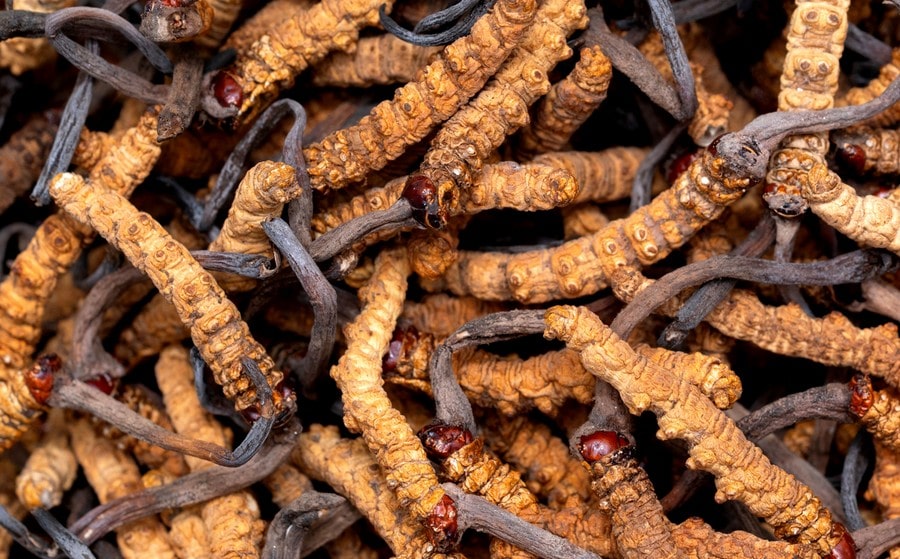
The highland communities, known for their reliance on cordyceps as a primary source of income are facing a worrying trend of declining quantities of their seasonal source of income from the much sought-after fungus. According to local farmers, the decline in quantity is a cause of concern, with many reporting a significant decline in the availability of the fungus compared to previous years.
According to Choki from Laya, a highlander who has been collecting cordyceps for years, reported that this year’s harvest was lower than usual. “This year, we could collect much fewer cordyceps compared to previous years,” she said. “In some places, we found only three or two, whereas in others, we used to find plenty.”
While she acknowledged that the price of cordyceps has increased compared to last year, the decrease in quantity have left a concerning look on her face, and others alike. Choki shared that the decrease in cordyceps might be due to climate change. She shared that there are fluctuations in rainfall and snowfall patterns. “We don’t find cordyceps anymore in places where we used to find plenty in the past,” she said.
Another farmer, Namgay, said they have been experiencing a drop in the availability of the fungus in recent years. Namgay, who has also collected the fungus for the last decade said, “I used to find 40-60 yartsas a day during my earlier years, but now, finding four to five per day is also considered a stroke of luck.” He said he was afraid his major source of income would not last for long.
Similarly, Kencho Norbu from Laya shared that this year he could not get much, unlike last year, but could collect only an average quantity. He shared that maximum number of cordycep collected this year was 3000 pieces per person.
“However, we are unsure about the price we will receive. Last year, we received a good price ranging from Nu 250,000 to Nu 300,000 per kilogram. We’re waiting for the auction and hoping for a good price,” said Kencho.
On the hindsight, not all highlanders share the same concerns. Pema Dema from Sephu reported a slightly better harvest this year compared to the previous year. Pema shared, “I could collect around 300 pieces of cordyceps this year, whereas last year I collected around 250.”
However, she shared that she was unsure about how much she could fetch at auction. “We’re not sure how much we’ll get this year,” Pema said. “We are waiting for the auction and hoping for a good price.”
Lekey from Lungzor, Sephu, reported a similar experience. He shared that this year’s harvest is satisfactory, but not a bumper collection like in the previous years. He said, “We found some really good-quality cordyceps in some areas, but not as many as we expected.” He opined that some areas had better yields than others, while in some area it is hard to get even one.
Although the collections this year at 1700 pieces was higher than last year’s, Dawa from Laya expressed his concerns about the long-term sustainability of their livelihoods. “The decline in quantity is worrying us all,” he said. “We’re not sure what will happen if the trend continues.”
Meanwhile, auctions for cordyceps will take place in various districts across the country from July 15 to August 7, 2024. The auction schedule as announced by the Agriculture Ministry will commence from Bumthang (July 15–17), Sephu (July 19–21), Dangchu and Wangdue (July 22–23), Kashi Gewog (July 24), Khatoed Gewog (July 26–27), Tashithang (July 28), Tsento in Paro (July 30), Lingzhi under Thimphu (August 1), Naro Gewog (August 2-3), and Bumdeling, Trashiyangtse (August 7).
By Nidup Lhamo, Thimphu











