

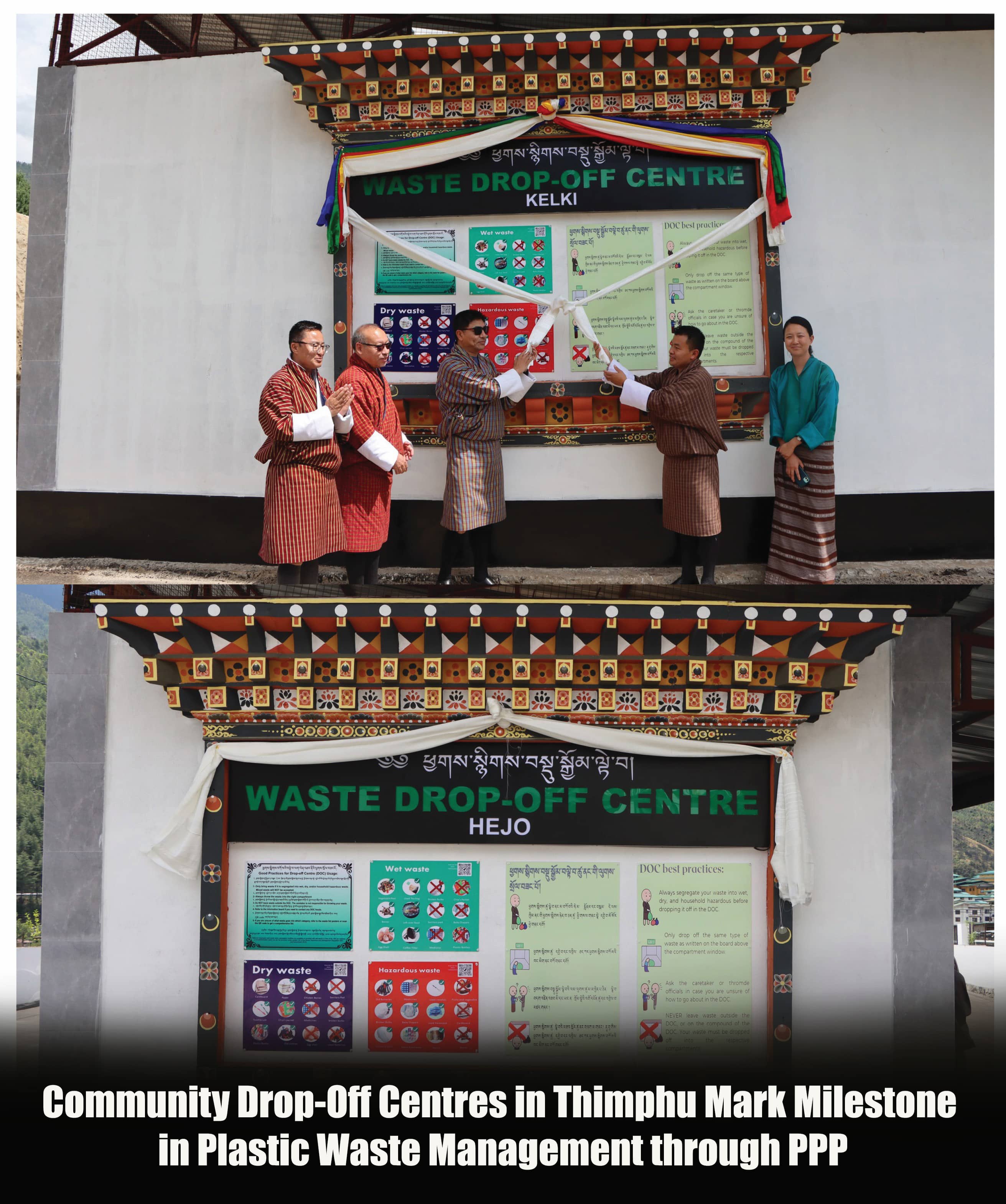
In a significant step towards sustainable urban waste management, two new community drop-off centres were officially inaugurated 23 May in Kelki and Hejo, Thimphu. This initiative, part of the Plastic Free Rivers and Seas for South Asia (PLEASE) Project, exemplifies successful public-private collaboration aimed at tackling plastic pollution and fostering a circular economy in Bhutan.
Funded by the World Bank (WB) and implemented by the South Asia Cooperative Environment Programme (SACEP), with technical and logistical support from UNOPS, the project brings together civil society, government agencies, and youth-led enterprises to drive environmental change. The Bhutan Ecological Society (BES) led the establishment of the centres, working closely with Thimphu Thromde and partnering with Gross International Nature (GIN), a youth-focused waste innovation group.
While the physical structures serve as designated spaces for waste segregation at source, the true impact of the centres extends beyond their bricks and mortar. BES played a pivotal role in mobilizing funding and forging partnerships to address urban waste challenges comprehensively. Thimphu Thromde provided essential technical support and site preparation, while GIN contributed innovative recycling solutions driven by youth engagement. This collaborative approach exemplifies how multi-stakeholder efforts can translate infrastructure into meaningful environmental and social outcomes.
In addition to the two drop-off centres, ten more waste storage facilities have been constructed across Thimphu Thromde, including Kawang. Waste collected at these centres will be sorted and transported to a central recycling hub in Bjemina, where it will be processed into high-value products such as URBricks and PET pellets. This circular model not only reduces plastic pollution but also promotes green jobs, supports youth-led enterprises, and advances Bhutan’s vision of a zero-waste nation.
Each drop-off centre features a caretaker’s quarter, ensuring continuous site management and providing income opportunities for local waste workers. This arrangement fosters social inclusion within the waste management sector, empowering communities and creating sustainable livelihoods.
The initiative aligns strongly with Bhutan’s Waste Prevention and Management Act and the nation’s commitment to achieving Zero Waste Bhutan. It demonstrates how collaborative governance, shared responsibility, and youth engagement can transform waste infrastructure into systemic change.
Dorji Khando, a staff member of Thimphu Thromde managing the Kelki Drop-off Centre, shared his experience: “I started managing the Kelki Drop-off Centre in 2018. Before, the space was small and parking was tight, making it difficult for people to drop their waste and for us to manage it properly. With support from the PLEASE Project, BES, and Thromphu Thromde, the centre has been rebuilt with more space and better parking. It’s now easier for people to dispose of their waste, and I’m grateful for the caretaker’s space—they help me stay on-site and manage the centre more efficiently. It’s not just a better workplace—it’s a better life.”
As Bhutan continues to pioneer sustainable waste management solutions, the Kelki and Hejo drop-off centres stand as models of how strategic partnerships and community involvement can drive meaningful environmental impact.
Nidup Lhamo from Thimphu