

For several years, road blocks at the site had caused inconvenience to passengers
On July 7, 2024, a nine-year-old girl from Bardo gewog in Zhemgang died at the Box-cut roadblock along the Zhemgang-Gelephu Highway. It is about 15 kilometers from Gelephu. She was a patient referred to the Gelephu Central Regional Referral Hospital (CRHH) from Yebilabtsa hospital in Zhemgang. Relatives later pointed out that “timely referral” could have saved the little one’s life.
In another instance, 31 years old Sonam Wangchuk (name changed) from Zhemgang throws tantrums whenever it’s time for him to fill up the stock in his parent’s shop and has to travel to Gelephu for the goods. Without any options, he has to run behind the wheels of his lorry and trudge along the nasty stretch, specifically the infamous Box-cut area where mud slings, rock falls and accidents are the name of the game. Sonam says that the Box-cut stretch is treacherous most of the time.
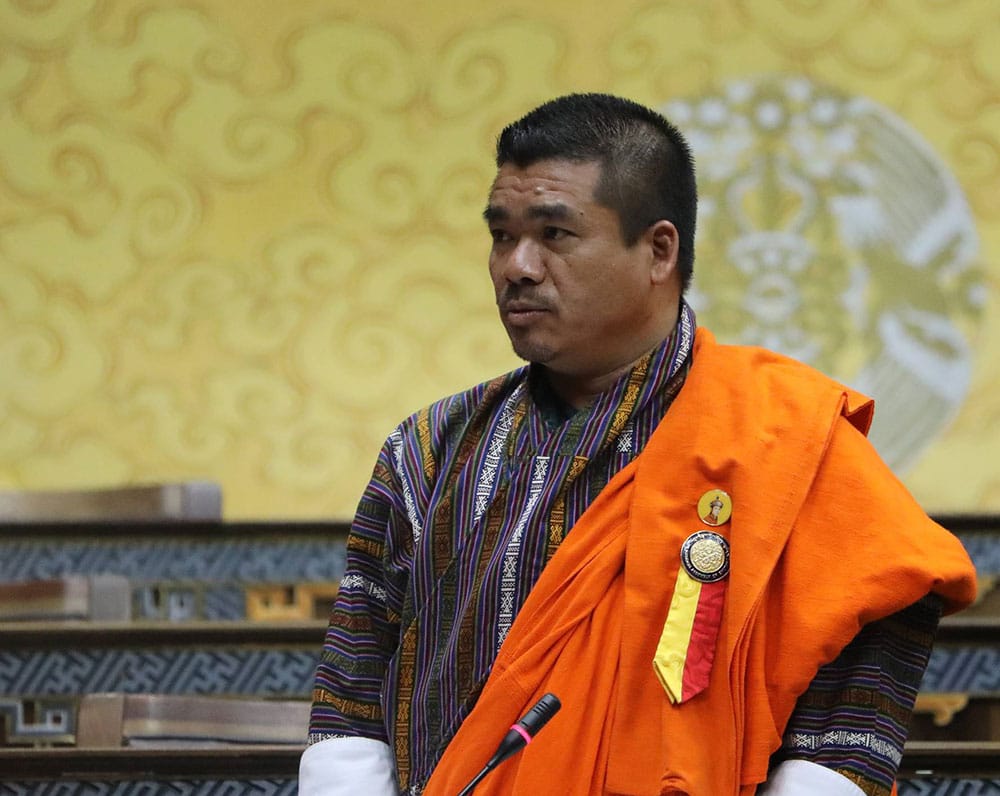
However, good news has come for people like Sonam and other regular commuters. The minister for Infrastructure and Transport, Chandra Bdr. Gurung, announced that Detailed Project Report (DPR) for the construction of a bypass road along the Box-cut area is completed and works will commence within this fiscal year.
“We will construct a 19km long bypass road via the Tsachhu area within this fiscal year,” the minister said responding to queries from reporters during the monthly meet the press on Friday.
Lyonpo said that around Nu 25 million (M) has been already spent on maintaining the recurring roadblocks at Box-cut in the past ten years, where every other options were explored, including dredging tunnels. “Everything the government did was to no avail and could not come to fruition that’s why we decided to construct the bypass for the safety of the commuters.”
The Box-cut roadblock on the Gelephu-Zhemgang highway in Bhutan is a significant infrastructure challenge that has impacted transportation in the region. The government spends about Nu 2 million every three months during the monsoon season for road clearance at Boxcut, totaling to Nu 20 million as of 2019.
The Gelephu-Zhemgang highway is an essential route in Bhutan, connecting the southern town of Gelephu with the central town of Zhemgang. This highway is crucial for regional connectivity, facilitating the movement of people and goods between these two important areas.
The highway serves as a vital link for the transportation of goods and vital supplies, and for regional development. It plays a key role in enhancing economic activities and accessibility within Bhutan.
The Box-cut Roadblock refers to a specific type of roadblock resulting from geological and engineering challenges encountered during road construction or maintenance. “Box-cut” generally describes a method used in road construction to cut through a hillside or embankment, often involving extensive excavation and cutting.
In the case of the Gelephu-Zhemgang highway, the Box-cut roadblock likely involves significant disruptions due to unstable terrain, landslides, or other geological issues. Such roadblocks can lead to temporary closures or severe delays, affecting transportation schedules and local economies. Geotechnical and geo-feasibility studies done by international experts estimated that stabilizing the current slide area with mitigation measures would cost around Nu 1 billion.
The government and relevant authorities have been working to address the roadblock. This involves engineering solutions to stabilize the affected area, clear debris, and ensure the safety and functionality of the highway. The ongoing efforts include road repairs, landslide mitigation, and structural reinforcement.
The Bhutanese government, in collaboration with road construction and maintenance agencies, has been actively engaged in resolving the issues caused by the Box-cut roadblock. This involves deploying specialized equipment, engaging engineers, and ensuring that the necessary safety measures are in place.
The roadblock has had notable effects on the local communities and economy. Delays in transportation can disrupt the supply chain for essential goods and impact daily life in the affected regions. The authorities are working to minimize these disruptions and restore normalcy as quickly as possible.
To prevent similar issues in the future, long-term measures may include improved road design, better geological surveys, and enhanced maintenance protocols. These efforts aim to ensure that the infrastructure can withstand natural challenges and remain reliable for users.
Meanwhile, along the same lines, the government has also started feasibility study for the construction of a 3km bypass road along the Rinchending checkpost in Phuentsholing. Upon the command of the Prime Minister (PM), the Ministry of Infrastructure and Transport (MoIT) initiated studies on the sinking area under the integrated checkpost is currently located.
By Tashi Namgyal, Thimphu