

Bhutan and Thailand are seeking to turn decades of friendship into a stronger economic partnership, with Gelephu Mindfulness City (GMC), renewable energy, healthcare, agriculture and trade emerging as key areas of cooperation.
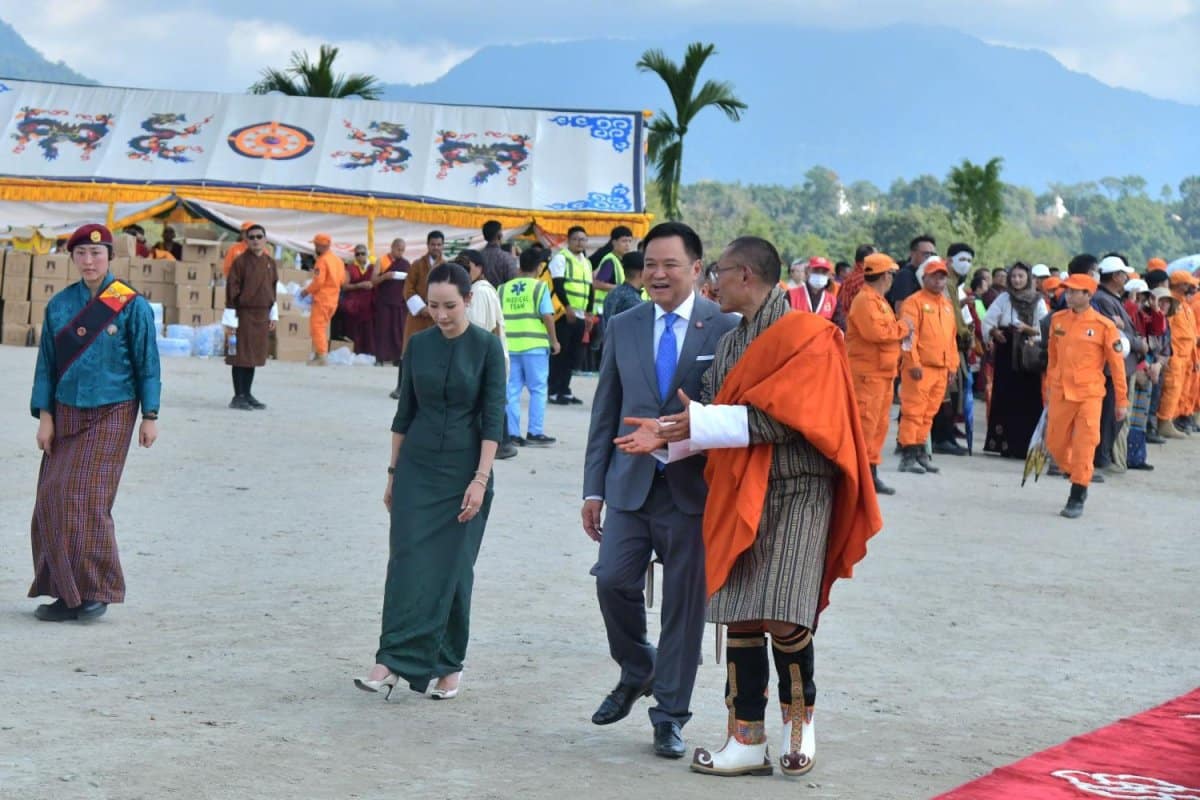
The partnership gained fresh momentum during Thai Prime Minister Anutin Charnvirakul’s official visit to Bhutan from October 30 to November 1, during which the two countries signed three cooperation agreements and explored opportunities for Thai businesses to invest in Bhutan, particularly in GMC.
Prime Minister Anutin encouraged Thai companies to explore investment opportunities in the ambitious development project, identifying potential areas in infrastructure, renewable energy, tourism and services.
Describing his visit as successful, the Prime Minister highlighted Bhutan’s economic potential despite its population of approximately 800,000. He pointed to the country’s renewable energy resources, agricultural potential and tourism sector as promising areas for investment and joint ventures.
GMC, envisioned as a future economic hub and special development zone, offers opportunities for Thai businesses to bring investment, technology and expertise into Bhutan’s emerging economy.
Clean energy opens new opportunities
Renewable energy featured prominently in the discussions, with one of the three agreements focusing on the proposed 100-megawatt Tareythang Agrivoltaic Project.
The agreement involves Thailand’s Neighbouring Countries Economic Development Cooperation Agency (NEDA), Bhutan’s Ministry of Finance and Norion Renewable Energy Limited. It provides technical assistance to review the project’s feasibility study and prepare its detailed design.
The project proposes combining agricultural activities with solar power generation, allowing land to support both food production and electricity generation.
For Bhutan, the initiative offers an opportunity to diversify its renewable energy mix and complement hydropower, which remains the backbone of its electricity sector. Solar energy could provide additional generation, particularly during periods of seasonal fluctuations in hydropower production.
Prime Minister Anutin expressed interest in Bhutan’s hydropower and solar potential, encouraging Thai companies to explore investment in energy infrastructure and joint development projects.
Healthcare and agriculture cooperation
The second agreement strengthens cooperation in public health, covering universal health coverage, telemedicine, artificial intelligence and referrals of Bhutanese patients to public hospitals in Thailand.
Thailand has long supported Bhutan through medical training, knowledge exchange and human resource development, including opportunities for Bhutanese medical and nursing students. The renewed cooperation is expected to expand these exchanges and improve access to specialised healthcare services.
The third agreement renews cooperation between Bhutan Development Bank Limited (BDBL) and Thailand’s Bank for Agriculture and Agricultural Cooperatives (BAAC).
The agreement covers green lending, credit risk assessment, international transfers and agricultural trade. It aims to improve access to finance, strengthen farmers’ capabilities and support agricultural modernisation in both countries.
Agriculture could also become an important area for technology transfer and private-sector engagement, allowing Thai businesses to explore opportunities in Bhutan and potentially the wider South Asian market.
Together, the three agreements move bilateral cooperation beyond diplomatic goodwill towards practical initiatives that connect Bhutan’s development priorities with Thailand’s technical expertise, financial institutions and private-sector capabilities.
Free trade agreement to boost commerce
Trade is another important pillar of the expanding partnership, with both countries working towards bringing the Thailand-Bhutan Free Trade Agreement (FTA) into force on January 1, 2027.
Signed on April 3, 2025, on the sidelines of the sixth BIMSTEC Summit in Bangkok, the agreement followed four rounds of negotiations completed within nine months. It is expected to improve market access, reduce trade barriers and encourage cross-border investment.
Bilateral trade in goods reached approximately USD 31 million in 2024. The FTA is expected to provide fresh momentum by creating more favourable conditions for businesses to access each other’s markets.
Thailand is an important source of imports for Bhutan, supplying food, beverages and manufactured products. Bhutan, meanwhile, has opportunities to expand exports of agricultural and high-value niche products to Thailand.
A more predictable trade framework could also encourage greater participation by private businesses and open new avenues for commercial partnerships.
A friendship extending beyond economics
The growing economic engagement builds on a relationship founded on longstanding diplomatic, cultural and people-to-people ties.
Bhutan and Thailand formally established diplomatic relations on November 14, 1989, although connections between their Royal Families and peoples go back much further. Shared Buddhist heritage, cultural affinities and mutual respect for their monarchies have provided a strong foundation for the relationship.
Over the years, cooperation has expanded into education, healthcare, agriculture, tourism and human resource development. Thailand has provided scholarships and training opportunities for Bhutanese students and officials, while Thai volunteers have shared expertise through the Friends from Thailand programme.
Thailand has also become an important destination for Bhutanese seeking medical treatment, education, business and leisure. The establishment of the Royal Bhutanese Embassy in Bangkok in 1997 further strengthened diplomatic and consular relations.
A major milestone came in April 2025 when Their Majesties the King and Queen of Thailand made a historic State Visit to Bhutan, the first visit by a reigning Thai monarch. The visit reaffirmed the close bonds between the two Royal Families and their commitment to strengthening bilateral relations.
Prime Minister Anutin’s visit has now added an economic dimension to this longstanding friendship, with cooperation agreements providing a framework for more practical engagement.
As Bhutan advances its economic transformation and develops GMC, Thailand is emerging as a potential partner in investment, technology, trade and human resource development.
With the proposed FTA expected to take effect in 2027, the two countries have an opportunity to translate their traditional friendship into a more dynamic economic partnership, creating opportunities for businesses and tangible benefits for their people.
Tashi Namgyal, Thimphu