

The need to increase Rural Life Insurance Scheme (RLIS) was a pledge of both parties – the Peoples Democratic Party (PDP) and Bhutan Tendrel Party (BTP) – as the parties campaigned for the National Assembly (NA) Elections. The issue was also raised by parliamentarians in all sessions of the NA. While the government recently said that the increase would require amendment of the Financial Services Act, Opposition members say that the increase can be done throughan executive order of the government.
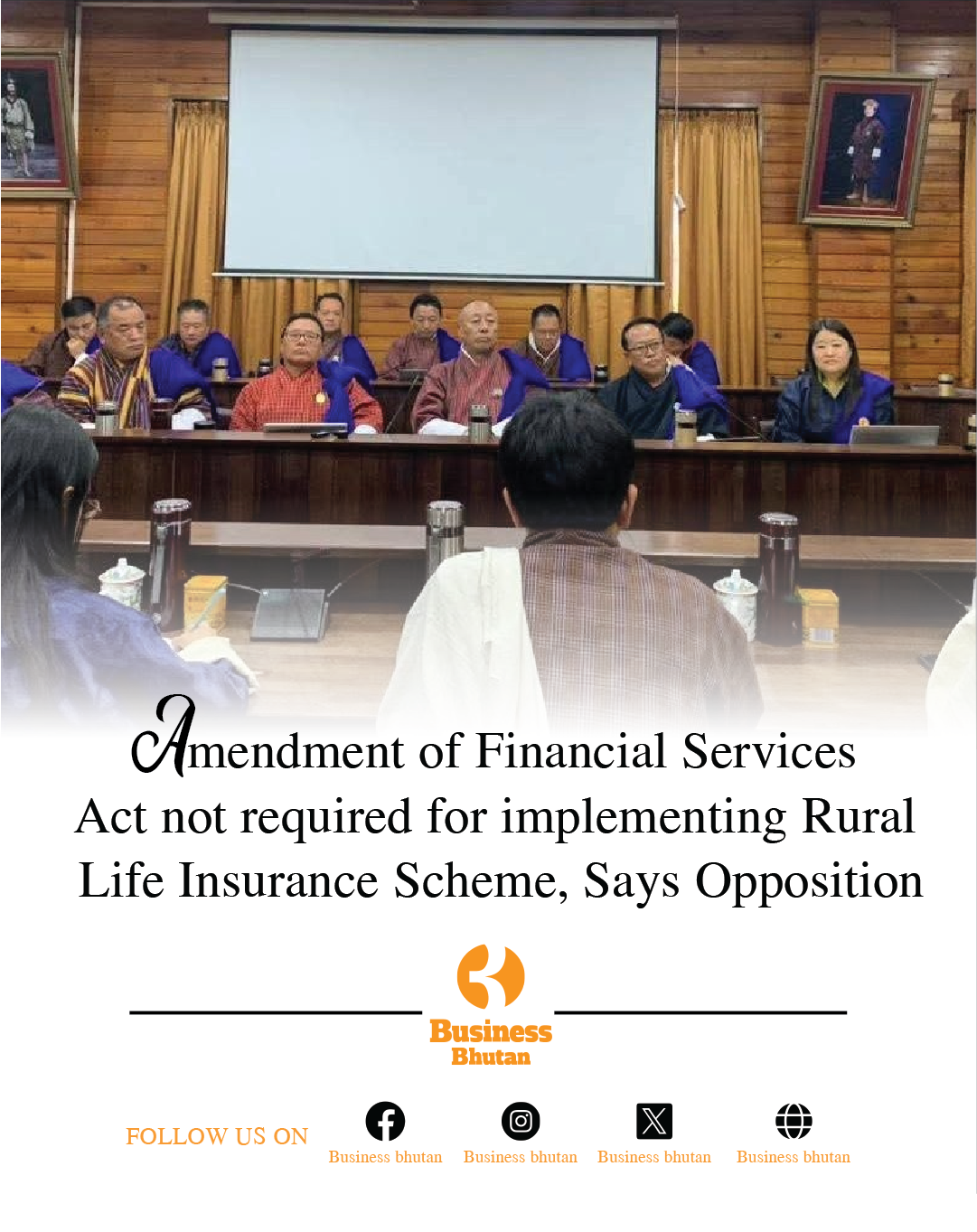
During the Oppositions’ interaction with the media earlier this week, BTP members of the NA said it is not necessary for the government to amend the bill. “The government of the day, during its first tenure, increased insurance to Nu 30,000 from Nu 15,000 simply by issuing an executive order,” BTP members said.
The members added that the government could similarly roll out the scheme through an executive order, as it had done before. The Royal Insurance Corporation of Bhutan Limited (RICBL) is the sole provider of life insurance, and the government can still roll out the scheme through RICBL. “The government has done it before,” the MPs said.
“But looking at the government’s delayed decisions to roll out this scheme, after following up several times, we are worried as to what is the real intent of the government,” MPs added, questioning whether there was genuine commitment to implementing the scheme. Members also said that the government has been accusing the opposition for delay in implementing the scheme, while BTP has been fighting for it since the fourth parliament began.
MPs also said they have been following up and raising questions since the start of Parliament. When updates on the issue were asked, during the first parliamentary session, the government responded that the nation’s economy was still fragile and in a recovery stage, and that the country was grappling with rising public debt and fiscal deficits, which constrained the government’s ability to immediately expand social programs.
During the second session, the government allocated Nu 263 million in the 2025–26 fiscal year for a comprehensive review of the RLIS, signaling recognition of its importance. However, the government emphasized that amendments to the Financial Services (Amendment) Bill of Bhutan 2025 are necessary before the scheme can be operationalized.
In the third parliamentary session, the government did not table the Financial Services (Amendment) Bill 2025. So, it was left without any update during this session.
But in the fourth session, there was discussion suggesting that the opposition parties are not supporting the scheme, especially the Financial Services (Amendment) Bill component.
The opposition claimed that if they had not pressed the government from the very beginning, the issue wouldn’t have reached where it has. Members further added that it is not about politics, but importance of the scheme.
NA MP Rinchen Wangdi said that they have consistently raised concerns and pushed for swift action, “Because this scheme is vital for the people’s welfare.” However, he added that there is still an absence of a detailed study on scheme beneficiaries, premium structure, and implementation modalities, and requested the government to conduct a review and roll out the scheme as soon as possible.
NA MP Namgay Dorji reiterated the importance to increase RLIS. He said that with inflation driving up the cost of goods and services, the existing Nu 30,000 Rural Life Insurance Scheme (RLIS) is insufficient to cover modern funeral expenses and rituals, which often cost much more and place financial strain on grieving families.
Because the scheme has significant benefits for grieving families, both parties pledged to increase the amount. “From the very first session to the fourth session, we have been following up on the issue by raising questions,” he said.
The opposition party has also submitted proposals to the government requesting that the scheme be rolled out from the first month of 2026.
Nidup Lhamo
From Thimphu