

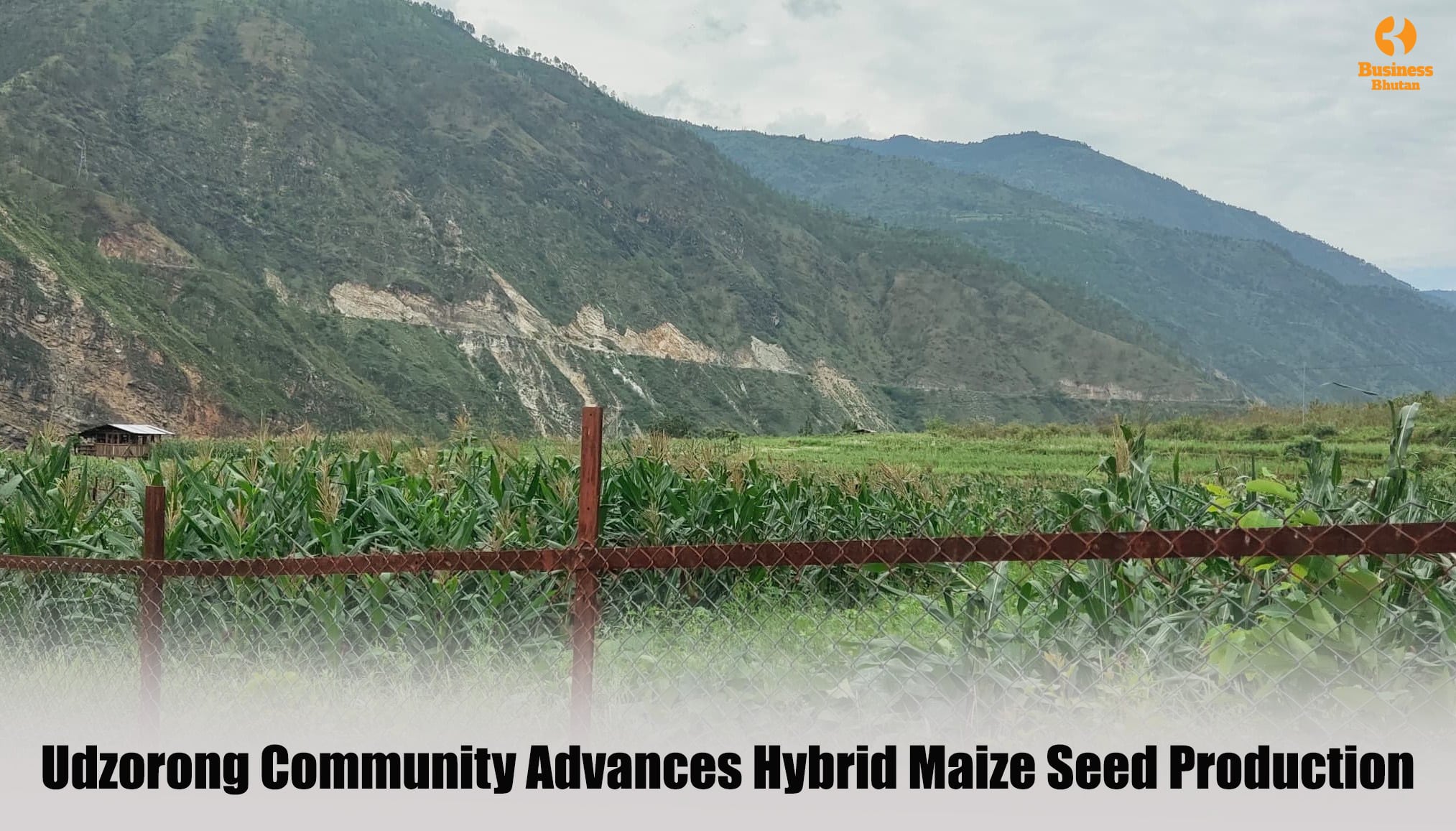
Since February 2024, the strategic introduction and systematic cultivation of hybrid maize varieties in Rizoryerchiilo, within Udzorong Gewog, Trashigang, have catalyzed a transformative shift in local agricultural practices. This advancement represents a significant milestone for the region’s farming community, delivering measurable improvements in crop productivity, enhanced resistance to prevalent diseases, and superior nutritional content.
The successful adoption of hybrid maize underscores a broader commitment to agricultural innovation and sustainability, positioning the local farming sector for increased resilience and long-term growth. By integrating these advanced crop varieties, farmers are now better equipped to meet rising food demand, improve livelihoods, and contribute to the overall economic development of the area.
In a strategic and collaborative initiative, the National Maize Program, in partnership with the Gewog Agriculture Sector, has launched a community-driven hybrid maize seed production project at Lamzang. This program is designed to harness local expertise and foster stakeholder engagement to strengthen Bhutan’s maize seed systems.
The project specifically targets the cultivation of the Wengkhar Hybrid Maize-1 (WHM-1) variety over a dedicated area of 0.33 acres. This focused approach allows for controlled seed production, quality assurance, and the establishment of a reliable supply chain for high-yield hybrid maize seeds.
By leveraging the combined resources and knowledge of national and local agricultural bodies, the initiative aims to promote sustainable agricultural development, increase maize productivity, and enhance food security at the community and national levels.
While farmers in Udzorong have historically relied on traditional local maize varieties, a growing number have proactively embraced the hybrid seed production initiative, acknowledging its significant potential to advance maize hybridization techniques and enhance the resilience of local seed systems.
This paradigm shift reflects a broader willingness among the farming community to adopt innovative agricultural practices that promise superior agronomic performance and increased yields. By integrating hybrid seed cultivation, farmers are positioning themselves to benefit from improved crop uniformity, greater disease resistance, and higher nutritional value.
Ultimately, this concerted effort is designed not only to elevate maize productivity within Udzorong Gewog but also to serve as a scalable model that supports maize production growth throughout Bhutan, contributing to national goals of food security and agricultural modernization.
An official from the Sub-Center of the Research and Development Center (RDC) based in Wengkhar, Mongar, at Khangma, Trashigang, confirmed that, upon successful production, hybrid maize seeds will be distributed to farmers nationwide, facilitating widespread adoption of improved varieties.
Growing Interest and Commercial Potential
Buoyed by the success of this pioneering hybrid maize project, local farmers have expressed strong optimism regarding the commercial viability and economic potential of hybrid maize cultivation. Yeshi, a seasoned 60-year-old farmer from Udzorong, conveyed enthusiastic support for the initiative, highlighting the promising growth observed in the Lamzang hybrid maize plantation.
While current harvests are predominantly dedicated to research activities at the Khangma Research and Development Center (RDC), Yeshi emphasized the tangible prospects for income generation within the farming community. He remarked, “The hybrid maize at Lamzang is thriving, and farmers recognize significant opportunities for revenue growth. Should Udzorong succeed in supplying hybrid maize seeds to farmers nationwide, the potential for substantial earnings is considerable. Furthermore, value-added products such as popcorn derived from this maize could offer additional income streams.”
Similarly, Tenzin Dema, another engaged participant in the hybrid maize cultivation program, underscored the transformative market opportunities this innovation presents beyond traditional subsistence farming. She noted, “Unlike local maize, which has historically been cultivated primarily for household consumption, hybrid maize offers an avenue to penetrate broader commercial markets. For instance, producing and selling cornflakes along the highway could serve as a lucrative enterprise, expanding economic prospects for farmers.”
These reflections from the local farming community signal a positive shift towards market-oriented agriculture, with hybrid maize cultivation poised to play a critical role in enhancing livelihoods and stimulating rural economic development across the region.
Capacity Building and Knowledge Transfer
As the first initiative of its kind in Bhutan, the project places a strong emphasis on capacity building for farmers and relevant stakeholders. Practical demonstrations and hands-on training sessions have been conducted, covering critical agronomic practices such as land preparation, precise field layout, strategic planting of male and female parental lines, detasseling, emasculation, and bulk pollination techniques.
A dedicated field day focused on hybrid maize seed production showcased essential practices including determining physiological maturity, harvesting protocols, and post-harvest handling. During this event, approximately 320 kilograms of F1 hybrid seeds were successfully produced. Participants praised the Wengkhar Hybrid Maize-1 (WHM-1) for its desirable agronomic traits — notably its large cob size, medium plant height, and dark green stalks at maturity. There was strong enthusiasm to continue seed production efforts, contingent upon consistent availability of parental lines. Plans are also underway to identify additional sites for productivity trials to further enhance the hybrid maize program’s development.
Addressing Challenges and Enhancing Support
Despite the encouraging advancements in hybrid maize cultivation, farmers continue to confront significant challenges related to wildlife intrusion, which poses a persistent threat to crop yields and overall productivity. Prior attempts to mitigate this issue through government-provided electric fencing have proven largely ineffective in deterring wildlife encroachment.
In response, the maize fields have been fortified with robust chain-link fencing, a measure supported by the Commercial Agriculture and Resilient Livelihoods Enhancement Programme (CARLEP), funded by the International Fund for Agricultural Development (IFAD). This strategic intervention is designed to protect the integrity of the maize hybridization initiative, safeguard seed production, and bolster the resilience of domestic seed systems. Ultimately, these efforts contribute meaningfully to increasing maize output and align with Bhutan’s broader objective of achieving agricultural self-sufficiency.
Narayan Subha, the Gewog Agriculture Extension Officer, emphasized that the gewog has formally submitted a request for additional support from CARLEP to ensure optimal crop protection and maximize harvests. Thanks to these proactive measures, farmers now have greater confidence to diversify their cultivation, including the successful planting of various vegetable crops alongside maize.
Furthermore, Subha highlighted improvements in irrigation infrastructure, noting that while water shortages have historically challenged farmers, reliable water access is imminent as maintenance and rehabilitation work on local canals nears completion. This critical enhancement in irrigation capacity is anticipated to significantly improve crop productivity, promote sustainable farming practices, and reinforce the overall viability of agricultural operations within the region.
Sangay Rabten From Trashigang