

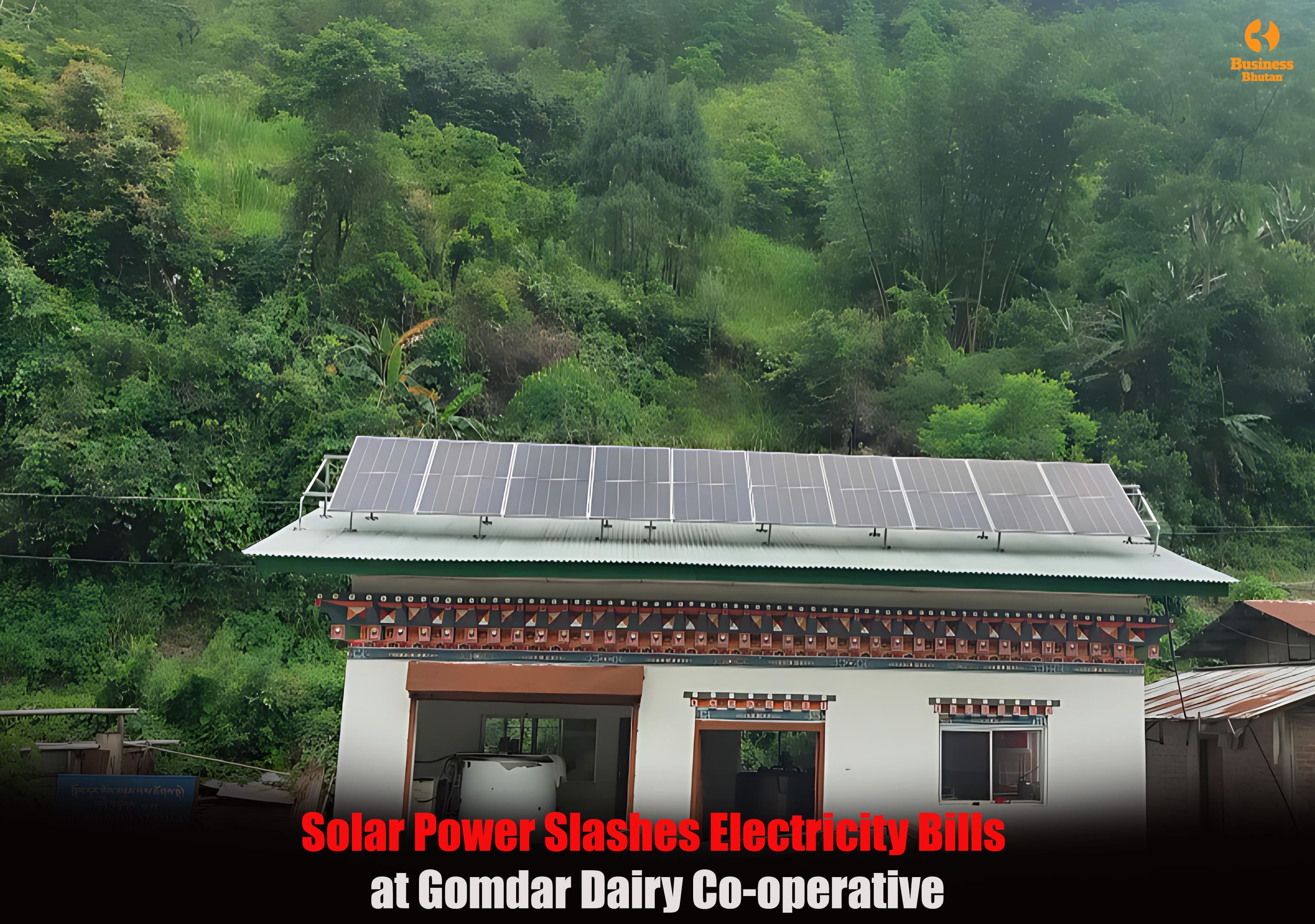
Harnessing the power of the sun is not just about going green — for rural cooperatives like Gomdar Om Nyamlay Tshogdey, it means survival, sustainability, and a sharp drop in operational costs.
The dairy cooperative in Gomdar Gewog, Samdrupjongkhar, is reaping the benefits of solar energy — and the results are transformative. Established in 2012, for the Gomdar dairy co-operative, the Commercial Agriculture and Resilient Livelihoods Enhancement Programme (CARLEP) started the project in 2016. The project had installed a solar panel, inverter and batteries, all solar bulk milk cooler in the 2023-24 Financial Year at the cost of Nu 1.4 million. It was procured from SERAP, a supplier of range of turnkey solar solutions all over the world.
Thanks to the Commercial Agriculture and Resilient Livelihoods Enhancement Programme (CARLEP), solar panels, inverters, and batteries were installed at the MPU in 2016, at a cost of Nu 1.4 million. The system was procured from SERAP, a global supplier of turnkey solar solutions.
Now serving his second term as Tshogpa of the co-operative, Kezang Dawa, 61, shared that the solar-powered system has drastically cut down electricity expenses. “We used to pay around Nu 3,000 per month, but today, our electricity bill has dropped by more than 90%,” he said proudly. “Thanks to CARLEP, we can now focus our savings on improving our operations.”
The co-operative’s accountant and secretary, Sonam Zangpo, 24, added that over the past six months, the MPU hasn’t had to pay a single ngultrum in electricity bills. “The solar system is not just helping us reduce costs — it’s building our savings. That’s money we can now invest back into the business,” he said.
Currently, the cooperative maintains around Nu 700,000 in a Bhutan Development Bank Ltd (BDBL) savings account and Nu 85,000 in a recurring account. With 147 members, each contributing Nu 100 per month, the co-operative is positioning itself as a model for sustainable rural enterprises.
For farmers like Sonam Zangmo, 36, who owns three milking Jerseys and supplies 12 liters of milk daily, the benefits go beyond cost savings. “Without the solar power, during frequent power outages, the milk would spoil,” she said. “Now we can store our milk safely — it’s a huge relief for us.”
The MPU collects milk from both members and non-members, storing it in a chiller before supplying it to Koufuko in Trashigang. Tshomo, 60, a dairy farmer and wife of a retired army man, though not a co-operative member, expressed gratitude: “CARLEP’s support has transformed our rural lives. More farmers are raising cows now, knowing their milk won’t go to waste.”
Gomdar Gup, Karchung, emphasized how critical solar power is for villages like Gomdar, where electricity disruptions — especially during monsoon — are common. “Without this project, we would’ve lost countless liters of milk during outages. This solar setup is a blessing,” he said.
While the gewog administration has requested Bhutan Power Corporation (BPC) to reduce outages caused by seasonal vegetation clearing, solar power has emerged as a dependable alternative.
This solar-powered pilot project at the MPU has proven to be a game-changer. Beyond lowering costs, it offers potential net metering benefits — allowing cooperatives to sell excess electricity back to the grid, especially valuable during lean winter months when Bhutan imports power from India.
Norbu, Component Manager for Livestock at CARLEP (ARDC, Wengkhar), explained:
“Solar power saves on electricity bills, prevents milk spoilage during blackouts, and opens up opportunities for cooperatives to generate additional income by feeding surplus energy into the national grid. It’s about self-reliance and resilience.”
During installation, basic operational training was provided to ensure the system’s upkeep. Future repairs and maintenance will be handled by a technician from the Regional Livestock Development Centre (RLDC).
However, Chador, the Gewog Livestock Officer, emphasized the need for locally trained technicians, so that cooperatives can handle technical issues promptly without waiting for outside assistance.
The success of the solar-powered dairy unit in Gomdar is more than a local story — it’s a national blueprint. When rural innovation meets renewable energy, the result is empowerment, sustainability, and prosperity. Through CARLEP’s vision and continued support, Bhutan’s farming future looks not just brighter — but also smarter.
Sangay Rabten from Samdrupjongkhar