

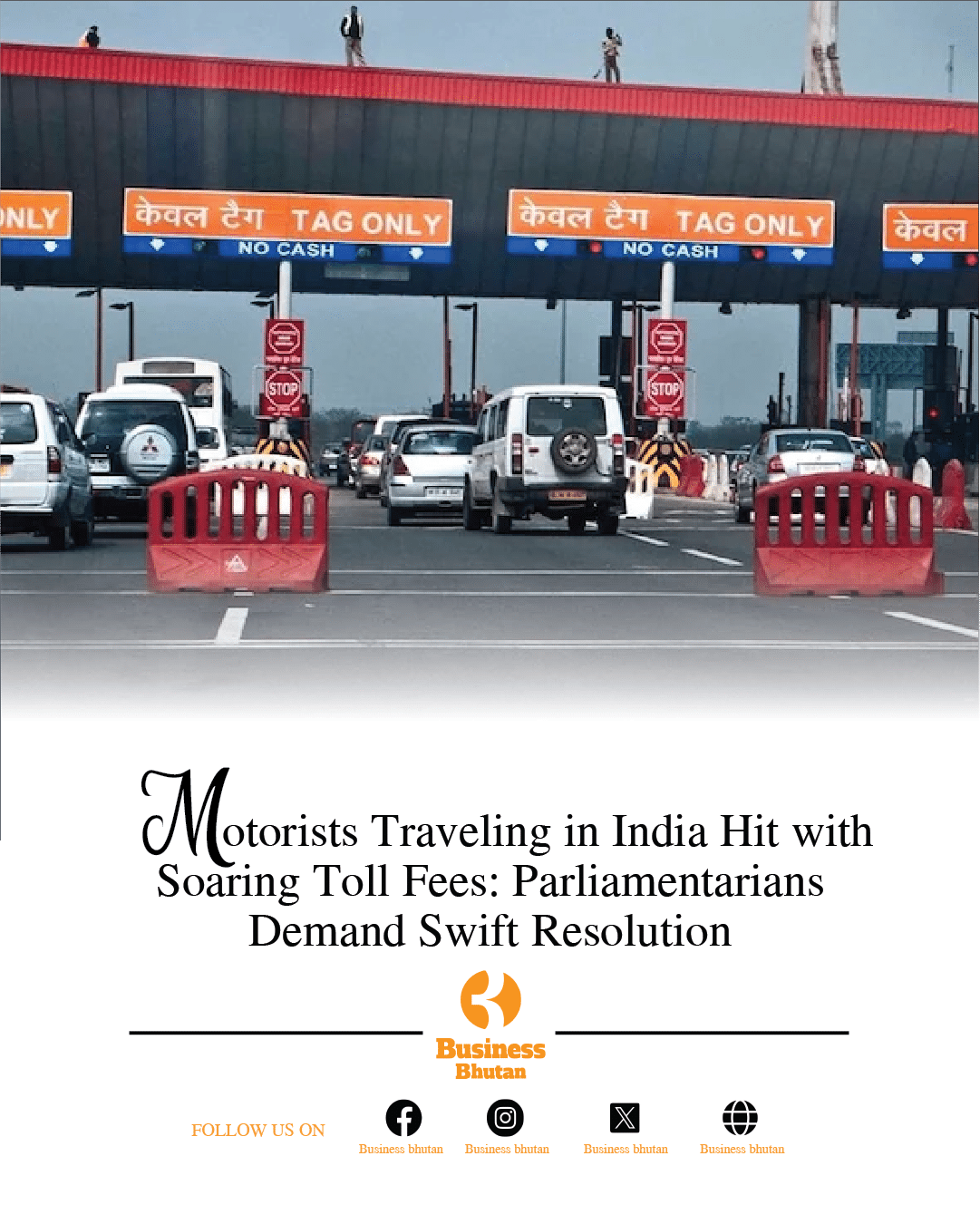
Bhutanese drivers are facing mounting frustrations as toll fees along Indian highways, particularly in Assam and West Bengal, continue to spike, prompting heated discussions in the National Assembly. During the ongoing parliamentary session, Tashi Tenzin, MP from Radhi-Sagteng constituency and member of the Opposition Party, demanded urgent action, highlighting that Bhutanese commuters are paying “triple penalties” despite repeated assurances from the Ministry of Foreign Affairs and External Trade (MoFAET).
The MP questioned the government on the progress since the Third Session, when Foreign Minister D.N. Dhungyel had promised to resolve issues surrounding double toll fees and the 50 percent extra charge on Ngultrum payments. More than five months later, travelers report continued difficulties, with little clarity on when the problem will be resolved. “Bhutanese motorists deserve concrete answers, not vague timelines,” Tashi Tenzin emphasized.
The Minister responded that the Ministry is actively reviewing the Standard Operating Procedure (SOP) received from the Government of India in late November 2025. While the Indian authorities are supportive, he noted, “The matter is bilateral, and timelines depend on government-to-government coordination.”
Bhutan is implementing the FASTag system—India’s electronic toll collection mechanism—to streamline payments and reduce reliance on cash. In theory, tolls are deducted automatically from prepaid or linked accounts.
However, motorists traveling between Phuentsholing and southern towns such as Gelephu and Samdrup Jongkhar continue to face problems.
Drivers report that despite sufficient FASTag balances, toll booths demand cash payments. Adding to the strain, toll fees have recently doubled from Nu 350 to Nu 700 per gate, significantly increasing the cost of cross-border travel for Bhutanese commuters.
Other MPs voiced concerns over prolonged delays and mounting costs.
Tshering Penjor, Dewathang-Gomdar MP, urged that penalties be reduced while formal diplomatic arrangements are finalized. Lamdra Wangdi, Nganglam MP, called for direct engagement with the Assam and West Bengal state governments rather than waiting solely on the central Indian government.
The Bartsham-Shongphu MP pressed for a defined resolution timeline, stressing that with only three years left in the current parliamentary term, prolonged delays are unacceptable.
Mongar MP Naiten Wangchuk argued that the repeated failure to resolve the matter in three consecutive sessions demonstrates the need for formal parliamentary action to compel the government to act.
The Minister maintained that while an exact resolution date cannot be guaranteed, the Ministry remains committed and optimistic. “We are actively working with India and exploring all possible measures to resolve this issue,” he assured the House.
For Bhutanese motorists, however, optimism provides little relief against inflated tolls and administrative hurdles. The doubling of fees and continued cash demands underscore the urgent need for a transparent, enforceable solution that ensures fair treatment for Bhutanese commuters. With the parliamentary spotlight now fixed firmly on this issue, the government faces mounting pressure to deliver tangible results and restore seamless cross-border travel.
Casesof harrasment along these roots are not new. Many people have resorted to social media platforms complaining about harassment along the routes.
Meanwhile, people travelling from Samtse to Phuentsholing have to cross one toll gate. On the orther habd, those travelling from Phuentsholing to Samdrup Jongkhar need to cross five toll gates. There are no toll gates between Daipham and Samdrup Jongkhar.
Sangay Rabten
From Thimphu