

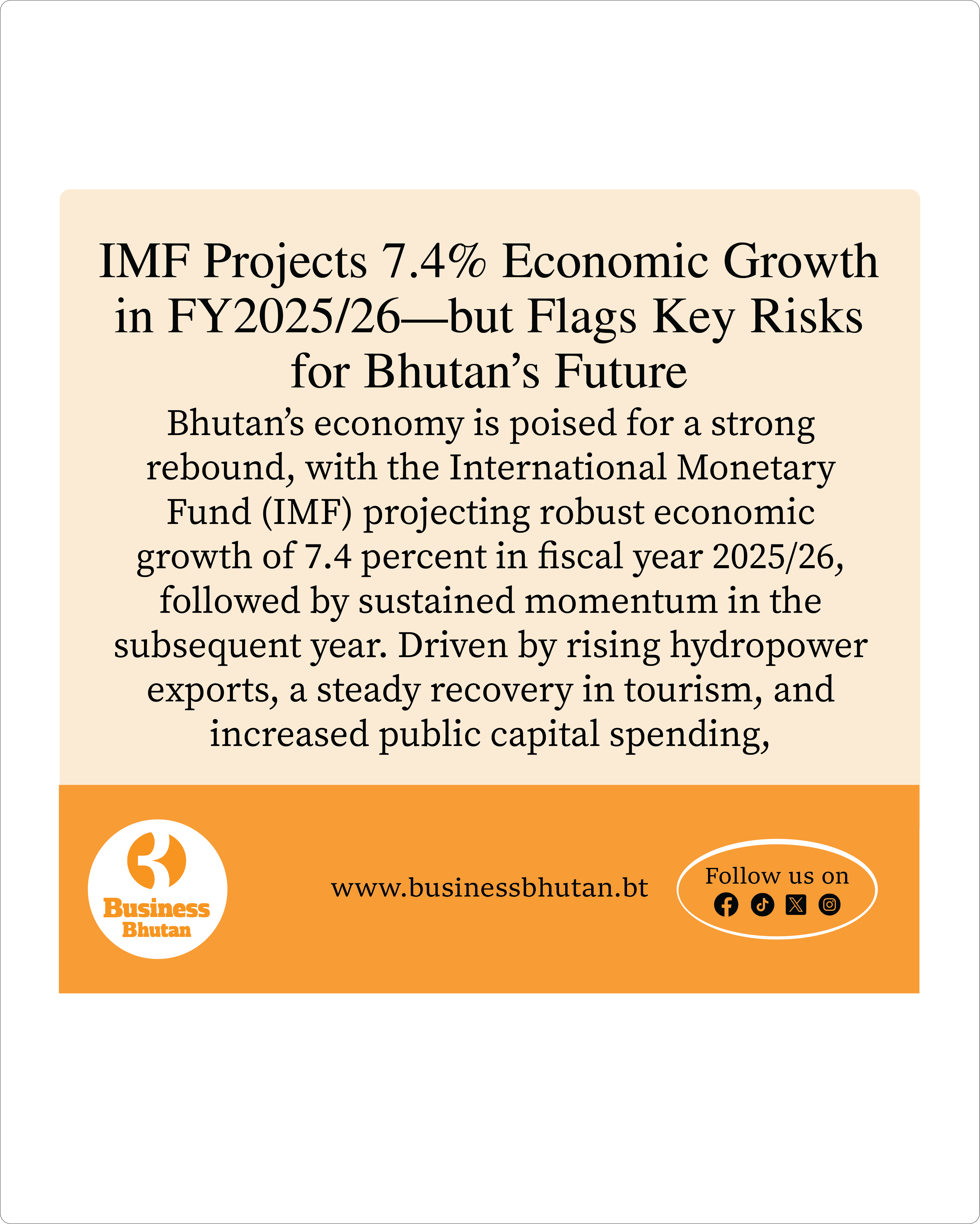
Bhutan’s economy is poised for a strong rebound, with the International Monetary Fund (IMF) projecting robust economic growth of 7.4 percent in fiscal year 2025/26, followed by sustained momentum in the subsequent year. Driven by rising hydropower exports, a steady recovery in tourism, and increased public capital spending, the outlook signals renewed confidence in the country’s economic trajectory. Yet, alongside this optimism, the IMF has issued a clear caution: without prudent fiscal management and stronger economic buffers, Bhutan’s gains could face significant risks.
The growth projection was released following the IMF Executive Board’s conclusion of its 2025 Article IV Consultation with Bhutan, conducted under the lapse-of-time procedure. The consultation is a routine but critical economic health check through which the IMF evaluates the macroeconomic, fiscal, and monetary policies of its member countries to ensure long-term stability.
What the Growth Forecast Means for Bhutan
For Bhutan, a 7.4 percent growth rate is more than just a number—it represents a potential turning point after years of economic strain caused by the pandemic, subdued tourism, and external shocks. Strong growth offers the government greater fiscal space to invest in infrastructure, social services, and employment creation, while also improving confidence among investors and development partners.
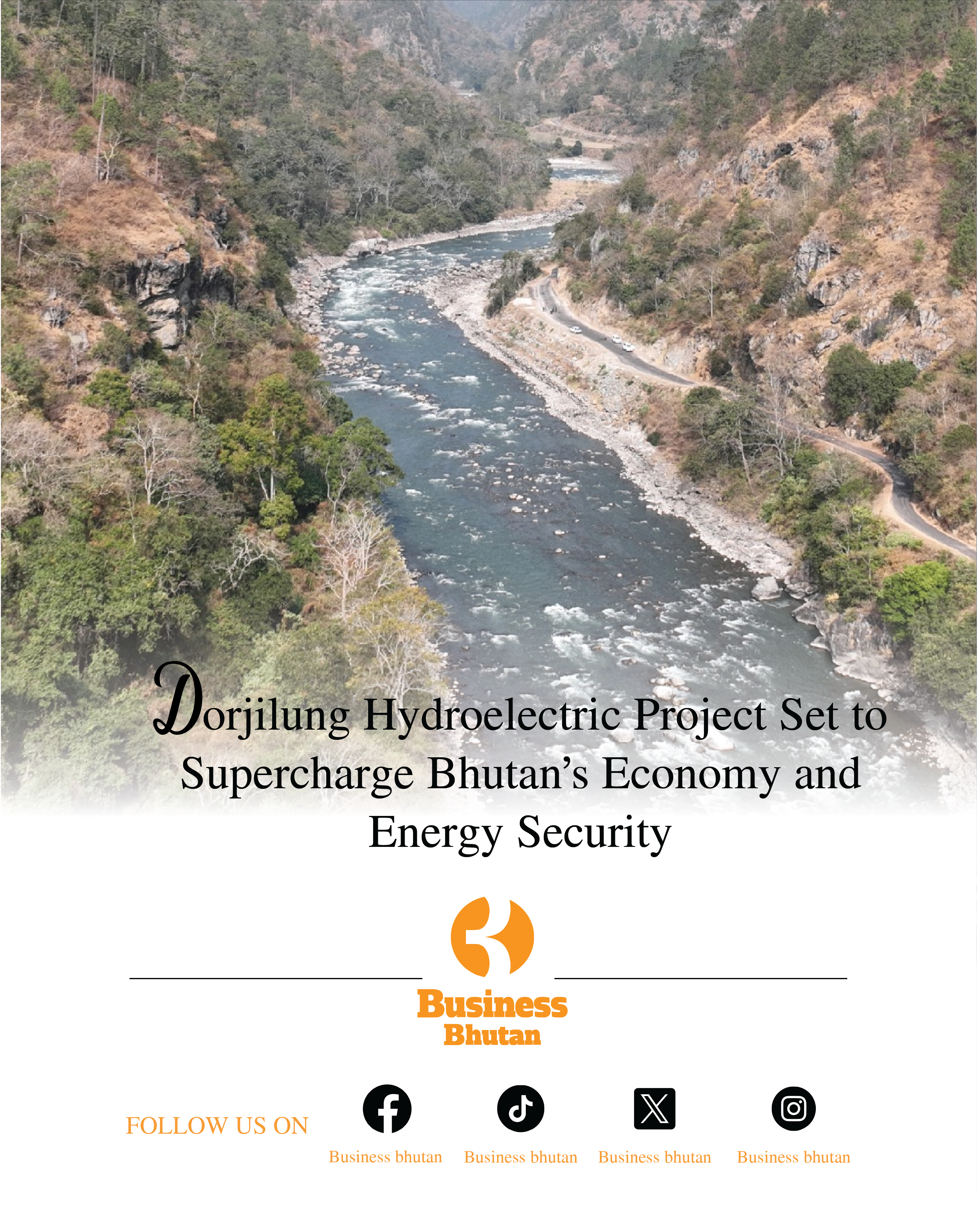
The IMF noted that Bhutan’s medium-term growth outlook remains positive, anchored primarily in expanding hydropower generation capacity and continued public investment. Hydropower, long the backbone of the Bhutanese economy, continues to play a decisive role by boosting exports, strengthening foreign exchange earnings, and supporting fiscal revenues.
At the same time, the revival of tourism—particularly under Bhutan’s “high value, low volume” strategy—is reinforcing growth while aligning with the country’s environmental and cultural priorities. Together, these sectors underscore Bhutan’s unique development model, where economic expansion is closely linked with sustainability and long-term national goals.
Inflation Stabilizing, But Pressures Remain
Inflation is projected to converge toward 4 percent, anchored by Bhutan’s currency peg to the Indian rupee and the high import content of investment. After declining through most of 2024 and stabilizing below 2 percent, inflation rebounded in 2025, largely due to rising food prices.
While inflation remains manageable, the IMF cautioned that external price shocks—especially fuel costs—could quickly translate into domestic pressures, given Bhutan’s dependence on imports. Keeping inflation in check will be crucial for protecting household purchasing power and maintaining social stability.
Strong Recovery Momentum in 2024–2025
Bhutan’s economic recovery gathered pace in 2024 and early 2025. Real GDP growth surged to 9.1 percent in the fourth quarter of 2024 and remained strong into the first half of 2025. This acceleration was supported by broad-based growth, including a rebound in industrial activity, resilience in the services sector, and the commissioning of major hydropower projects.
Tourism recovery has been particularly encouraging. Tourist arrivals increased by 41 percent, while tourism receipts rose by 35 percent, driven largely by higher-spending non-Indian visitors. This trend is significant for Bhutan, as it demonstrates that the country’s tourism strategy can generate higher value without returning to mass tourism.
Structural Challenges Beneath the Optimism
Despite these gains, the IMF emphasized that structural challenges persist. Youth unemployment remains high, raising concerns about inclusive growth and long-term social cohesion. Capital expenditure performance has also lagged behind plans, limiting the full growth impact of public investment.
Moreover, Bhutan continues to face a large structural current account deficit, reflecting heavy import dependence. Although foreign exchange reserves improved significantly—rising to USD 801 million in FY2024/25—they remain below levels warranted by economic fundamentals. The increase in reserves was supported by lower crypto-mining related imports, higher remittances, and stronger earnings from tourism and hydropower.
Fiscal Discipline: A Critical Test
The IMF Executive Board stressed that gradual but sustained fiscal consolidation is essential to safeguard Bhutan’s macroeconomic stability. It welcomed the government’s commitment to maintaining a fiscal deficit of 3 percent under the current Five Year Plan and acknowledged progress in revenue reforms.
However, it warned that gains in indirect tax revenue could stall. To support fiscal sustainability, the IMF identified higher GST rates, the introduction of fuel taxes, and tighter expenditure discipline as necessary measures. For Bhutan, this means balancing social protection and development needs with the reality of limited fiscal space.
Gelephu Mindfulness City: Opportunity and Risk
The IMF also weighed in on the ambitious Gelephu Mindfulness City (GMC) project. While acknowledging its potential to attract foreign investment and support economic diversification, the Fund cautioned that the project carries significant fiscal and financial risks.
Differences between national regulations and those applied within the GMC could raise concerns about regulatory arbitrage and financial supervision—particularly with crypto-asset activities permitted in the city. Careful governance and oversight, the IMF noted, will be essential to ensure that the project strengthens rather than destabilizes the economy.
The Road Ahead
On monetary policy, the IMF called for gradual normalization to support reserve accumulation and moderate credit growth. Strengthening financial sector resilience—through better supervision, stress testing, and enforcement of prudential norms—was also emphasized, especially as new accounting standards require higher provisioning for restructured loans.
Ultimately, the IMF’s message is clear: Bhutan’s growth prospects are strong, but the margin for policy error is narrow. With careful implementation, disciplined fiscal management, and effective risk mitigation, Bhutan has a real opportunity to translate rapid growth into sustainable, inclusive development—staying true to its unique economic philosophy while navigating an increasingly uncertain global environment.
Nidup Lhamo
From Thimphu